Showing posts with label Boeing. Show all posts

Tuesday, 5 August 2014

Airbus A350 touches down in Auckland

First A350 XWB Touches down in New Zealand


In a NZ First: Airbus’ rival to the new generation Boeing Dreamliner has landed in Auckland and Sydney on its global tour.
The A350 - 900 XWB (extra wide-bodied) test aircraft  touched down at Auckland International airport earlier today after flying from Sydney, via Johannesburg, South Africa.
The aircraft is operated by Airbus flight crews and while in Auckland is to be demonstrated such as meeting normal airline turnarounds using airport handling and ground demonstration services.
The tests form part of the final trials required for aircraft Type Certification, which is expected by the end of September.


The A350 family as envisaged 

Comparison of competitors


The aircraft, named A350-900 (MSN 5), is one of five A350 test aircraft one of two with 265 seats (42 business and 223 economy).
The world tour began on July 24 and involves a series of tests on four different trips. It will visit 14 airports around the world and will end on August 13.

Airbus says the aircraft offers a 25% reduction in fuel use and comes in three versions from 276 to 369 seats.
It has a carbon fibre fuselage and wings, the same as its Boeing rival, which has been bought by Air New Zealand. 
The visit could be seen as a reminder that Airbus has a strong competitor here.

The NZ national carrier has switched to Airbus A320s to replace its aging single-aisled Boeing 737 fleet.
At the end of June 2014, the A350 XWB had 742 orders from 38 customers worldwide.
From Airbus' website:
" The A350-900 is the cornerstone member of Airbus’ all-new A350 XWB Family, which is tailored to meet airlines’ future market requirements in medium-to-long haul operations.
As the first A350 XWB Family version that will enter airline service, the A350-900 has the same optimised cabin cross-section as the other A350 XWB versions (A350-800 and A350-1000) – which ensures maximum comfort for both passengers and crew while guaranteeing operators optimum revenue potential and operating efficiency.

This jetliner accommodates 315 passengers in a two-class configuration, while offering unbeatable economics in high-density seating and true long-haul capability with a range of up to 7,750 nautical miles.
Airbus’ right-sized interior cross-section for the A350 XWB Family is five inches larger than the nearest competitor, allowing operators to comfortably accommodate economy class passengers at eight-, nine- or 10-abreast arrangements.
The A350 XWB’s wide fuselage cross-section was designed for an optimal travel experience in all classes of service, with passengers enjoying more headroom, wider panoramic windows and larger overhead storage space.  With a cross-section of 220 inches from armrest to armrest, the jetliner’s cabin provides the widest seats in its category, being five inches larger than its nearest competitor.  In addition to providing the space for unmatched premium first class and business solutions, the A350 XWB allows for high-comfort economy seating in a nine-abreast arrangement, with a generous 18-inch seat width. 

Over 70 per cent of the A350’s weight-efficient airframe is made from advanced materials that combine composites (53 per cent), titanium and advanced aluminium alloys. The innovative carbon fibre reinforced plastic fuselage results in lower fuel burn as well as easier maintenance. With this new fuselage – along with the latest systems and engines, as well as an advanced wing optimised for Mach 0.85 cruise speed – the A350-900 is a generation beyond its current competitor, benefiting from a 25 per cent lower fuel burn, 25 per cent lower operating costs, and 25 percent lower CO2 emissions.  The A350-900 also offers more range and additional seats for greater revenue potential.
The A350-900, along with the other A350 XWB variants, inherit commonality features from Airbus’ fly-by-wire aircraft family, while benefiting from the latest in display technology and integrated modular avionics.  
They retain the same handling qualities as the A320, A330/A340 and A380 families, and are flown utilising similar operating procedures. For Airbus-rated pilots, this means less training time when transitioning from one aircraft to another, as shorter-duration Difference Training classes replace the Full Type Rating course.
Additionally, pilots can fly multiple aircraft types within an Airbus fleet by using the proven Mixed Fleet Flying concept – enabling significant benefits for airline profitability, pilot productivity and scheduling flexibility."

Thursday, 17 July 2014

Malaysia Airlines Tragedy Again: MH17 Boeig 777-200 shot down

Malaysian Airlines Jet shot down

An Air Malaysia Boeing 777-200 has been shot down by Cossacks of the Donyetsk separatist movement:

United States Vice President Joe Biden confirmed the plane was hit by missile, killing 295 people from several countries, including 27 from Australia.


New Zealand Foreign Minister Murray McCully said at least one New Zealand passport holder was aboard flight MH17.  "Officials from the Ministry of Foreign Affairs and Trade are following up on indications that at least one New Zealand passport holder, and other passengers with New Zealand connections, may have been on board," McCully said. "The Ministry is working hard to confirm these details and make contact with the next of kin."

Malaysia Airlines confirmed in a press release it had received notification from Ukrainian air traffic control that it had lost contact with flight MH17 at GMT 2.15pm (NZT 2.15am) at 30km from Tamak waypoint, approximately 50km from the Russia-Ukraine border.

Flight MH17 operated on a Boeing 777 departed Amsterdam Thursday at 12.15pm (NZT 10.15pm) and was estimated to arrive at Kuala Lumpur International Airport Friday at 6.10am Malaysia time (NZT 10.10am).


Malaysian 777-200 at Naruto, Tokyo

It has emerged that a surface-to-air missile was detected by US intelligence agencies, but the Wall Street Journal reported officals were divided over whether it came from Russia or eastern Ukraine. Biden confirmed the missile attack while he was at a conference in Detroit and Malaysian officials have reported the plane made no distress call. The UN Security Council would today hold an emergency meeting to discuss Ukraine.


The news of confirmation came a short time after Ukraine's state security chief accused Russian military officers of being involved in shooting down Malaysia Airlines MH17, which happened about 3am (NZT).

The disaster comes only four months after Malaysia Airlines flight MH370 vanished on March 8 when flying from Kuala Lumpur to Beijing with 239 people aboard.

Malaysia Airlines Ukraine

Ukraine media have now reported the content of a phone call between members of militant groups, intercepted by Ukraine's security agency. (Transcript below)

The phone call was made 20 minutes after the plane crash, the Kyiv Post reported, by Igor Bezler, military commander of the separatist Donetsk People's Republic. He was said to be reporting to a Russian army colonel in their intelligence department. In a transcript of the conversation Bezler said: "We have just shot down a plane." Russian-backed Cossack militants have allegedly claimed responsibility for shooting down Malaysia Airlines MH17.

Ukraine media have reported the content of a phone call between members of militant groups, intercepted by Ukraine's security agency. The call was made 20 minutes after the plane crash by Igor Bezler, military commander of the separatist Donetsk People's Republic, the Kyiv Post reported. He was said to be reporting to a Russian army colonel in their intelligence department.


In a transcript of the conversation Bezler said: "We have just shot down a plane". In another conversation between two militants identified as "Major" and "Greek", they were heard discussing what they found at the crash site, discovering it was a civilian aircraft:

FULL TRANSCRIPT

Igor Bezler: We have just shot down a plane. Group Minera. It fell down beyond Yenakievo.
Vasili Geranin: Pilots. Where are the pilots?
IB: Gone to search for and photograph the plane. Its smoking.
VG: How many minutes ago?
IB: About 30 minutes ago.

SBU (Ukraine Intelligence) comment: After examining the site of the plane the terrorists come to the conclusion that they have shot down a civilian plane. The next part of the conversation took place about 40 minutes later.

Major: These are Chernukhin folks show down the plane. From the Chernukhin check point. Those cossacks who are based in Chernukhino.
Greek: Yes, Major.
Major: The plane fell apart in the air. In the area of Petropavlovskaya mine. The first "200" (code word for dead person). We have found the first "200". A Civilian.
Greek: Well, what do you have there?
Major: In short, it was 100 percent a passenger (civilian) aircraft.
Greek: Are many people there?
Major: Holy sh**t! The debris fell right into the yards (of homes).
Greek: What kind of aircraft?
Major: I haven't ascertained this. I haven't been to the main site. I am only surveying the scene where the first bodies fell. There are the remains of internal brackets, seats and bodies.
Greek: Is there anything left of the weapon?
Major: Absolutely nothing. Civilian items, medicinal stuff, towels, toilet paper.
Greek: Are there documents?
Major: Yes, of one Indonesian student. From a university in Thompson. 

- via Sydney Morning Herald/Kyiv Post

1:52: About that plane shot down near Snezhnovo Torez. It turned out to be a passenger plane. Fell near Grabovo, there's lots of bodies, women and children. Right now the cossacks are inspecting it.
2:03: On TV they are saying AN-26, Ukrainian transport, but are saying it's labeled Malaysian Airlines.
2:12: What was it doing in Ukrainian territory?
2:16: Maybe it was transporting spies. Who knows. It's war.


Anton Gerashenko, an adviser to Ukraine's interior minister, said the plane was flying at an altitude of 10,000 metres (33,000 feet) over the eastern Ukraine when it crashed. He also said it was hit by a missile fired from a Buk launcher, which could fire missiles up to an altitude of 22,000 metres (72,000 feet).

An Air New Zealand spokeswoman said Air New Zealand did not operate over Eastern Europe.
Dutch authorities said that, along with the 27 Australians, there were also 143 Dutch on board.
Other passengers included 20 Malaysians, 11 Indonesians, six from the UK, four each from France and Germany and one from Canada. Some of the passengers were on their way to New Zealand, Dutch media reported.

MH17 was also a very popular route with oil and gas workers coming to South East Asia from the UK.
Ukrainian armed forces were not involved in the plane being brought down, the Ukrainian presidential press service said. Interfax quoted it as saying that President Petro Poroshenko had described the incident an act of "terrorism".
"We stress that the armed forces of Ukraine did not carry out any action to destroy targets in the air."

Pro-Russian separatists have said they were willing to have up to three days of ceasefire in eastern Ukraine to allow for recovery work at the site of the downed airliner, RIA news agency reported. However, the head of Ukrainian Emergency Situations said search efforts at scene were being hampered by "armed terrorists".


BODIES SCATTERED

An emergency services rescue worker confirmed 100 bodies had so far been found at the scene, near the village of Grabovo, and that debris from the wreckage was spread across an area up to about 15km in diameter.

''I was working in the field on my tractor when I heard the sound of a plane and then a bang and shots. Then I saw the plane hit the ground and break in two. There was thick black smoke,'' said a witness, who gave his name only as Vladimir.

A separatist rebel from nearby Krasnyi Luch who gave his name only as Sergei said: ''From my balcony I saw a plane begin to descend from a great height and then heard two explosions.''

Ukraine's Espreso TV reported that pro-Russian militants had recently received anti-aircraft weapons capable of shooting down planes at high altitudes.

The 'Buk' anti-aircraft missile system, manufactured in Russia, can hit aircraft up to an altitude of 25km. A launcher similar to the Buk missile system was seen by Associated Press journalists near the eastern Ukrainian town of Snizhne, which is held by pro-Russia rebels yesterday.

BUK, also known as SAM-17 Grizzly, or SAM-11 Gadfly is a mobile anti-aircraft system mounted usually on a tracked vehicle or truck that can simultaneously track and strike up to six targets flying from different directions and at different altitudes..


BUK/SA-11 (Gadfly) Missle system

On June 29, the Itar-Tass news agency reported that Donetsk People's Republic separatists had taken control of a missile defence unit equipped with Buk missile systems. (Clicky to Aus Airpower info)

However a spokesman for the Donetsk rebels denied any involvement. "The plane was shot down by the Ukrainian side," the spokesman told Interfax. "We simply do not have such air defence systems."

He said the plane was well beyond the range of any of their weapons, which can only go as high as 3000m. He also expressed his condolences to the bereaved families.

However the capture of such weapons was reported on a Russian News site: Donetsk militia captured military defense part A-1402. Point defense is a division of Missile Forces and equipped with self-propelled anti-aircraft missile systems "Buk". This is the second division of the Air Force, which passed under the control of militias in recent days. One part surrendered voluntarily, for the second conducted many hours of fighting, RIA "Novosti".


The Wall Street Journal reported an earlier missle strike (above) on a Ukrainian Transport:

MOSCOW—Pro-Russian separatists shot down a Ukrainian military transport plane early Saturday, killing all 49 people on board, in the deadliest episode of months of unrest in eastern Ukraine.

The Il-76 plane was downed near the government-controlled airport in Luhansk, a region largely in the grasp of the separatists, after coming under fire from heavy machine guns and shoulder-launched missiles, said Ukraine's Defense Ministry.

The Ukrainian prosecutor general's office said the 40 military personnel and the nine crew members on board were all killed.


The incident, the second such shooting down of a plane this month, demonstrates how far the nascent government in Kiev is from its target of restoring security in the regions bordering Russia. Luhansk has been the center of significant unrest in recent months, and a month ago separatists declared independence in the region, as well as in Donetsk.


It came less than a day after the U.S. said it had confirmed the rebels had acquired tank and missile launchers from Russia and as the North Atlantic Treaty Organization released images it said supported allegations that Russian tanks had entered Ukraine. Russian President Vladimir Putin has consistently denied charges that the country has provided weapons and troops to the rebels in Donetsk and Luhansk.

In the wake of the attack, Ukrainian President Petro Poroshenko called on the European Union to immediately introduce sectoral sanctions against Russia.

More info: According to an online flight tracking site, the plane's last known position was near Donetsk at an altitude of just over 10 km. A Dutch man, Cor Pan,  is feared missing by his Facebook friends, after posting a joke as he boarded a plane in Amsterdam saying "if the plane disappears, this is what it looks like". Cor also posted a photo of what is believed to be the Malaysia Airlines plane later reportedly shot down over Ukraine.

Friends initially laughed along with the reference to missing Malaysia flight MH370, wishing him and his partner happy holidays. However their comments later turned to shock and disbelief. One wrote "rest in peace dear Cor and (his partner) Neeltje, and we wish strength to your family - what a nightmare this is."
Fairfax could not independently verify whether the post was genuine. According to his Facebook page, Cor Pan was self-employed and lived in Volendam in the Netherlands.


Internet sleuths claim to have some photos of the offending SA-11:
Photos of Donetsk Missile Unit (Unproven); including a picture of a BUK Missle system leaving the area.

The prime suspect goes by the name Strelkov - or "shooter". Real name Igor Girkin, the former Russian intelligence officer has shot his own troops for insubordination. He may have just shot down a passenger plane with 298 people on board, or ordered it.

"We did warn you - do not fly in our sky," he reportedly posted to a Russian social media page just hours ago. This chilling message was most probably aimed at the Ukraine government, Girkin's target in a vicious separatist war.

But that post has now been deleted as it has become clear the jet was from Malaysia Airlines, not a military transport aircraft of the type Girkin has brought down in recent weeks.

The so-called "defence minister" of the Donetsk People's Republic first announced: "We just downed an An-26 near (the town of) Torez, and here is a video confirming that a 'bird fell'," said the post.

The video shows locals referring to the same coal mine in the region mentioned by Strelkov.

Russia's state media avoided any mention of the controversial posts and instead reported militia leaders' later claims that the Ukrainian air force had shot down the Boeing 777 instead.

Confirmation of separatist fighters killing the 298 people on board the plane from Amsterdam to Kuala Lumpur would further complicate Russian President Vladimir Putin's efforts to paint their uprising as a fight for self-determination.

The comments attributed to Girkin did not identify what missile was used to down the craft. But a message on the official Twitter account of the Donetsk People's Republic had announced hours earlier that insurgents had seized a series of Russian-made Buk systems capable of soaring to that height.

"dnrpress: self-propelled Buk surface-to-air missile systems have been seized by the DNR from (Ukrainian) surface-to-air missile regiment A1402," said the post. (link above) That tweet was later deleted as well.

No amateur can bring down a passenger jet streaking across the sky. A trained operator is needed to work the sophisticated surface-to-air missiles needed. Don't be lulled into believing any trooper with a rocket propelled grenade launcher on his shoulder could carry out this attack. The professionalism required alone makes Girkin and his Russian-backed separatists as the most likely suspects.

They have captured missile batteries mounted on trucks, and are suspected to have been supplied Russian-made "needle" portable launchers that can be carried by a man.

But it was far from clear whether Moscow condoned this atrocity.

The conflict in Ukraine has boiled for months since Russian commandos in Februrary seized control of the Crimean peninsula.

Wednesday, 9 July 2014

Air New Zealand gets first Boeing 787-9 Dreamliner. Also to feature at Farnborough

Air New Zealand takes Delivery of the first Boeing 787-9 Dreamliner, also to feature at Farnborough


 Air New Zealand has become the first airline to take delivery of the new 787-9, a stretched version of the revolutionary Dreamliner aircraft.

The plane was handed over in front of more than 1000 Boeing employees and guests at the aircraft manufacturer's facility in Everett, near Seattle in the US.

"It's a privilege to be the global launch customer for this aircraft and our team is looking forward to flying it home to New Zealand.  The 787-9 is a real game changer," Luxon said.

The fuselage for the 787-9 is stretched by 6 metres over the 787-8, and will fly up to 40 more passengers an additional 450 nautical miles (830 km).

Boeing's Dreamliners feature several major differences from other major passenger aircraft.

SONY DSC

It is the first airliner to be made of carbon fibre, not aluminium, and promises airlines more fuel efficiency - a saving of 20 per cent. It also offers 20 per cent less carbon dioxide emissions than comparable aircraft.

The aircraft promises a better experience for passengers too. The cabin air is, unlike other aircraft, drawn directly from outside, rather than through the engines, meaning it is fresher. The air is also more humid, and pressurised at a lower level - the theory being that passengers will feel better at the end of their flights. There are also larger windows and a more spacious cabin.

Twenty-six customers from around the world have ordered 409 787-9s, accounting for 40 per cent of all 787 orders, Boeing said.

The Air New Zealand aircraft is scheduled to depart the US on Thursday morning, local time, and arrive in Auckland late afternoon on Friday.


This is the first of ten 787-9 Dreamliners to join Air New Zealand's fleet.  The aircraft will operate the Auckland-Perth route from 15 October 2014 and to Shanghai and Tokyo later this year.

Another of Air New Zealand's 787-9s will be displayed by Boeing at the Farnborough International Airshow later this month.

Delayed for several years, the Dreamliner has faced criticism over its reliability from some carriers. All active aircraft were grounded for three months last year after a battery fire on one Dreamliner. The incident forced Boeing to re-design the powerful lithium-ion battery and enclose it in a tough new steel containment box.

Boeing admitted in January it was not satisfied with the aircraft's performance. The Dreamliner's reliability rate was at about 98 per cent - this meant that two out of every 100 flights were delayed for mechanical problems.

The rate was higher than the 97 per cent recorded in October but was still short of Boeing's target. The company aims to have the aircraft's reliability up to the level of its long-range 777 model, which has a reliability rate of 99.4 per cent.

Plane spotters may think this is the same livery as the ‘All-Blacks’ livery that already graces some of the fleet, but you’ll actually be wrong. The fern, which now is the ‘New Zealand Way’ national fern rather than the all-blacks ‘Silver’ fern (above), is a sign of national pride, and symbolises New Zealand internationally.


Created by Designworks, the fern, now a part of the national carrier livery, was just one part of the job of bringing together all the ingredients needed to accelerate New Zealand’s brand on the world stage. “[we were] involved in a process of clarifying and articulating the strategic idea of New Zealand’s past, present and future purpose – engaging the country in a program of initiatives aimed at moving the whole population onto the same song sheet and collaborating with artists, designers and the wider community on a national attitude and vocabulary that is unique.”

Tuesday, 25 March 2014

Was MH370 a Ghost Flight?

Did MH370 Fly on autopilot until its fuel ran out?

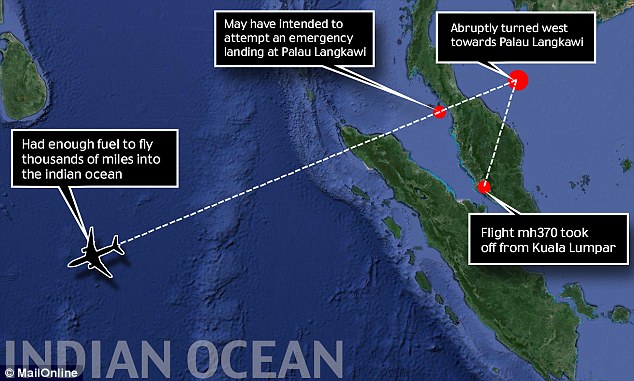
Theories abound about what happened to MH370 and why it (probably at this stage) ended up in the drink. Having discussed the situation with experienced pilots and ATC crew, I started wondering if sudden incapacitation had overcome the pilots while they were still entering co-ordinates for a return to the closest Malaysian Airport capable of allowing a 777 to land (Langkawi Island)

My theory (and that of others, by the look of things) was that some catastrophic event rendered both pilots and crew unconscious or dead, (likely the same fate for the passangers) and the plane simply flew on on the programmed heading, on autopilot, until the fuel simply ran out. Pilot suicide in this fashion simply makes no sense to me. I think it was a ghost flight:


It would have taken less than a minute for the pilots, passengers and crew aboard MH370 to lose consciousness and have their fate sealed if the cabin experienced a catastrophic loss of pressure and became what is known as a "ghost flight".

It would not be the first time that a flight has flown for hours with all those on board unconscious before crashing. Opinion from the Sydney Morning Herald:


Payne Stewart :

In 1999, American golfer Payne Stewart was among six people on a Learjet that took off from Orlando, Florida bound for Dallas, Texas who died after a sudden loss of cabin pressure deprived them of oxygen.

Despite the pilots being incapacitated, the plane flew on auto-pilot for a further four hours before running out of fuel and crashing into a field in South Dakota, more than 2250 kilometres off-course.

Six minutes into the flight, the alarm was raised and the Learjet was monitored by two F16- fighters but nothing could be done to save the plane.

Helios Airways Flight 522

Flight 522, a Boeing 737, was initially feared hijacked in 2005 when it crashed into a mountain in Greece leaving 121 dead. A crash investigation revealed that the pilots had succumbed to hypoxia and had mistaken a pressure warning signal and lights for other safety alerts.

A flight attendant who had pilot training and was able to stay conscious, tried unsuccessfully to control the plane before also passing out. The plane stayed in the air for two more hours before running out of fuel and crashing. Autopsies found that the passengers had been alive but could not establish whether they were conscious at the time of the crash.

WA mine workers

Five years earlier, in 2000, a Beechcraft King Air 200 took off from Perth to transport workers to a mine in Leonora but after less than 30 minutes began to climb too high, setting off alarms with air traffic controllers. The pilot asked the control room to "stand by" and then, it was later concluded, promptly passed out from hypoxia.

Air traffic controllers could do nothing but watch as the plane, transporting mine workers, flew across the country on auto-pilot for about five hours before running out of fuel and crashing in Queensland, killing all eight people on the plane.

Bo Rein

In 1980, a football coach Bo Rein and pilot Louis Benscotter were aboard a twin-engine Cessna 441 in Louisiana when it inexplicably began climbing above its planned flight path's altitude and lost all contact.

The plane flew on for more than 1600 kilometres, apparently on auto-pilot, before crashing into the Atlantic Ocean. Investigators believed a problem with the plane's oxygen supply had rendered the pair unconscious.


Hypoxia

1. How long would someone have to put on an oxygen mask before passing out?

University of New South Wales head of School of Aviation Jason Middleton said that at 35,000 feet a person would have a minute or less to put on an oxygen mask before becoming unconscious.

2. How much oxygen would be available?

Passenger oxygen masks automatically drop if there is a loss of cabin pressure. Professor Middleton said passengers would have about 10 minutes supply of oxygen while the pilots descended to 10,000 feet as quickly as possible, at which point it is safe to breathe without an oxygen supply.

Professor Middleton said MH370s' pilots would have had enough oxygen for about 30 minutes. But he said it had been shown that stress could make people consume oxygen four to five times faster than if they were calm. Crew also have access to portable oxygen tanks that allow them to move within the cabin and help passengers.

3. How long can auto-pilot work for?

An Australian commercial pilot, who did not want to be named, said the auto-pilot system would work until a plane's fuel ran out. The pilot said when the engines began to fail from lack of fuel, a system that is powered by air would keep the plane going for a short time longer before finally crashing.

4. Would those on board have known if there was a loss of cabin pressure?

The commercial pilot said if there was a loss of pressure in the plane the first thing a pilot would do would be to don their oxygen masks, which would take three to four seconds.

They dismissed some MH370 theories that had suggested the pilots may not have put on their oxygen masks to ensure they could see if there was smoke from a fire, as pilots' oxygen masks have smoke hoods and can be purged to ensure their vision is kept clear.

The pilot said if there was a slow leak there would be numerous warning signs, including a loud siren if the plane got to 10,000 feet without enough pressure. They said there was no way the pilots could have flown without being aware that there had been a loss of pressure and even if there was an explosion of some sort, the pilots could hold their breath while making a rapid descent.

Professor Middleton said making an emergency descent due to depressurisation was part of standard training for commercial pilots. Checking oxygen supplies is also a mandatory part of pre-flight safety checks.

But wait, it gets worse:

Of all the various theories to have emerged about the disappearance of Malaysia Airlines flight MH370, this could be the most terrifying yet: 

Aviation experts have raised the possibility that, if the flight's pilots had become incapacitated, the passengers and cabin crew may have flown for seven hours aware that there was a problem but unable to raise the alarm .

That's because the reinforced cockpit door, designed for maximum security, would have stopped staff or passengers from getting into the cockpit to make contact with the outside world. 

No emergency communication system existed in the cabin of the plane, Fairfax Media has been told. Mobile phones may have been out of range, and the satellite phones which existed in business class could have been disabled, either purposefully or accidentally, by the same incident that eliminated the plane's tracking systems.

''There are no communications available from the cabin to the ground ... only from the cockpit," said Professor Jason Middleton, head of University of New South Wales School of Aviation.

Professor Middleton said post 9-11 security measures meant passengers and crew were isolated from the outside world if a plane's pilots were out of action, whether by their own or someone else's intention or through some sort of emergency.

''It's the modern world [that says] the only way to protect against illegal activities and hijacking is for the pilots to be safely ensconced so no one can get at them and no one can get at the systems.''

Professor Middleton said the approach usually worked but that so far flight MH370 had proved to be an "unprecedented case".

The flight path of the doomed Malaysia Airlines jet, established by British satellite company Inmarsat through the plane's "ping" data, has shown that it flew for more than seven hours after it turned back from its scheduled flight path over the South China Sea on March 8.

An Australian commercial pilot, who did not want to be named, said flight MH370 would have had a reinforced cockpit door for security reasons. If the crew could not access the cockpit they would have been helpless without the pilots. "There is no way they could raise the alarm," he said.


American airline pilot and aviation author and blogger Patrick Smith also told Fairfax Media that if for any reason the pilots were unconscious or incommunicado, there would have been no way the for the crew to tell anyone.

There has been much speculation as to why no phone calls or messages were received from passengers or crew on the missing flight. But Smith said the lack of calls did not necessarily support the theory because unless a plane was flying low and within range of a mobile phone tower, mobile phones would not work.

Vincent Lau, an electronics professor specialising in wireless communications at Hong Kong University of Science and Technology, also told the New York Times that the altitude of the plane might have meant mobile phones could not connect with ground stations.

According to the Malaysia Airlines website, in-flight entertainment systems in business class on a Boeing 777-200, the model of flight MH370, are equipped with satellite phones.

Smith said that this entertainment system could, however, be disabled as was the jet's transponder and Aircraft Communications Addressing and Reporting System (ACARS). No one yet knows how and why these systems were not working.

Sunday, 9 March 2014

Air Malaysia MH370 Disappears


Malaysia Airlines Flight MH370 Disappears

Theories abound, and possible traces,possibly a door ? is found
Original Article Scott Mayerowitz, with my own comments

Having just recently been bumped off a Malysian airlines Boeing 777  flight for my daughter not having a  passport with 6 months' validity, I find it bizarre that 2 false or stolen passports were used to gain entrance onto flight MH370. Malaysia seemed so inflexible on passport issues! Was this oversight the undoing of MH370?

I today had a discussion about this with one of my patients, a retired military (A6 Skyhawk) pilot and ATC expert. His opinion is that a sudden calamity overtook the plane. Either an explosion or a massive structural failure. The other options should have triggered a mayday response, which, as he says: " Is just the flick of a thumb away."


The most dangerous parts of a flight are takeoff and landing. Rarely do incidents happen when a plane is cruising 11 kilometres above the earth.

So the disappearance of a Malaysia Airlines jet well into its flight on Saturday morning over the South China Sea has led aviation experts to assume that whatever happened was quick and left the pilots no time to place a distress call.

It could take investigators months, if not years, to determine what happened to the Boeing 777 flying from Malaysia's largest city of Kuala Lumpur to Beijing. (If at all)

"At this early stage, we're focusing on the facts that we don't know," said Todd Curtis, a former safety engineer with Boeing who worked on its 777 wide-body jets and is now director of the Airsafe.com Foundation.

Military radar indicates that the missing Boeing 777 jet may have turned back before vanishing, Malaysia's air force chief said Sunday as authorities were investigating up to four passengers with suspicious identifications. The revelations add to the mystery surrounding the final minutes of the flight. Air force chief Rodzali Daud didn't say which direction the plane veered when it apparently went off course, or how long it flew in that direction, Some of the information it had was also corroborated by civilian radar, he said.

If the information about the U-turn is accurate, that lessens the probability that the plane suffered a catastrophic explosion but raises further questions about why the pilots didn't signal for help. If there was a minor mechanical failure - or even something more serious like the shutdown of both of the plane's engines - the pilots likely would have had time to radio for help. The lack of a call "suggests something very sudden and very violent happened", said William Waldock, who teaches accident investigation at Embry-Riddle Aeronautical University in Prescott, Arizona.

It's possible that there was either an abrupt breakup of the plane or something that led it into a quick, steep dive. Some experts even suggested an act of terrorism or a pilot purposely crashing the jet.

"Either you had a catastrophic event that tore the airplane apart, or you had a criminal act," said Scott Hamilton, managing director of aviation consultancy Leeham Co. "It was so quick and they didn't radio."

No matter how unlikely a scenario, it's too early to rule out any possibilities, experts warn. The best clues will come with the recovery of the flight data and voice recorders and an examination of the wreckage. US investigators from the FBI, the National Transportation Safety Board and the Federal Aviation Administration and experts from Boeing were heading to Asia to assist in the investigation.

A massive international sea search has so far turned up no confirmed trace of the jet, though Vietnamese authorities said late Sunday that a low-flying plane had spotted a rectangular object in waters about 90 kilometres south of Tho Chu island, in the same area where oil slicks were spotted Saturday. The state-run Thanh Nien newspaper said, citing the deputy chief of staff of Vietnam's army that searchers had spotted what appeared to be one of the plane's doors.

Airplane crashes typically occur during takeoff and the climb away from an airport, or while coming in for a landing, as in last year's fatal crash of an Asiana Airlines jet in San Francisco. Just 9 per cent of fatal accidents happen when a plane is at cruising altitude, according to a statistical summary of commercial jet airplane accidents done by Boeing.

Captain John M Cox, who spent 25 years flying for US Airways and is now chief executive of Safety Operating Systems, said that whatever happened to the Malaysia Airlines jet, it occurred quickly. The problem had to be big enough, he said, to stop the plane's transponder from broadcasting its location, although the transponder can be purposely shut off from the cockpit.

One of the first indicators of what happened will be the size of the debris field. If it is large and spread out over tens of miles, then the plane likely broke apart at a high elevation. That could signal a bomb or a massive airframe failure. If it is a smaller field, the plane probably fell from 35,000 feet (10,500 metres) intact, breaking up upon contact with the water.

"We know the airplane is down. Beyond that, we don't know a whole lot," Cox said.

The Boeing 777 has one of the best safety records in aviation history. It first carried passengers in June 1995 and went 18 years without a fatal accident. That streak came to an end with the July 2013 Asiana crash. Three of the 307 people aboard that flight died. Saturday's Malaysia Airlines flight carrying 239 passengers and crew would only be the second fatal incident for the aircraft type.

"It's one of the most reliable airplanes ever built," said John Goglia, a former member of the US National Transportation Safety Board.


MH370

An object, possibly a door is found by search aircraft

Some of the possible causes for the plane disappearing include:

A CATASTROPHIC STRUCTURAL FAILURE

Most aircraft are made of aluminium which is susceptible to corrosion over time, especially in areas of high humidity. But given the plane's long history and impressive safety record, experts suggest that a failure of the airframe, or the plane's Rolls-Royce Trent 800 engines, is unlikely.

More of a threat to the plane's integrity is the constant pressurisation and depressurisation of the cabin for takeoff and landing. In April 2011, a Southwest Airlines Boeing 737 made an emergency landing shortly after takeoff from Phoenix after the plane's fuselage ruptured, causing a 1.5m tear. The plane, with 118 people on board, landed safely. But such a rupture is less likely in this case. Airlines fly the 777 on longer distances, with many fewer takeoffs and landings, putting less stress on the airframe.

"It's not like this was Southwest Airlines doing 10 flights a day," Hamilton said. "There's nothing to suggest there would be any fatigue issues."

BAD WEATHER

Planes are designed to fly through most severe storms. However, in June 2009, an Air France flight from Rio de Janeiro to Paris crashed during a bad storm over the Atlantic Ocean. Ice built up on the Airbus A330's airspeed indicators, giving false readings. That, and bad decisions by the pilots, led the plane into a stall causing it to plummet into the sea. All 228 passengers and crew aboard died. The pilots never radioed for help.

In the case of Saturday's Malaysia Airlines flight, all indications show that there were clear skies.

PILOT DISORIENTATION

Curtis said that the pilots could have taken the plane off autopilot and somehow went off course and didn't realise it until it was too late. The plane could have flown for another five or six hours from its point of last contact, putting it up to 4800km away. This is unlikely given that the plane probably would have been picked up by radar somewhere. But it's too early to eliminate it as a possibility.

FAILURE OF BOTH ENGINES

In January 2008, a British Airways 777 crashed about 300m short of the runway at London's Heathrow Airport. As the plane was coming in to land, the engines lost thrust because of ice buildup in the fuel system. There were no fatalities.

Loss of both engines is possible in this case, but Hamilton said the plane could glide for up to 20 minutes, giving pilots plenty of time to make an emergency call. When a US Airways A320 lost both of its engines in January 2009 after taking off from LaGuardia Airport in New York it was at a much lower elevation. But Captain Chesley B. "Sully" Sullenberger still had plenty of communications with air traffic controllers before ending the six-minute flight in the Hudson River.

A BOMB

Several planes have been brought down including Pan Am Flight 103 between London and New York in December 1988. There was also an Air India flight in June 1985 between Montreal and London and a plane in September 1989 flown by French airline Union des Transports Ariens which blew up over the Sahara.

HIJACKING

A traditional hijacking seems unlikely given that a plane's captors typically land at an airport and have some type of demand. But a 9/11-like hijacking is possible, with terrorists forcing the plane into the ocean.

PILOT SUICIDE

There were two large jet crashes in the late 1990s - a SilkAir flight and an EgyptAir flight- that are believed to have been caused by pilots deliberately crashing the planes. Government crash investigators never formally declared the crashes suicides but both are widely acknowledged by crash experts to have been caused by deliberate pilot actions.

ACCIDENTAL SHOOT-DOWN

There have been incidents when a country's military unintentionally shot down civilian aircraft. In July 1988, the United States Navy missile cruiser USS Vincennes accidentally shot down an Iran Air flight, killing all 290 passengers and crew. In September 1983, a Korean Air Lines flight was shot down by a Russian fighter jet.

Sunday, 1 December 2013

Smaug on a Plane

Air New Zealand Unveils Smaug on a Boeing 777


Ahead of the premiere of the second part of the Hobbit trilogy, The Desolation of Smaug, Air New Zealand has unveiled a 54-metre long image of the dragon on the sides of a Boeing 777-300.

Hobbit fans can finally see the most-anticipated character in the movie trilogy, the dragon Smaug.
While Smaug has previously been glimpsed in part, his full body has never been revealed.
Ahead of the premiere of the second part of the Hobbit trilogy, The Desolation of Smaug, Air New Zealand on Monday unveiled a 54-metre long image of the dragon on the sides of a Boeing 777-300.

Air New Zealand chief executive Christopher Luxon said the airline had worked with Weta Digital "to reveal their star to the world".
Advertisement
For the last premiere, the airline created another Hobbit-themed plane which carried stars to the Wellington premiere.
Director Sir Peter Jackson said he was proud to debut Smaug in New Zealand.

"To see Smaug fly off the big screen and into the skies like this is pretty exciting," he said.
The plane will fly to Los Angeles on Monday evening, arriving in time for the premiere on Tuesday.
Over the weekend, a giant eagle - a character from The Hobbit - was unveiled in the Wellington Airport terminal, alongside the character Gollum which was put up a year ago for the first premiere.
A further addition will be added at the airport.
Meanwhile, Peter Jackson and Middle-earth have popped up in a swanky Beverly Hills hotel.
As part of a Tourism New Zealand promotion, four replica sets from the movie were built inside the Beverly Hilton Hotel.
Jackson's three Lord of the Rings films and last year's first Hobbit film have created a tourism bonanza for New Zealand and Saturday's event was designed to attract another wave of American visitors.
Jackson shot all of the Lord of the Rings and Hobbit films in New Zealand and the Oscar winner joked he might even squeeze out a fourth Hobbit film.
''We have a few little corners of New Zealand that we're saving up for The Hobbit: Part Four,'' Jackson smiled.
''You never know.''
Jackson was joined at the event by The Hobbit's stars Martin Freeman, Richard Armitage, Evangeline Lilly, Luke Evans and Dean O'Gorman.
The sets at the Hilton included Laketown, shot at Lake Pukaki, Hidden Bay (Turoa, Ohakune), Forest River (Pelorus River) and Beorn's House (Paradise, Queenstown).


Video:
http://www.stuff.co.nz/business/industries/9465138/Hobbits-Smaug-debuts-on-Air-NZ-plane

Wednesday, 18 September 2013

Boeing Dreamliner 787-9 takes to the skies: Air NZ the first customer

Dreamliner 787-9


A longer version of Boeing's Dreamliner made its first flight, passing a key milestone for a plane that should be more profitable both for Boeing to sell and for its customers to operate than the current production model.

Orders have been places by several carriers, Air New Zealand being the first, also Canada, Japan, KLM, Air France, Virgin, and others


The 787-9 jet, which left the ground at 11.02 am local time has room for 290 passengers, 40 more than the original 787-8 jetliner, and has about 300 more nautical miles (555km) of range.
That means Boeing can charge US$37.7 million ($45.8 million) more for the plane at list price, and airlines can sell more seats on longer routes.
Boeing has unfilled orders for 936 Dreamliners, worth about US$217 billion at list prices, or nearly eight years worth of production at its target construction rate of 10 per month, which it aims to hit by year's end.
About 41 per cent of the orders, or 388 planes, are for the 787-9.


Boeing began selling an even longer version of the jet, the 787-10, in June. It has garnered 50 orders so far. The rest of the orders are for the 787-8.
In its maiden voyage on Tuesday, the 787-9 will fly for about five hours, running detailed tests of its flight controls, part of a nine-month testing program.
The aircraft used for the tests will eventually be delivered to Air New Zealand in mid-2014, Boeing said.


An hour behind schedule, in overcast weather, the jet rose smoothly before TV crews, reporters and thousands of Boeing employees, who watched from an adjacent runway. The flight began at Paine Field in Everett, Washington, near Boeing's main 787 assembly lines, and is due to end at Boeing Field south of Seattle, near Boeing's 737 factory.
The jet was scheduled to fly at a speed of up to 250 knots and altitude of 16,000 feet if the two test pilots aboard feel it is safe, Boeing said.
The jet will fly over Puget Sound and then head inland to Moses Lake, Washington.                                 (Reuters)

Sunday, 7 July 2013

Korean jet crashes at San Francisco Airport: Pilot error to blame?

Korean jet crashes at San Francisco Airport: Pilot error to blame?


 The plane that crashed at San Francisco's airport was flying "significantly below" its intended speed and its pilot was in training.


Asiana Airlines said the pilot in charge of landing the Boeing 777, Lee Kang-kook, was training for the long-range plane and it was his first flight to that airport with the jet. Asiana Airlines said he had previously flown to San Francisco on different planes and was being assisted by another pilot more experienced with the Boeing 777.


Information collected from the plane's cockpit voice recorder and flight data recorder indicated that there were no signs of trouble until seven seconds before impact, when the crew tried to accelerate, NTSB Chairwoman Deborah Hersman said at a news conference at the airport.

Opinion on possible cause of this crash:

Images FAA

A stall warning in which the cockpit controls begin to shake activated four seconds before impact, and the crew tried to abort the landing and initiate what is known as a "go around" maneuver 1.5 seconds before crashing, Hersman said.


"Air speed was significantly below the target air speed" of 137 knots, she said. The throttle was set at idle as the plane approached the airport and the "engines appear to respond normally" when the crew tried to gain speed in the seconds before the crash, Hersman said.

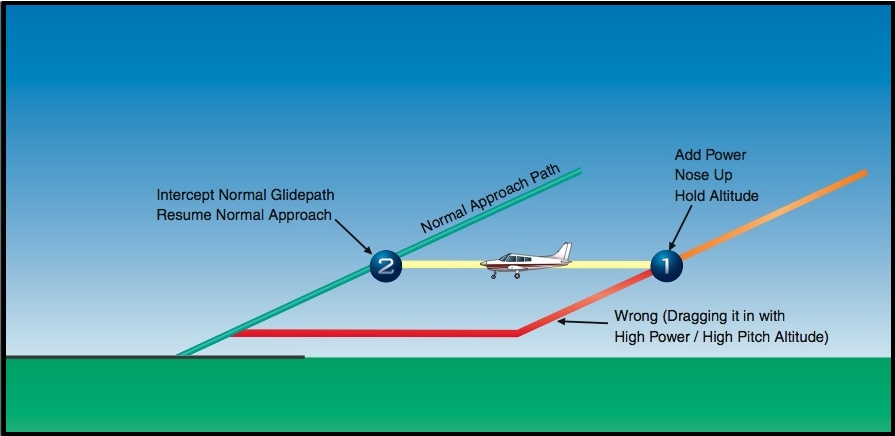
If a landing cannot be made on the first third of the runway, or the airplane drifts sideways, the pilot should  EXECUTE A GO-AROUND.

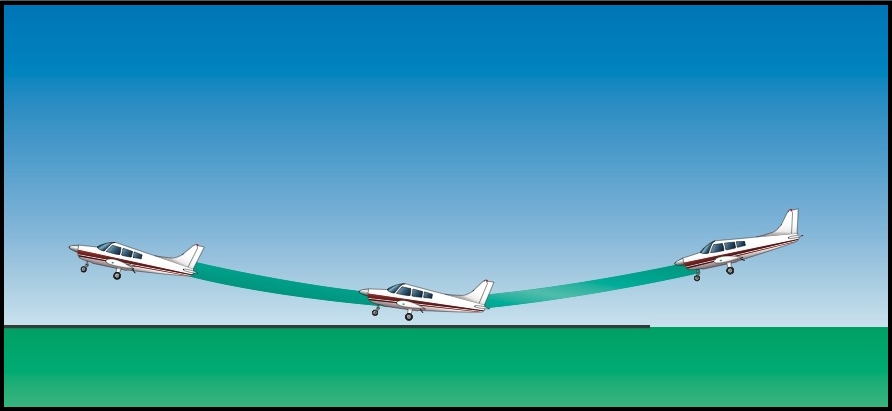
Diagram showing ballooning in roundout.

Ballooning During Round-out

If you misjudge the rate of sink during a landing and think the airplane is descending faster than it should, there is a tendency to increase the pitch attitude and angle of attack too rapidly. This not only stops the descent, but actually starts the airplane climbing, known as ballooning.

Ballooning can be dangerous because the height above the ground is increasing and the airplane may be rapidly approaching a stalled condition.I suspect the plane balloned, and the tail slammed into the ground as the pilot tried to climb out of the stall/ballooning.

When ballooning is excessive, it is best to EXECUTE A GO-AROUND IMMEDIATELY; and  NOT ATTEMPT TO SALVAGE THE LANDING. 

Power must be applied before the airplane enters a stalled condition. Reuters reports that the stall warning had already sounded, so there was no powering out of the descent.


Two Chinese teenagers died in the incident and more than 180 people were injured, local officials said. In a tragic new twist, the San Francisco Fire Department said that one of the teenagers may have been run over by an emergency vehicle as first responders scrambled to the scene.


"One of the deceased did have injuries consistent with those of having been run over by a vehicle," fire department spokeswoman Mindy Talmadge said. "Many agencies were on the field yesterday."

Autopsies to determine the cause of death will be conducted by the San Mateo County coroner's office, officials said.

More than 30 people remained hospitalised late. Eight were listed in critical condition, including two with paralysis from spinal injuries, according to hospital officials.

The charred hulk of the aircraft remained on the airport tarmac as flight operations gradually returned to normal. Three of the four runways were operating by Sunday afternoon.


Hersman said it was too early to speculate on the cause of the crash. The data recorders corroborated witness accounts and an amateur video, shown by CNN, that indicated the plane came in too low, lifted its nose in an attempt to gain altitude, and then bounced violently along the tarmac after the rear of the aircraft clipped a seawall at the approach to the runway.


Asked whether the information reviewed by the NTSB showed pilot error in the crash, Hersman did not answer directly.

"What I will tell you is that the NTSB conducts very thorough investigations. We will not reach a determination of probable cause in the first few days that we're on an accident scene," she told reporters.

Asiana said mechanical failure did not appear to be a factor in the crash. Hersman confirmed that a part of the airport's instrument-landing system was offline on Saturday as part of a scheduled runway construction project, but cautioned against drawing conclusions from that.

"You do not need instruments to get into the airport," she said, noting that the weather was good at the time of the crash and that the plane had been cleared for a visual approach.

The Asiana flight originated in Shanghai and was flying to San Francisco from Seoul with 291 passengers and 16 crew members on board. Several large groups of Chinese students were among the passengers.


People on the flight said nothing seemed amiss until moments before the plane hit the ground. Pictures taken by survivors showed passengers hurrying out of the wrecked plane, some on evacuation slides. Thick smoke billowed from the fuselage and TV footage showed the aircraft gutted and blackened by fire. Much of its roof was gone.

Interior damage to the plane also was extreme, Hersman said on CNN earlier on Sunday.

"You can see the devastation from the outside of the aircraft, the burn-through, the damage to the external fuselage," she said. "But what you can't see is the damage internally. That is really striking."


The NTSB released photos showing the wrecked interior cabin oxygen masks dangling from the ceiling.

The dead were identified as Ye Meng Yuan and Wang Lin Jia, both 16-year-old girls and described as Chinese nationals who are students, Asiana Airlines said. They had been seated at the rear of the aircraft, according to government officials in Seoul and Asiana, and were found outside the airplane.

Hersman said the first crew of emergency workers to arrive at the scene included 23 people in nine vehicles. San Francisco Mayor Ed Lee said a total of 225 first responders were involved.

"As chaotic as the site was yesterday, I think a number of miracles occurred to save many more lives," Lee said at the airport news conference. Appearing later at San Francisco General Hospital, he declined to address whether one of the Chinese teenagers may have been run over.


The crash was the first fatal accident involving the Boeing 777, a popular long-range jet that has been in service since 1995. It was the first fatal commercial airline accident in the United States since a regional plane operated by Colgan Air crashed in New York in 2009.

"For now, we acknowledge that there were no problems caused by the 777-200 plane or (its) engines," Yoon Young-doo, the president and CEO of the airline, told reporters on Sunday at the company headquarters on the outskirts of Seoul.

Asiana said passengers included 141 Chinese, 77 South Koreans, 64 Americans, three Indians, three Canadians, one French, one Vietnamese and one Japanese citizen.

Asiana, South Korea's junior carrier, has had two other fatal crashes in its 25-year history.

- Reuters

Amelia Earhart's sad demise

Dozens heard Amelia Earhart's final, chilling pleas for help, researchers say Distilled from 2 posts in the  Washington Post a...