Showing posts with label Junkers. Show all posts

Sunday, 5 August 2018

Junker JU 52 Crashes in Swiss Alps

A Junker Ju 52, affectionately known as "Tante Ju" (Aunty Ju) by German troops in WW2, has crashed in Switzerland


The Wreckage of HB-HOT near Flims


HB-HOT in happier days


The 79 year old 3-engined World War II transport workhorse plane crashed in the Swiss Alps in early Augist 2018 while on a sightseeing tour, killing all 20 people on board.

The German-built Junkers Ju-52 (HB-HOT) was carrying 17 passengers, all Swiss except for an Austrian couple and their son, the Swiss authorities said. Three crew members were also killed in the crash on Saturday.

The plane was on an Alpine sightseeing tour from Locarno, in the Italian-speaking region of southern Switzerland, to Dübendorf, an airport near Zurich, when it crashed into the mountainside near the ski resort of Flims, in eastern Switzerland.


An investigation was underway, but explosion on board and in-flight collision as the cause of the crash has already been ruled out.

The Junkers plane struck the Piz Segnas Mountain at an altitude of about 8,000 feet. It plunged down “almost vertically, at high speed,” Daniel Knecht, a spokesman for the Swiss transport safety investigation board, said at a news conference on Sunday 5 August.

The plane was operated by Ju-Air, a Swiss vntage aircraft company that offers tours in  the former Swiss military aircraft. The Ju-52, also known as “Aunty Ju,” was developed by Junkers, a German plane manufacturer in the 1930s, initially with a single engine but then as a three-engine aircraft.The company operates several Vintage Ju 52s. It was a popular airliner and postal aircraft before the war, and used widely.

The aircraft were used by the Luftwaffe during World World II as both transport and bomber. It first came into military use during the Spanish Civil War, notably as part of the German-led bombing of the Basque town of Guernica in 1937, which was later immortalized by Pablo Picasso in his famous painting, Guernica Night.


During World War II, the Germans used the plane mostly as a transport, serving on all fronts, including Russia and North Africa. The Swiss Air Force decommissioned its last three Ju-52 planes in 1982, which were then taken over by a group of Swiss vintage aircraft enthusiasts.


Kurt Waldmeier, a former pilot and the president of Ju-Air, called it “the most tragic day in the history” of his company, but said it was too early to draw conclusions about what had caused the crash. “Nobody has more interest than Ju-Air in clarifying the events, so that such an accident can never occur again,” he said.

Waldmeier told a news conference  that the plane, built in 1939, had flown more than 10,000 hours and had been regularly checked because of its age. The last inspection was in late July, and the aircraft had no history of technical problems, he said. The plane was navigated by using sight and maps rather than modern instruments. All three members of the crew had more than 30 years of professional experience.


The 62-year-old captain, who was not immediately named, had spent three decades as a commercial pilot for the national carrier, Swissair, and its successor, Swiss. He had been flying the Ju-52 regularly since 2004.

Rescue teams and investigators, with the support of helicopters, were sifting through the debris on Sunday. In recent days, Switzerland has been hit by a heat wave that has pushed daytime temperatures above 30 degrees Celsius (86 degrees Fahrenheit).

While flight specialists told Swiss news outlets that intense heat could make it more difficult to fly such an aircraft, they said it was too early to suggest that high temperature played any part in the crash.

(Copyright notice: Original article from The Times, photograph from the net. Happy to attribute (or remove) where not clearly marked to identify comyright material. No infringement intended, simply a aircraft fan blog)

Sunday, 25 May 2014

Back to the Ju 87 Stuka: Part 3: Variants: Production models

Ju 87 Stuka Part 3:
Variants: Production Models


Ju 87B "Bertha"

The Ju 87 B series was to be the first mass-produced variant. A total of six pre-production Ju 87 B-0 were produced, built from Ju 87 A airframes. Test flights began from the summer of 1937. A small number, at least three, served as conversion Cs or Es for potential naval variants.


Junker Ju 87B.
[Source: Unknown]

The first production version was the Ju 87 B-1, with a considerably larger engine, its Junkers Jumo 211D generating 1,200 PS (883 kW, 1,184 hp), and completely redesigned fuselage and landing gear. This new design was again tested in Spain, and after proving its abilities there, production was ramped up to 60 per month. As a result, by the outbreak of World War II, the Luftwaffe had 336 Ju 87 B-1s on hand.


The B-1 was also fitted with "Jericho trumpets", essentially propeller-driven sirens with a diameter of 0.7 m (2.3 ft) mounted on the wing's leading edge directly forward of the landing gear, or on the front edge of the fixed main gear fairing. This was used to weaken enemy morale and enhance the intimidation of dive-bombing. After the enemy became used to it, however, they were withdrawn. The devices caused a loss of some 20–25 kph (10-20 mph) through drag. Instead, some bombs were fitted with whistles on the fin to produce the noise after release.


The trumpets were a suggestion from Generaloberst Ernst Udet (but some authors say the idea originated from Adolf Hitler). The Ju 87 B-2s that followed had some improvements and were built in a number of variants that included ski-equipped versions (the B-1 also had this modification), and at the other end, with a tropical operation kit called the Ju 87 B-2 trop.

Italy's Regia Aeronautica received a number of the B-2s and named them the "Picchiatello", while others went to the other members of the Axis, including Hungary, Bulgaria and Romania. The B-2 also had an oil hydraulic system for closing the cowling flaps. This continued in all the later designs.


Italian Air force Ju87B2-trop, forced down behind British Lines

The tropicalised versions were initially named the Ju 87 B-2/U1. This was eventually designated the Ju 87 B-2 trop, equipped with tropical emergency equipment and sand filters for the powerplant.

Production of the Ju 87 B started in 1937. 89 B-1s were to be built at Junkers' factory in Dessau and another 40 at the Weserflug plant in Lemwerder by July 1937. Production would be carried out by the Weserflug company after April 1938, but Junkers continued producing Ju 87 up until March 1940. Total production amounted to 697 B-1s (311 by Junkers, 386 by Weserflug) and 225 B-2s (56 by Junkers, 169 by Weserflug). The last Ju 87B rolled off the production lines in October 1940.

Ju 87R
A long range version of the Ju 87 B was also built, known as the Ju 87 R. They were primarily intended for anti-shipping missions. The Ju 87R had a B-series airframe with an additional oil tank and fuel lines to the outer wing stations to permit the use of two 300 L (79,25 US gal) under-wing drop tanks.

Junkers JU 87 R-2 STUKA May 1941

This increased fuel capacity to 1,080 litres (500 L in main fuel tank of which 480 L where usable + 600 L from drop tanks). To prevent overload conditions, bomb carrying ability was often restricted to a single 250 kg (550 lb) bomb if the aircraft was fully loaded with fuel.

Junkers Ju 87 R 13

Ju 87 R-3

The Ju 87 R-1 had a B-1 airframe with the exception of a modification in the fuselage which enabled an additional oil tank. This was installed to feed the engine due to the increase in range after the addition of the extra fuel tanks.

The Ju 87 R-2 had the same airframe as the B-2, and strengthened to ensure it could withstand dives of 600 kph (370 mph). The Jumo 211D in-line engine was installed, replacing the R-1s Jumo 211A. Due to an increase in overall weight by some 700 kg (1,540 lb), the Ju 87 R-2 was 30 kph (20 mph) slower than the Ju 87 B-1 and had a lower service ceiling. The Ju 87 R-2 had an increased range advantage of 360 km (220 mi). The R-3 and R-4 were the last R variants developed. Only a few were built.

The R-3 was an experimental tug for gliders and had an expanded radio system so the crew could communicate with the glider crew by way of the tow rope. The R-4 differed from the R-2 in the Jumo 211J powerplant.

Total production amounted to 972 Ju 87R (105 R-1, 472 R-2, 144 R-4), all built by Weserflug. The last Ju 87R rolled off the production lines in October 1941.

Ju 87 C


Ju 87 R2

On 18 August 1937, the RLM decided to introduce the Ju 87 Tr(C). The Ju 87 C was intended to be a dive and torpedo bomber for the Kriegsmarine. The type was ordered into prototype production and available for testing in January 1938. Testing was given just two months and was to begin in February and end in April 1938. The prototype V10 was to be a fixed wing test aircraft, while the following V11 would be modified with folding wings. The prototypes were Ju 87 B-0 airframes powered by Jumo 211 A engines. Owing to delays, the V10 was not completed until March 1938. It first flew on 17 March and was designated Ju 87 C-1. On 12 May, the V11 also flew for the first time. By 15 December 1939, 915 arrested landings on dry land had been made. It was found the arresting gear winch was too weak and had to be replaced. Tests showed the average braking distance was 20–35 metres (65–115 feet). The Ju 87 V11 was designated C-0 on 8 October 1938. It was fitted out with standard Ju 87C-0 equipment and better wing-folding mechanisms. The "carrier Stuka" was to be built at the Weserflug Company's Lemwerder plant between April and July 1940.


Among the "special" equipment of the Ju 87 C was a two-seat rubber dinghy with signal ammunition and emergency ammunition. A quick fuel dump mechanism and two inflatable 750 L (200 US gal) bags in each wing and a further two 500 L (130 US gal) bags in the fuselage enabled the Ju 87 C to remain afloat for up to three days in calm seas. On 6 October 1939, with the war already underway, 120 of the planned Ju 87 Tr(C)s on order at that point were cancelled. The intention was to launch them off the Graf Zeppelin CV1 class aircraft carriers:


Despite the cancellation, the tests continued using catapults:

Imagen


The Ju 87 C had a takeoff weight of 5,300 kg (11,700 lb) and a speed of 133 kph (82 mph) on departure. The Ju 87 could be launched with a SC 500 kg (1,100 lb) bomb and four SC 50 kg (110 lb) bombs under the fuselage. The C-1 was to have two MG 17s mounted in the wing with a MG 15 operated by the rear gunner. On 18 May 1940, production of the C-1 was switched to the R-1.


Junkers Ju 87 C.


Ju 87D "Dora"


Ju 87 D-5

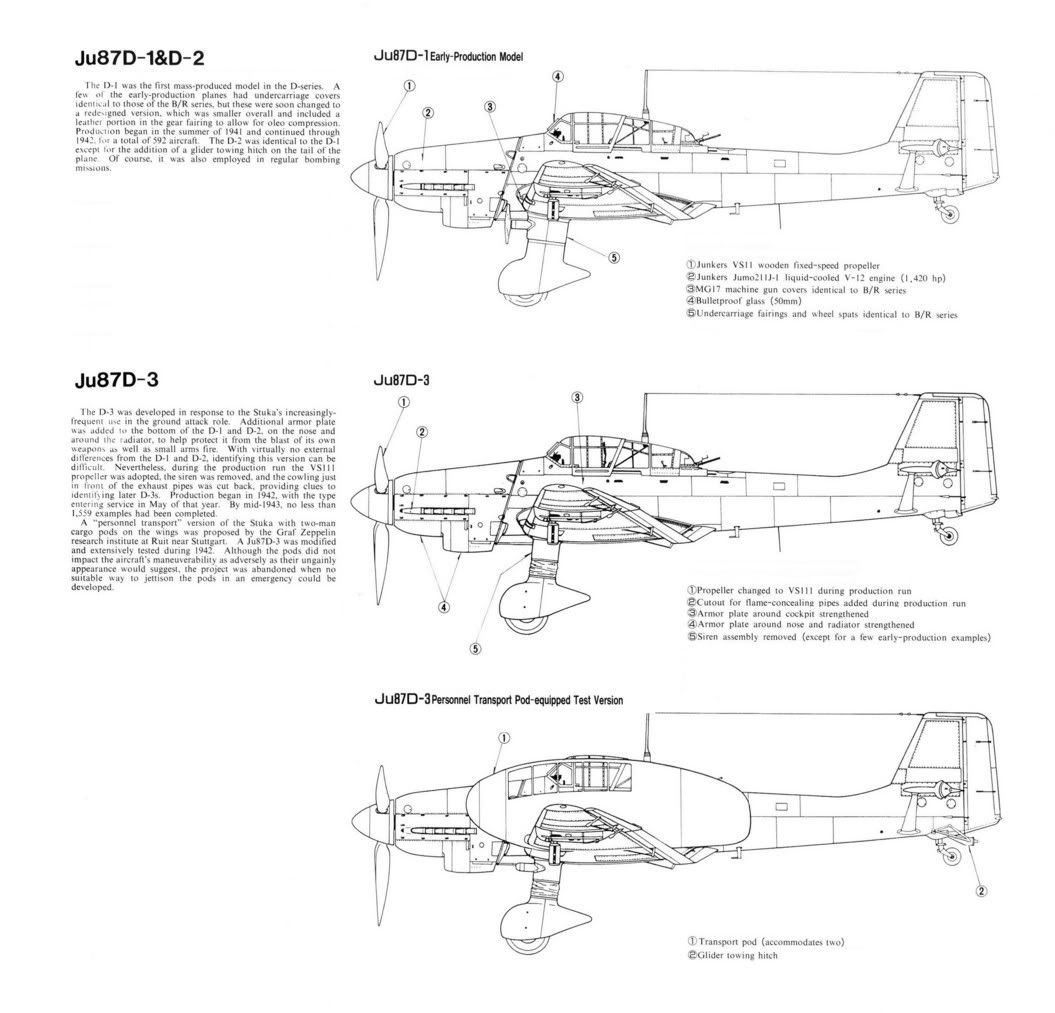
Despite the Stuka's vulnerability to enemy fighters having been exposed during the Battle of Britain, the Luftwaffe had no choice but to continue its development, as there was no replacement aircraft in sight. The result was the D-series. In June 1941, the RLM ordered five prototypes, the Ju 87 V21–25. A Daimler-Benz DB 603 powerplant was to be installed in the Ju 87 D-1, but it did not have the power of the Jumo 211 and performed "poorly" during tests and was dropped. The Ju 87 D-series featured two coolant radiators underneath the inboard sections of the wings, while the oil cooler was relocated to the position formerly occupied by the coolant radiator.


The D-series also introduced an aerodynamically refined cockpit with better visibility and space. In addition, armor protection was increased and a new dual-barrel 7.92 mm MG 81Z machine gun with an extremely high rate of fire was installed in the rear defensive position. Engine power was increased again, the Ju mo 211J now delivering 1,420 PS (1,044 kW, 1,401 hp). Bomb carrying ability was nearly quadrupled from 500 kg (1,100 lb) in the B-version to 1,800 kg (3,970 lb) in the D-version (max. load for short ranges, overload condition), a typical bomb load ranged from 500-1,200 kg (1,100-2,650 lb).


The internal fuel capacity of the Ju 87D was raised to 800 L (of which 780 L were usable) by adding additional wing tanks while retaining the option to carry two 300 L drop tanks. Tests at Rechlin revealed it made possible a flight duration of 2 hours and 15 minutes. With an extra two 300 L (80 US gal) fuel tanks, it could achieve four hours flight time.


The D-2 was a variant used as a glider tug by converting older D-series airframes. It was intended as the tropical version of the D-1 and had heavier armour to protect the crew from ground fire. The armour reduced its performance and caused the Oberkommando der Luftwaffe to "place no particular value on the production of the D-2".

 The D-3 was an improved D-1 with more armour for its ground-attack role. A number of Ju 87 D-3s were designated D-3N or D-3 trop and fitted with night or tropical equipment. The D-4 designation applied to a prototype torpedo-bomber version, which could carry a 750–905 kg (1,650-2,000 lb) aerial torpedo on a PVC 1006 B rack.

The D-4 was to be converted from D-3 airframes and operated from the aircraft carrier Graf Zeppelin. Other modifications included a flame eliminator and, unlike earlier D variants, two 20 mm MG 151/20 cannon, while the radio operator/rear gunner's ammunition supply was increased by 1,000 to 2,000 rounds.


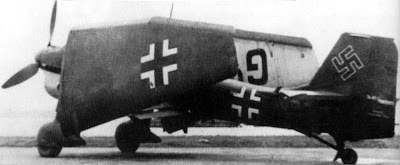
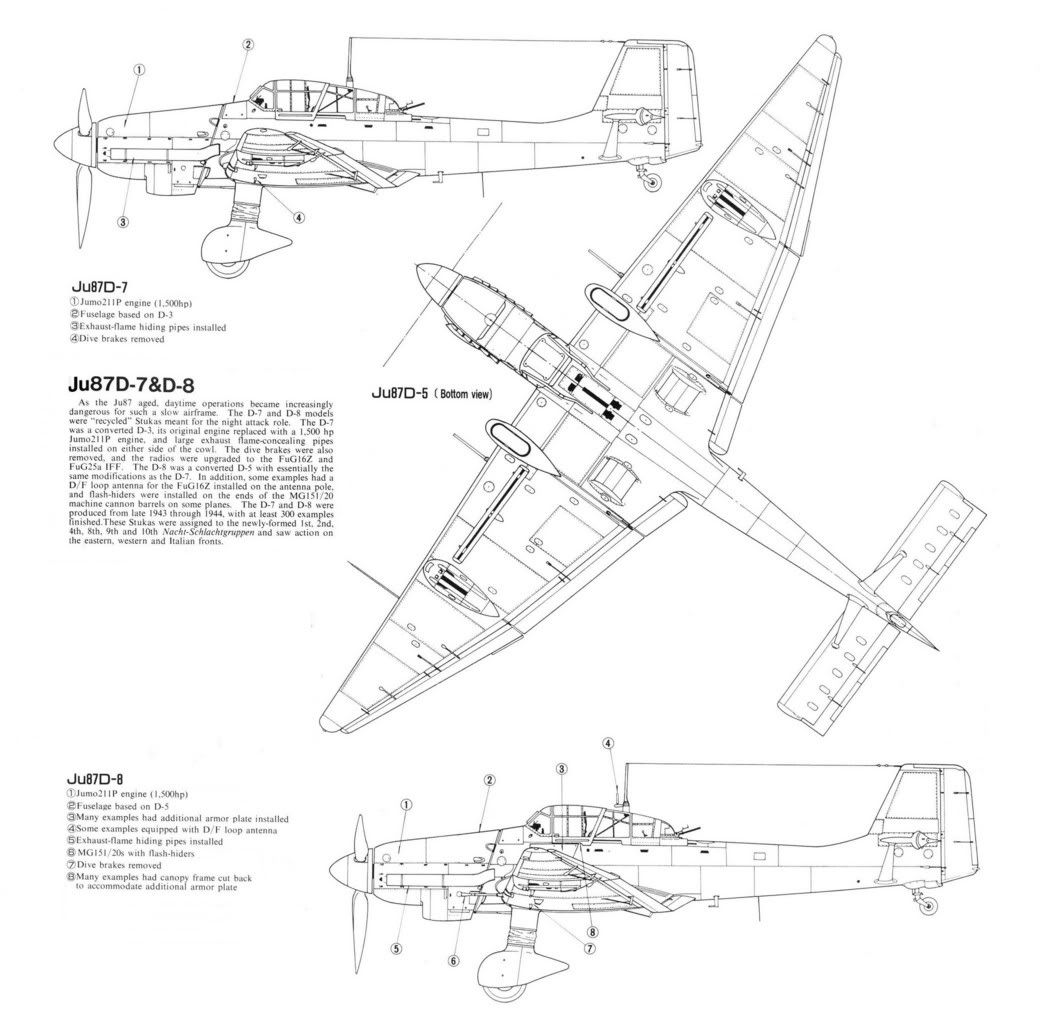
The Ju 87 D-5 was based on the D-3 design and was unique in the Ju 87 series as it had wings 0.6 metres (1 foot) longer than previous variants. The two 7.92 mm MG 17 wing guns were exchanged for more powerful 20 mm MG 151/20s to better suit the aircraft's ground-attack role. The window in the floor of the cockpit was reinforced and four, rather than the previous three, aileron hinges were installed. Higher diving speeds were obtained of 650 kph (408 mph) up to 2,000 m (6,560 ft). The range was recorded as 715 km (443 mi) at ground level and 835 km (517 mi) at 5,000 m (16,400 ft).


The D-6, according to "Operating instructions, works document 2097", was built in limited numbers to train pilots on "rationalised versions". However, due to shortages in raw materials, it did not go into mass production. The D-7 was another ground attack aircraft based on D-1 airframes upgraded to D-5 standard (armor, wing cannons, extended wing panels), while the D-8 was similar to the D-7 but based on D-3 airframes. The D-7 and D-8 were both were fitted with flame dampers, and could conduct night operations.

Production of the D-1 variant started in 1941 with 495 ordered. These aircraft were delivered between May 1941 and March 1942. The RLM wanted 832 machines produced from February 1941. The Weserflug company was tasked with their production. From June to September 1941, 40 Ju 87 Ds were expected to be built, increasing to 90 thereafter. Various production problems were encountered. Just one of the planned 48 was produced in July. Of the 25 the RLM hoped for in August 1941, none were delivered. Only in September 1941 did the first two of the planned 102 Ju 87s roll off the production lines. The shortfalls continued to the end of 1941. During this time, the WFG plant in Lemwerder moved production to Berlin. Over 165 Ju 87s had not been delivered and production was only 23 Ju 87 Ds per month out of the 40 expected. By the spring of 1942 to the end of production in 1944, 3,300 Ju 87s, mostly D-1s, D-2s and D-5s had been manufactured.


Total production amounted to 3639 Ju 87D (592 D-1, 1559 D-3 and 1448 D-5), all built by Weserflug. The last Ju 87 D-5 rolled off the production lines in September 1944.


The Ju 87 E and F proposals were never built, and Junkers went straight onto the next variant. Another variant derived from the Ju 87D airframe, the Ju 87H saw service as a dual-control trainer.


In January 1943, a variety of Ju 87 Ds became "test beds" for the Ju 87 G variants. At the start of 1943, the Luftwaffe test centre at Tarnewitz tested this combination from a static position. Oberst G. Wolfgang Vorwald noted the experiments were not successful, and suggested the cannon be installed on the Messerschmitt Me 410. However, testing continued, and on 31 January 1943, Ju 87 D-1 W.Nr 2552 was tested by Hauptmann Hans-Karl Stepp near the Briansk training area. Stepp noted the increase in drag, which reduced the aircraft's speed to 259 kph (162 mph). Stepp also noted that the aircraft was also less agile than the existing D variants. D-1 and D-3 variants operated in combat with the 37 mm (1.46 in) BK 37 cannon in 1943.


Ju 87G "Gustav"
With the G variant, the aging airframe of the Ju 87 found new life as an anti-tank aircraft. This was the final operational version of the Stuka, and was deployed on the Eastern Front. The reverse in German military fortunes after 1943 and the appearance of huge numbers of well-armoured Soviet tanks caused Junkers to adapt the existing design to combat this new threat. The Hs 129B had proved a potent ground attack weapon, but its large fuel tanks made it vulnerable to enemy fire, prompting the RLM to say "that in the shortest possible time a replacement of the Hs 129 type must take place." With Soviet tanks the priority targets, the development of a further variant as a successor to the Ju 87D began in November 1942. On 3 November, Erhard Milch raised the question of replacing the Ju 87, or redesigning it altogether. It was decided to keep the design as it was, but to upgrade the powerplant to a Jumo 211J, and add two 30 mm (1.18 in) cannon. The variant was also designed to carry a 1,000 kg (2,200 lb) free-fall bomb load. Furthermore, the armoured protection of the Ilyushin Il-2 Sturmovik was copied - a feature pioneered by the 1916-17 origin Junkers J.I of World War I Imperial Germany's Luftstreitkräfte - to protect the crew from ground fire now that the Ju 87 would be required to conduct low level attacks.


Junkers Ju 87G.
[Source: Unknown]

Hans-Ulrich Rudel, a Stuka ace, had suggested using two 37 mm (1.46 in) Flak 18 guns, each one in a self-contained under-wing gun pod, as the Bordkanone BK 3,7, after achieving success against Soviet tanks with the 20 mm MG 151/20 cannon.


These gun pods were fitted to a Ju 87 D-1, W.Nr 2552 as "Gustav the tank killer". The first flight of the machine took place on 31 January 1943, piloted by Hauptmann Hans-Karl Stepp. The continuing problems with about two dozens of the Ju 88P-1, and slow development of the Hs 129 B-3, each of them equipped with a large Bordkanone BK 7,5 cm (2.95 in) cannon in a conformal gun pod beneath the fuselage, meant the Ju 87G was put into production.


Winter Camo

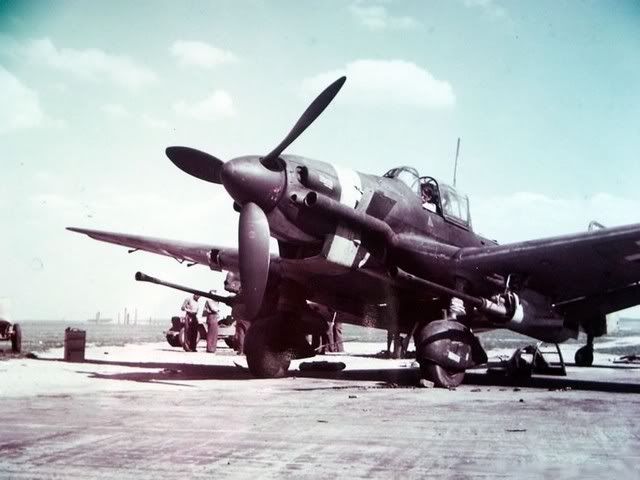
In April 1943, the first production Ju 87 G-1s were delivered to front line units. The two 37 mm (1.46 in) cannons were mounted in under-wing gun pods, each loaded with a six-round magazine of armour-piercing tungsten carbide ammunition. With these weapons, the Kanonenvogel ("cannon-bird"), as it was nick named, proved spectacularly successful in the hands of Stuka aces such as Rudel. The G-1 was converted from older D-series airframes, retaining the smaller wing, but without the dive brakes. The G-2 was similar to the G-1 except for use of the extended wing of the D-5. 208 G-2s were built and at least a further 22 more were converted from D-3 airframes.
Junkers Ju 87 Stuka


37mm Flak 18 mounted on a Junkers Ju 87G.
[Source: Unknown]

Only a handful of production Gs were committed in the Battle of Kursk. On the opening day of the offensive, Hans-Ulrich Rudel flew the only "official" Ju 87 G, although a significant number of Ju 87D variants were fitted with the 37 mm (1.46 in) cannon, and operated as unofficial Ju 87 Gs before the battle. In June 1943, the RLM ordered 20 Ju 87Gs as production variants. The G-1 later influenced the design of the A-10 Thunderbolt II, with Hans Rudel's book, Stuka Pilot being required reading for all members of the A-X project.


Night-harassment variants

The Soviet Air Force practice of harassing German ground forces using antiquated Polikarpov Po-2 and R-5 biplanes at night to drop flares and fragmentation bombs, inspired the Luftwaffe to form its own Störkampfstaffeln (harassment squadrons). On 23 July 1942, Junkers offered the Ju 87 B-2, R-2 and R-4s with Flammenvernichter ("flame eliminators"). On 10 November 1943, the RLM GL/C-E2 Division finally authorised the design in directive No. 1117. This new equipment made the Ju 87 more difficult to detect from the ground in darkness.


Note the flame suppressors on the exhausts


Pilots were also asked to complete the new "Blind Flying Certificate 3", which was especially introduced for this new type of operation. Pilots were trained at night, over unfamiliar terrain, and forced to rely on their instruments for direction. The Ju 87's standard Revi C12D gunsight was replaced with the new Nachtrevi ("Nightrevi") C12N. On some Ju 87s, the Revi 16D was exchanged for the Nachtrevi 16D. To help the pilot see his instrument panel, a violet light was installed. On 15 November 1942, the Auxiliary Staffel were created. By mid-1943, Luftflotte 1 was given four Staffeln while Luftflotte 4 and Luftwaffe Kommando Ost (Luftwaffe Command East) were given six and two respectively.

 In the first half of 1943, 12 Nachtschlachtgruppen had been formed, flying a multitude of different types of aircraft, including the Ju 87, which proved itself ideally suited to the low-level slow flying needed.

Unusual operators:

Wednesday, 30 April 2014

The Junkers Ju 87 Stuka. Part 2: Development

The Junkers Ju 87 Stuka Part 2

Development


Origins: Early design
The Ju 87's designer, Hermann Pohlmann, held the opinion that dive-bomber design needed to be simple and robust. This led to many technical innovations, such as the retractable undercarriage being discarded in favour of one of the Stuka's distinctive features, its fixed and "spatted" undercarriage.


 Pohlmann continued to carry on developing and adding to his ideas and those of Karl Plauth (Plauth was killed in a flying accident in November 1927), and produced the Ju A 48 which underwent testing on 29 September 1928. The military version of the Ju A 48 was designated the Ju K 47.


Ernst Udet; the greatest proponent of the dive-bomber and the Ju 87 (Photo 1928)

After Hitler came to power, the design was given priority. Despite initial competition from the Henschel Hs 123, the Reichsluftfahrtministerium (RLM) - Aviation Ministry - turned to the designs of  Pohlmann  and Plauth. During the trials with the K 47 in 1932, the double vertical stabilisers were introduced to give the rear gunner a better field of fire. The main, and what was to become the distinctive, feature of the Ju 87 was its double-spar inverted gull wings. After Plauth's death, Pohlmann continued the development of the Junkers dive bomber. The Ju A 48 registration D-ITOR, was originally fitted with a BMW 132 engine, producing some 450 kW (600 hp). The machine was also fitted with dive brakes for dive testing. The aircraft was given a good evaluation and "exhibited very good flying characteristics"


Ernst Udet took an immediate liking to the concept of dive-bombing after flying the Curtiss Hawk II. 
He invited  Luftwaffe OC Walther Wever and Robert Ritter von Greim to him  perform a trial flight in May 1934 at the Jüterbog artillery range, but it raised doubts about the capability of the dive bomber. Udet began his dive at 1,000 m (3,300 ft) and released his 1 kg (2.2 lb) bombs at 100 m (330 ft), barely recovering and pulling out of the dive. Wever, and the Secretary of State for Aviation, Erhard Milch, feared that such high-level nerves and skill could not be expected of "average pilots" in the Luftwaffe. Nevertheless, development continued at Junkers. Udet's "growing love affair" with the dive bomber pushed it to the forefront of German aviation development. He even went so far as to advocate that all medium bombers have dive-bombing capabilities.

Ju 87 evolution


The design of the Ju 87 had begun in 1933 as part of the Sturzbomber-Programm. The Ju 87 was to be powered by the British Rolls-Royce Kestrel engine. Ten engines were ordered by Junkers in 19 April 1934 The first Ju 87 prototype was built by AB Flygindustri (sv) in Sweden and secretly brought to Germany in late 1934. It was to have been completed in April 1935, but, due to inadequate strength of the airframe, construction was not completed until October 1935. However, the mostly complete Ju 87 V1 W.Nr.c 4921 (less non-essential parts) took off for its maiden flight on 17 September 1935. The aircraft originally did not carry any registration, but later was given the registration D-UBYR. The flight report, by Hauptmann Willy Neuenhofen, stated the only problem was with the small radiator, which caused the power plant to overheat.


The Ju 87 V1, powered by a Rolls-Royce Kestrel V12 cylinder liquid-cooled engine, and with a twin-tail, crashed on 24 January 1936 at Kleutsch near Dresden, killing Junkers' chief test pilot, Neuenhofen, and his engineer, Kreft. The square twin fins and rudders proved too weak; they collapsed and the aircraft crashed after it entered an inverted spin during the testing of the terminal dynamic pressure in a dive.The crash prompted a change to a single vertical stabiliser tail design. To withstand strong forces during a dive, heavy plating was fitted, along with brackets riveted to the frame and longeron, to the fuselage. Other early additions included the installation of hydraulic dive brakes that were fitted under the leading edge and could rotate 90°.

The RLM was still not interested in the Ju 87 and was not impressed that it relied on a British engine. In late 1935, Junkers suggested fitting a DB 600 in-line engine, with the final variant to be equipped with the Jumo 210. This was accepted by the RLM as an interim solution. The reworking of the design began on 1 January 1936. The test flight could not be carried out for over two months due to a lack of adequate aircraft. The 24 January crash had already destroyed one machine.

The second prototype was also beset by design problems. It had its twin stabilizers removed and a single tail fin installed due to fears over stability. Due to a shortage of power plants, instead of a DB 600, a BMW "Hornet" engine was fitted. All these delays set back testing until 25 February 1936.[12] By March 1936, the second prototype, the V2, was finally fitted with the Jumo 210Aa power plant, which a year later was replaced by a Jumo 210 G (W.Nr. 19310). Although the testing went well, and the pilot, Flight Captain Hesselbach, praised its performance, Wolfram von Richthofen told the Junkers representative and Construction Office chief engineer Ernst Zindel that the Ju 87 stood little chance of becoming the Luftwaffe's main dive bomber, as it was underpowered in his opinion. On 9 June 1936, the RLM ordered cessation of development in favour of the Heinkel He 118, a rival design. Udet cancelled the order the next day, and development continued.


Heinkel's He 118, the main competitor to the Stuka

On 27 July 1936, Udet crashed the He 118 prototype, He 118 V1 D-UKYM. That same day, Charles Lindbergh was visiting Ernst Heinkel, so Heinkel could only communicate with Udet by telephone. According to this version of the story, Heinkel warned Udet about the propeller's fragility. Udet failed to consider this, so in a dive, the engine oversped and the propeller broke away. Immediately after this incident, Udet announced the Stuka the winner of the development contest.

Honing the design


Despite being chosen, the design was still lacking and drew frequent criticism from Wolfram von Richthofen. Testing of the V4 prototype (A Ju 87 A-0) in early 1937 revealed several problems. The Ju 87 could take off in just 250 m (820 ft) and climb to 1,875 m (6,152 ft) in just eight minutes with a 250 kg (550 lb) bomb load, and its cruising speed was 250 km/h (160 mph). However, Richthofen pushed for a more powerful engine. According to the test pilots, the Heinkel He 50 had a better acceleration rate, and could climb away from the target area much more quickly, avoiding enemy ground and air defences. Richthofen stated that any maximum speed below 350 km/h (220 mph) was unacceptable for those reasons. Pilots also complained that navigation and power plant instruments were mixed together, and were not easy to read, especially in combat. Despite this, pilots praised the aircraft's handling qualities and strong air-frame.


These problems were to be resolved by installing the Daimler-Benz DB 600 engine, but delays in development forced the installation of the Jumo 210 Da in-line engine. Flight testing began on 14 August 1936. Subsequent testing and progress fell short of Richthofen's hopes, although the machine's speed was increased to 280 km/h (170 mph) at ground level and 290 km/h (180 mph) at 1,250 m (4,100 ft), while maintaining its good handling ability.


The Ju 87 was a single-engined all-metal cantilever monoplane. It had a fixed undercarriage and could carry a two person crew. The main construction material was duralumin, and the external coverings were made of Duralumin sheeting. Parts that were required to be of strong construction, such as the wing flaps, were made of Pantal and its components made of Elektron. Bolts and parts that were required to take heavy stress were made of steel.

The Ju 87 was fitted with detachable hatches and removable coverings to aid and ease maintenance and overhaul. The designers avoided welding parts wherever possible, preferring moulded and cast parts instead. Large airframe segments were interchangeable as a complete unit, which increased speed of repair.

The airframe was also subdivided into sections to allow transport by road or rail. The wings were of standard Junkers double-wing construction. This gave the Ju 87 considerable advantage on take-off; even at a shallow angle, large lift forces were created through the aerofoil, reducing take-off and landing runs.

In accordance with the Aircraft Certification Center for "Stress Group 5", the Ju 87 had reached the acceptable structural strength requirements for a dive bomber. It was able to withstand diving speeds of 600 km/h (370 mph) and a maximum level speed of 340 km/h (210 mph) near ground level, and a flying weight of 4,300 kg (9,500 lb). Performance in the diving attack was enhanced by the introduction of dive brakes under each wing, which allowed the Ju 87 to maintain a constant speed and allow the pilot to steady his aim. It also prevented the crew from suffering extreme g forces and high acceleration during "pull-out" from the dive.

The fuselage had an oval cross-section and housed a water-cooled inverted-V V-12 engine. The cockpit was protected from the engine by a firewall ahead of the wing center section where the fuel tanks were located. At the rear of the cockpit, the bulkhead was covered by a canvas cover which could be breached by the crew in an emergency, enabling them to escape into the main fuselage. The canopy was split into two sections and joined by a strong welded steel frame. The canopy itself was made of Plexiglas and each compartment had its own "sliding hood" for the two crew members.


The engine was mounted on two main support frames that were supported by two tubular struts. The frame structure was triangulated and emanated from the fuselage. The main frames were bolted onto the power plant in its top quarter. In turn, the frames were attached to the firewall by universal joints. The firewall itself was constructed from asbestos mesh with dural sheets on both sides. All conduits passing through had to be arranged so that no harmful gases could penetrate the cockpit.

The fuel system comprised two fuel tanks between the main (forward) and rear spars of the (inner) an-hedral wing section of the port and starboard wings, each with 240 L  The tanks also had a predetermined limit which, if passed, would warn the pilot via a red warning light in the cockpit. The fuel was injected via a pump from the tanks to the power plant. Should this shut down, it could be pumped manually using a hand-pump on the fuel cock armature.

The power plant was cooled by a 10 L (3 US gal) ring-shaped aluminium water container situated between the propeller and engine. A further container of 20 L (5 US gal) was positioned under the engine. The control surfaces operated in much the same way as other aircraft, with the exception of the innovative automatic pull-out system. Releasing the bomb initiated the pull-out, or automatic recovery and climb, upon the deflection of the dive brakes. The pilot could override the system by exerting significant force on the control column and taking manual control.

The wing was the most unusual feature. It consisted of a single center section and two outer sections installed using four universal joints. The center section had a large negative dihedral (anhedral) and the outer surfaces a positive dihedral. This created the inverted gull, or "cranked", wing pattern along the Ju 87's leading edge. The shape of the wing improved the pilot's ground visibility and also allowed a shorter undercarriage height. The center section protruded by only 3 m (9 ft 10 in) on either side.


Posted Image


The offensive armament was two 7.92 mm (.312 in) MG 17 machine guns fitted one in each wing outboard of undercarriage, operated by a mechanical pneumatic system from the pilot's control column. The rear gunner/radio operator operated one 7.92 mm (.312 in) MG 15 machine gun for defensive purposes.

The engine and propeller had automatic controls, and an auto-trimmer made the aircraft tail-heavy as the pilot rolled over into his dive, lining up red lines at 60°, 75° or 80° on the cockpit side window with the horizon and aiming at the target with the sight of the fixed gun. The heavy bomb was swung down clear of the propeller on crutches prior to release.

Diving procedure


Flying at 4,600 m (15,100 ft), the pilot located his target through a bomb sight window in the cockpit floor. The pilot moved the dive lever to the rear, limiting the "throw" of the control column. The dive brakes were activated automatically, the pilot set the trim tabs, retarded his throttle and closed the coolant flaps. The aircraft then rolled 180°, automatically nosing the aircraft into a dive. Red tabs protruded from the upper surfaces of the wing as a visual indicator to the pilot that, in case of a g-induced black-out, the automatic dive recovery system would be activated. The Stuka dived at a 60-90° angle, holding a constant speed of 500–600 km/h (350-370 mph) due to dive-brake deployment, which increased the accuracy of the Ju 87's aim.

When the aircraft was reasonably close to the target, a light on the contact altimeter came on to indicate the bomb-release point, usually at a minimum height of 450 m (1,480 ft). The pilot released the bomb and initiated the automatic pull-out mechanism by depressing a knob on the control column. An elongated U-shaped crutch located under the fuselage swung the bomb out of the way of the propeller, and the aircraft automatically began a 6 g pullout. Once the nose was above the horizon, dive brakes were retracted, the throttle was opened, and the propeller was set to climb. The pilot regained control and resumed normal flight. The coolant flaps had to be reopened quickly to prevent overheating. The automatic pull-out was not liked by all pilots. Helmut Mahlke later said that he and his unit disconnected the system because it allowed the enemy to predict the Ju 87s recovery pattern and height, making it easier for ground defences to hit an aircraft.


Physical stress on the crew was severe. Human beings subjected to more than 5 g forces in a seated position will suffer vision impairment in the form of a grey veil known to Stuka pilots as "seeing stars". They lose vision while remaining conscious; after five seconds, they black out. The Ju 87 pilots experienced the visual impairments most during "pull-up" from a dive.

Eric "Winkle" Brown RN, a British test pilot and Commanding Officer of Captured Enemy Aircraft Flight section, tested the Ju 87 at RAF Farnborough. He said of the Stuka, "I had flown a lot of dive-bombers and it’s the only one that you can dive truly vertically. Sometimes with the dive-bombers...maximum dive is usually in the order of 60 degrees.. When flying the Stuka, because it’s all automatic, you are really flying vertically... The Stuka was in a class of its own."

Once the Stuka became too vulnerable to fighter opposition on all fronts, work was done to develop a replacement. None of the dedicated close-support designs on the drawing board progressed far due to the impact of the war and technological difficulties. So the Luftwaffe settled on the Focke-Wulf Fw 190 fighter aircraft, with the Fw 190F becoming the ground-attack version. The Fw 190F started to replace the Ju 87 for day missions in 1943, but the Ju 87 continued to be used as a night nuisance-raider until the end of the war.


Amelia Earhart's sad demise

Dozens heard Amelia Earhart's final, chilling pleas for help, researchers say Distilled from 2 posts in the  Washington Post a...