Showing posts with label Show. Show all posts

Tuesday, 11 April 2017

Start of the drip-feed: Arrival at Ohakea and line-up of NZ choppers

Pictures from an exhibition: 

Ohakea Air Show: New Zealand Choppers


So I've been wondering how to share the literally hundreds of photos I took at the Air Tattoo. Decided to go with themes, and how the day unwound. So the first thing I saw was a line-up of NZ Choppers. So let's start here:


Line-up of active helicopter types in the RNZAF: 
Seasprite SH2-G(I), A109 LUH and NH 90s lined up at Ohakea Air Base


AugustaWestland A109 Light Utility Helicopter

The Helicopter Transition Unit is responsible for the operational testing and introduction of the new A109 training and light utility and NH90 medium utility helicopters which are replacing the Bell Iroquoiss.

The RNZAF has five new state-of-the-art AgustaWestland A109 Light Utility Helicopters (A109LUH). They are a lightweight, twin-engine aircraft with a modern glass cockpit and a retractable wheeled undercarriage.

The A109LUH is part of the Defence Force helicopter training system that includes computer based training, a virtual interactive procedural trainer, a simulator and helicopter. This provides the Defence Force with a cost effective means of training aircrew prior to operational conversion onto the NH90 or SH-2G helicopters. In addition to its training role, the A109LUH will be used in various operational roles.

Manufacturer: AgustaWestland, Italy
Power plant: Two Turbomeca Arrius 2K2 turboshaft engines capable of producing 609 Shaft horse power (SHP) each. The transmission system is rated for a maximum of 900 Shp (normally 450 Shp x 2)
Length: 12.939m
Fuselage Length: 11.429m
Rotor diameter: 10.830m
Height: 3.421m
Empty weight: 2200kg
Undercarriage: Retractable tricycle (wheeled)
Maximum take-off weight: 3175kg (3200kg with external load)
Useful load on cargo hook: 400kg
Rescue hoist: Can lift 270kg or two people
Max cruise speed: 285kph
Normal ferry range: 650km
Normal endurance: 3 hours 30 minutes
Crew: Two pilots, one helicopter crewman
Seating: The A109LUH has two pilot seats and a maximum of six seats in the rear cabin
Equipment: Glass cockpit (fully Night Vision Goggle compatible) with moving map, advanced flight management system, four-axis autopilot, fitted with radios for interoperability with the Defence Force, other military partners and civil agencies, Nightsun searchlight, emergency floats
Armament: Single pintle mounted 7.62mm MAG 58 Machine Gun
Protection: Full cockpit and rear cabin ballistic protection

(Information from RNZAF Official website)


A109 LUH In-flight display


A109 LUH Static display


Grand ol' dame: Bell Iroquis on static display


Bell UH-1H Iroquois

The RNZAF has retired its fleet of 16 Iroquois helicopters as of 1 July 2015
The first delivery was five UH-1D in 1966 followed in 1970 by nine UH-1H and one more UH-1H in 1976. All of the UH-1D aircraft were upgraded to 1H specification during the 1970s.


Two ex-US Army UH-1H attrition air frames were purchased in 1996, one of which is still  in service. Three aircraft have been lost in accidents.

Capacity is nine passengers or five troops with full packs or seven troops in light order. Equipment included a rescue winch, nightsun searchlight and night vision goggle capability. Armament was the M60 7.62mm, replaced by the MAG58 7.62mm.


The NH-90s took over all official duties on 1 July 2015. 10 Bell UH-1H air frames were advertised for sale to domestic and international purchasers and the remaining three air frames will be donated to museums around New Zealand.

On the 2 March 2016, after a successful tender acquisition, the Iroquois helicopter fleet was shipped to Dakota Air Parts International, warehouse in Phoenix, Arizona. Six of the ten helicopters remain in a airworthy condition.


3 Sq RNZAF NH 90's


NH Industries NH90

The NH Industries NH90 was chosen as the primary replacement helicopter for the Bell UH-1H. 

The NH-90 are used to support the NZ Army, NZ Police, New Zealand Department of Conservation, assist with search and rescue, VIP duties, and heavy lifting. 
Nine NH-90 were acquired for NZ $70 million a helicopter in 2007 and deliveries began in 2012 with the first two helicopters arriving at RNZAF Base Ohakea. The NH-90 took over all official duties from the Bell UH-1H on 1 July 2015.


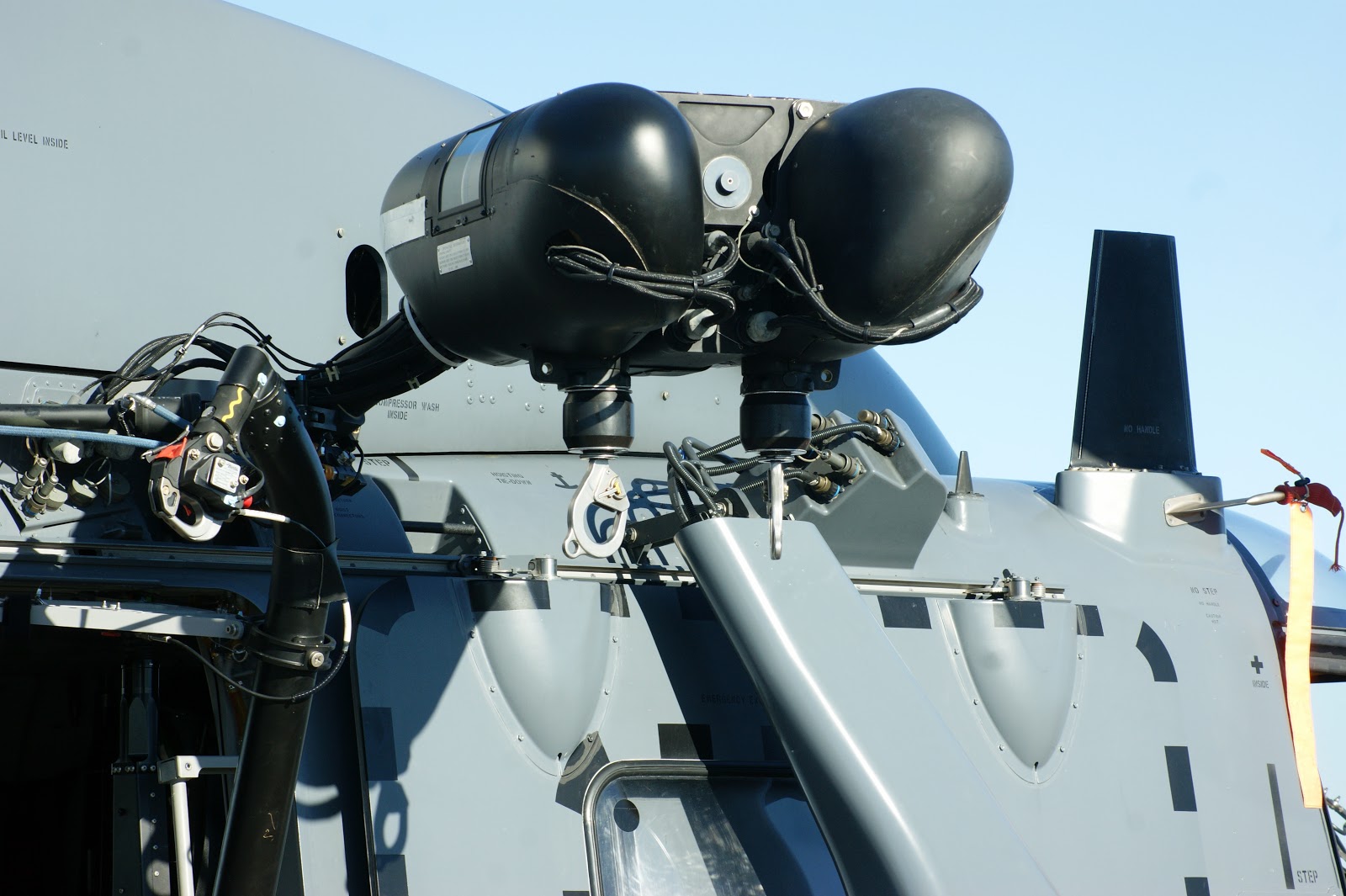
Tail assembly NZ3304 NH90 of 3 Squadron RNZAF


Winching gear
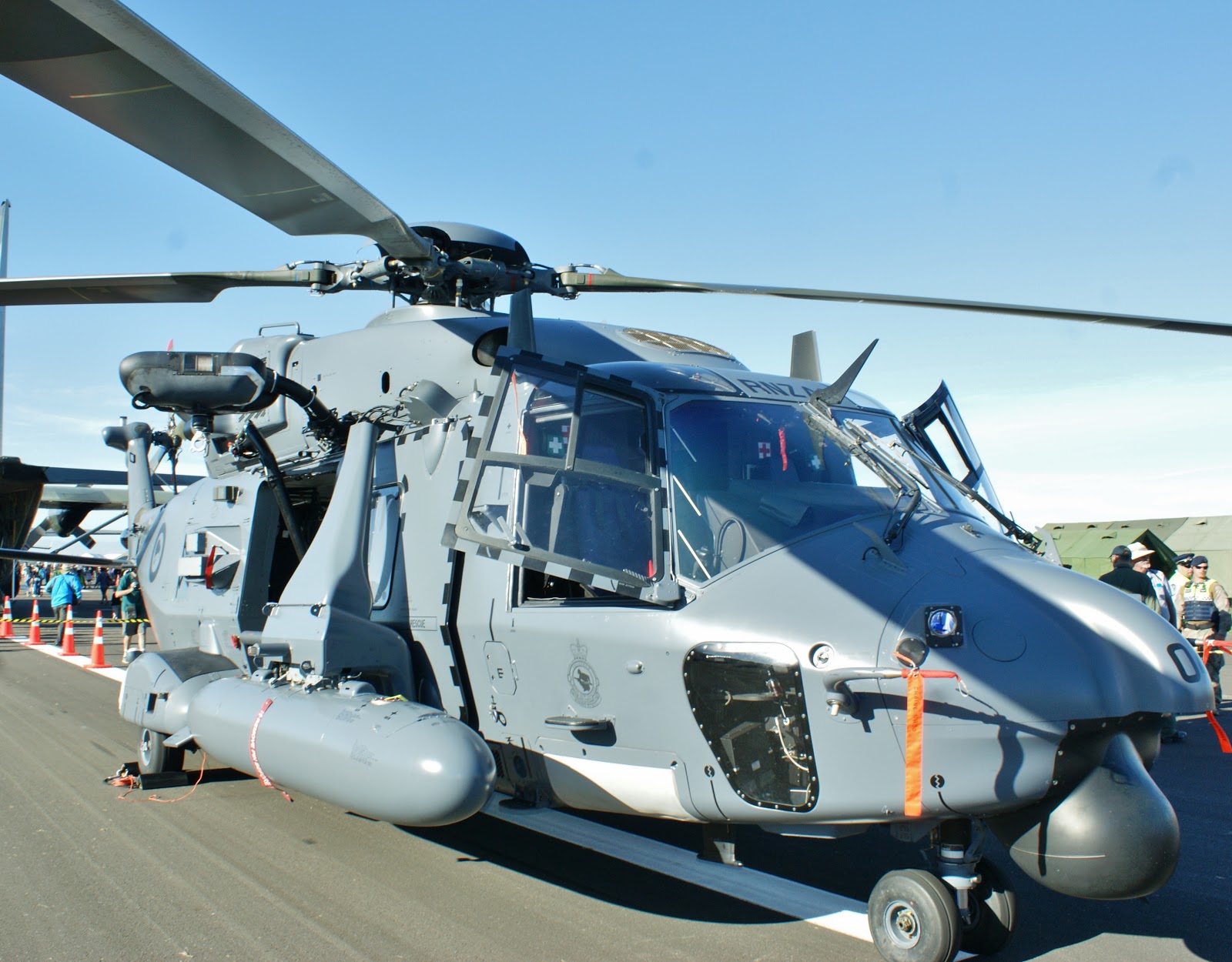


The NH90 is an advanced medium utility helicopter, capable of undertaking a wide variety of roles. It incorporates new and sustainable technologies and represents a substantial improvement on the Iroquois that will provide the NZDF with a contemporary, highly capable and deployable helicopter. The NH90 will be used for frontline military and civil operations.
The RNZAF has eight NH90 helicopters in its fleet.

The NH90 can carry up to 12 fully equipped soldiers or up to 18 lightly equipped troops (allowing for door gunners). It can carry up to 9 stretchers plus medical staff or palletised cargo; it can also lift the Army’s Light Operational Vehicle.

It has the capability to support ground operations, disaster relief, search and rescue, counter-drug operations and counter terrorism. Police, Customs, Maritime NZ, Civil Defence, Foreign Affairs and Trade, NZAID and the Department of Conservation all will be able to make effective use of the NH90.

Aircraft: NH90
Manufacturer: NATO Helicopter Industries (NHI)
Power plant: 2 x Rolls-Royce Turbomecca RTM 322-01/9; 2,227 SHP each)
Length: 19.56m (rotors turning)
Width: 4.62m (fuselage and stabilator)
Height: 5.23m (rotors turning)
Max weight: 10,600kg, can be extend to 11, 000kg in certain operational situations
Max underslung load: 4,000kg
Max speed: 300kph (164kts)
Fuel: 2035 kgs (internal), two 500kg external fuel tanks
Range: 780km (420nm) with internal fuel
Endurance: 4.45 hours on internal fuel
Crew: Two pilots and one or two Helicopter Loadmasters (HLM)
Capacity: Eighteen troops in light order (allowing for door gunners)


Tail assembly folded for transport on naval vessels or road


Kaman SH-2G(I) Super Seasprite

The Kaman SH-2G(I) Super Seasprite is an advanced maritime weapon system and proven day/night/all-weather multi-mission helicopter.  Originally designed to meet the exacting requirements of the U.S. Navy, the SH-2G Super Seasprite has the highest power-to-weight ratio of any maritime helicopter, assuring a safe return-to-ship capability even in single-engine flight conditions. 

It is the largest, most powerful small ship helicopter in use today and is recognized for its mission effectiveness, support, and unmatched performance.  The SH-2G is currently operated by the Royal New Zealand Navy, the Egyptian Air Force and the Polish Navy. 

Its robust design, outstanding stability, and excellent reliability have been proven through more than 1.5 million flight hours. The SH-2G is a multi-mission maritime weapon system designed to fulfill anti-submarine warfare (ASW), anti-surface warfare (ASuW), over the horizon targeting, surveillance, troop transport, vertical replenishment, search and rescue, and utility missions. 


The Kaman SH-2F Seasprite, was operated in the first decade of the 2000s  whilst the SH-2G(NZ) Seasprite helicopters were being built to replace these aircraft. In April 2013, the government approved the purchase of an upgraded and expanded Seasprite helicopter fleet for the NZDF - the SH-2G(I) Super Seasprite helicopter.

No. 6 Squadron is one of the force elements under the command of the Air Component Commander HQ JFNZ (ACC) and remains under full command of the Chief of the Air Force.

Operational command (OPCOM) when ships' flights are required to embark, is assigned by ACC to the Maritime Component Commander (MCC), who will in turn assign operational control (OPCON) to the ship's CO. The squadron is located at RNZAF Base Auckland.

Squadron History
The squadron operates Kaman SH-2G(I) Seasprite helicopters.
To meet NZDF Naval Helicopter Force requirements, the Squadron provides:
  • operational tasks and training for the RNZN.
  • surface warfare missions and surveillance operations.
  • underwater warfare.
  • helicopter delivery services/logistics.
  • day and night search and rescue.
  • medical evacuation.
  • helicopter operational conversion (Seasprite) training for pilots, observers and helicopter crewmen.
  • assistance to other government agencies.

An increase in the fleet from five to eight allows the helicopters to be embarked on the two ANZAC Class Frigates, HMNZS Te Mana and Te Kaha, as well as the offshore patrol vessels HMNZS Otago and Wellington, and the multi-role ship HMNZS Canterbury with aircrew from the RNZN and maintainers from the RNZAF. 
The Squadron is currently annually allocated approximately 1000 flying hours to achieve the stated tasks.

In July 1998, Naval Support Flight moved from their historic home at Hobsonville to the Whenuapai, Auckland air base and on 31 October 2005, was reformed as No. 6 Squadron, RNZAF.

Naval aviation have been involved in a number of operations:

Multi-nation Interdiction Force (1980's, 1996, 1999)
Bougainville and Papua New Guinea (1990's)
East Timor (1999-2000)
Solomon Islands (2000, 2001)
Operation Enduring Freedom (2002, 2003, 2004)


I always find air show sea rescue simulations a little awkward to watch, and this was no exception. Whilst it does display the aircraft's capabilties, it seems just somehow wrong to see someone sitting on a trailerboat being"rescued" on dry land , and then seeing the boat and trailer then being towed away by a ute.


Oldest of NZ's workhorses, the Bell Sioux 
Bell 47G-3B-2 Sioux

The first helicopters to be flown by the RNZAF, six B47G-3B-1 (NZ3701 -NZ3706) were delivered in 1965. Seven B47G-3B-2 (NZ3707 – NZ3713) were purchased in 1968 and delivered during 1970. All Bell 47G-3B-2 have been retired and replaced by the Agusta A109LUH since 2011.
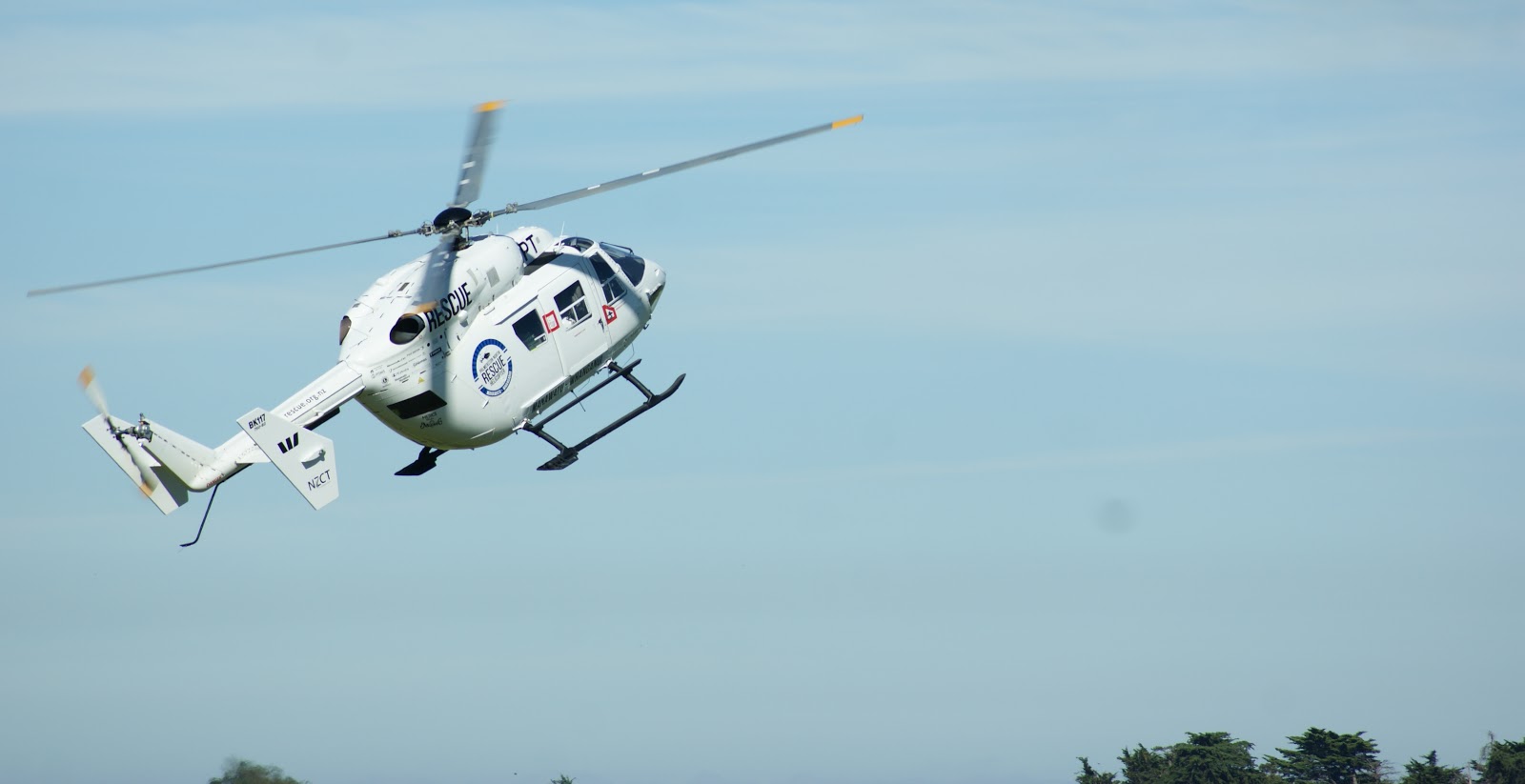

There was also a display of precision flying from some of the many rescue helicopters that do such fantastic life-saving work all over the country. In this case it is ZK-IPT, a Palmerston North based 
Kawasaki BK-117 B-2. Two or three were present at the event.

Thursday, 30 March 2017

RNZAF 80th Anniversary Air Tattoo

The Royal New Zealand Air Force (RNZAF) celebrated its 

80th anniversary with an

Air Tattoo at RNZAF Base Ohakea 

 25-26 February 2017.


The two day event focused on military aircraft and featured an international Air Force contingent.Aircraft from a number of nations were present. What a feast for aviation enthusiasts.

The event also showcased the Black Falcons aerobatic team flying the T-6C Texan trainers, and many static displays that provided an opportunity to see, and understand, the work of the New Zealand Air Force.


RAAF F18 taxi at Ohakea

I attended with the Jensen Family. Wayne and Sarah came down from Auckland, Sarah's dad came up from Wellington, and George, a retired pilot himself lives in Kapiti. I went completely snap-happy, and wandered around in a contented daze, giving my shutter finger a workout like it has not had in some time. Thank goodness for digital photography. In the old days I would have needed a trailer for all the film!


I too so many photos that it may be best to share them in batches. When the camera's second battery eventually died, I had to switch to my cellphone, which also eventually surrendered under the onslaught. Thought 'd share a couple of photos and some video first !


F18s coming to rest


Monday, 14 October 2013

Pelican 16 Down : The sad story of a SAAF Shackleton (Part 3 of Shackleton MR3 in SAAF Service)

Pelican 16 Down:
The story of a grand old lady lost in the Sahara desert

Part 3 of the Shackleton MR3 in SAAF Service

SAAF Shackleton 1716, call-sign "Pelican 16" was the first Avro Shackleton built for the South African Air Force and the first to go into service upon its delivery on August 18th, 1957. Eventually joined by seven other aircraft, Pelican 16 formed part of the SAAF's 35 Squadron and for the next 27 years served as part of South Africa's Air Force patrolling the sea lanes around the Cape of Good Hope.


Side-lined by a combination of air frame fatigue and lack of spares due to apartheid-era embargoes on South Africa, Pelican 16 and the balance of the SAAF's Shackleton fleet were placed into storage by 1990.


Restored to flying condition by volunteers in 1994, Pelican 16 was offered to take part in a multi-stop air show tour in the UK and departed South Africa for England on July 12th, 1994, taking in the famous Farnborough Airshow. At the time she was the only airworthy Shackleton MR3 in the world.


Flown by a group of active SAAF pilots, Pelican 16 was operating over the Sahara desert in temperatures exceeding 38 deg C/100 deg F on the night of July 13th when her number 4 engine began to overheat from a coolant leak and had to be shut down. Moments later, a bolt connecting her two contra-rotating propellers in her no 3 engine failed, causing the assembly to overheat and melt and leaving the fuel-laden plane without any functional engines on its right wing.

Image

Image

Left no option but a controlled ditching in the desert below, Pelican 16's pilots successfully belly-landed their aircraft on flat sands where it slid to a stop at this location. Though none of the crew were injured by the landing, all 19 men were miles from any assistance and in the middle of an active war zone. Through the next several days, the crew of Pelican 16 made their way to the safety of friendly forces and returned safely to South Africa.


The rescue

Today, the wreckage of Pelican 16 still remains where she came to a stop on the night of June 13th, 1994.

On the morning of 13 July 1994 the headline news in The Argus newspaper read “SAAF Plane Down in Desert”. Today, twelve years later and although she was found, Pelican 16 is for the records still “missing-in-action”; and remains at the crash site (click for panoramio map)


Enough has been written in the past on Pelican 16 and her last resting place in the Western Sahara when she hugged the sand with her belly on the night of 13 July 1994 after an emergency landing when her number 3 and 4 engines on her starboard side ignited and burned. A documentary by Andrew White told the story in great detail. The radio transmission that was made with military precision and efficiency are told to be used even today by the SA Air Force in their training as a text book example of how it should be done.


One can only begin to understand the legacy of, and the passion for this remarkable aircraft once you have heard for yourself the mighty roar of the four Rolls Royce Griffon engines. Everything else is only then put into perspective if you are lucky enough to touch the fuselage and ride the winds on the mighty wings of this Avro Shackleton MK3 called the “Pelican”.


This aircraft to some is bigger than religion and greater than fantasy…

Today a few survivors from the crash still believe that she should have been brought home years ago and others are of the opinion that it is significant to let her rest where she came to a halt.

Be as it may South Africa is still very fortunate to have Pelican 22 still in flying condion (albeit grounded)  at Air Force Base Ysterplaat in Cape Town and to hear the four fabulous Griffons growl!


The crew who had to leave Pelican 16 behind:

Eric Pienaar (Pilot)
Peter Dagg (Co-Pilot)
John Balledon (2nd Co-Pilot)
Derick Page (Public Relations Coordinator)
Blake Vorster (Navigation Leader)
Horace (Hartog) Blok (2nd Navigator)
Frans Fourie (Flight Engineer)
Buks Bronkhorst (Aircraft Fitter)
JP van Zyl (Flight Engineer)
James Potgieter (Aircraft Fitter)
Lionel Ashbury (Telecom Operator)
Freddy Deutshmann (Radio Operator)
Chris Viviers (Radio Operator)
Pine Pienaar (Aircraft Electrician)
Spud Murphy (Radio Technician)
Ron Bussio (Museum Curator)
Gus Gusse (Aircraft Fitter)
Bobby Whitfield-Jones (Instrument Fitter)
Tony Adonis (Treasurer)


Lost in the desert sands: A first-hand account:

The South Africans Air Force crew who crash-landed this plane in the Sahara Desert were rescued with the help of a message dropped from the sky and a rebel movement.

This is all that's left of the SA Air Force Shackleton 1716, forever abandoned in the sand.

"No way will you ever hear that sound again," said mission commander Hartog "Horace" Blok.

He was reminiscing over the long-gone sound of the Shackleton's four Rolls Royce Griffon engines.

"The sound those engines make is just so unique. It's a sound that nothing can emulate, it's a beautiful sound."

Blok is now involved in aviation in the private sector.

These photographs were taken by United Nations officials who passed by the wreck recently.

In July 1994 the Shackleton, known as Pelican 16, had been refurbished in a huge project, and the team was flying from SA to England to take part in a series of airshows.

At the time The Star reported the aircraft was one of only two airworthy Shackletons left in the world, and had about 1 000 hours of airframe time left before being permanently grounded.

It had been used for maritime patrols off the South African coast until a few years before its last trip.

But en route to the English airshows, at night over the Sahara, the Shackleton had engine trouble and pilot Eric Pienaar had to crash land at 1.40am.

"It was pitch black. There was no horizon," remembered Blok.

"We just flew until we hit something.

"It's an anxiety attack that I never ever want to relive."

Driven by terror of fire, they fled from the plane and scattered.

Blok blew a whistle to get everyone together and, joining hands, they counted all 19 occupants.

Only two were slightly injured.

Still holding hands to stay together, one survivor led them in the Lord's Prayer - a ritual re-enacted at the survivors' union every year. 

They had sent mayday messages shortly before crashing, but after that lost radio contact.

On the ground they set off a satellite-linked signal beacon - initially ignored by rescuers who disbelieved a signal from the Sahara.

At sunrise, they attracted the attention of a French naval plane from Morocco (inaccuate- Ex Dakar, Senegal - see erratum below-) by burning a tyre.

The French plane couldn't land, but eventually got help - by writing a note, shoving it into a plastic Coke bottle and dropping it on a UN team in two vehicles in the desert.

"One aircraft has crashed near your position - 19 persons on board.

"Position 015/10km from you. We try to contact you on frequency 1215 or 243 MHZ. GPS position 2238 north 01314 west," read the note.

Blok said the UN team fortunately included someone who spoke English, so could read the note.

Horrified at the prospect of 19 people mangled in an air crash, the UN team rushed to the scene.

"And there were the South Africans, beers in hand," said Blok.

The crash site was near Agwanit in the Western Sahara, for years in dispute between Morocco and the Polisaro Front, a Sahrawi rebel movement working for independence for the region.

The Shackleton survivors were helped by the Polisaro, even though South Africa did not recognise its government-in-exile until 10 years later.

The territory is still disputed.

"They took extremely good care of us," said Blok.

Within hours, the survivors had all been picked up.

"The last one of us left the crash site at 11.45am local time," Blok said.

The plane was written off as too difficult to salvage.

Now all that remains in the desert is the wreck of the grey- and-white plane, one of the last Shackletons to fly.

Update 25.03.2015

Erratum: Updated facts-  The Search and Rescue operation that found Pelican 16 was operated by a French 22.F Squadron Breguet Br 1150 Atlantic 1 (22.F is based in Nimes, France)


The Atlatic 1 operated out of Dakar (Senegal) at the time; and not Morocco, as reported in my article.
Thank you to Sebastien Jouve, who was the radio operator on board the rescue  flight for setting the record straight.

Amelia Earhart's sad demise

Dozens heard Amelia Earhart's final, chilling pleas for help, researchers say Distilled from 2 posts in the  Washington Post a...