Wednesday, 18 September 2013

Boeing Dreamliner 787-9 takes to the skies: Air NZ the first customer

Dreamliner 787-9


A longer version of Boeing's Dreamliner made its first flight, passing a key milestone for a plane that should be more profitable both for Boeing to sell and for its customers to operate than the current production model.

Orders have been places by several carriers, Air New Zealand being the first, also Canada, Japan, KLM, Air France, Virgin, and others


The 787-9 jet, which left the ground at 11.02 am local time has room for 290 passengers, 40 more than the original 787-8 jetliner, and has about 300 more nautical miles (555km) of range.
That means Boeing can charge US$37.7 million ($45.8 million) more for the plane at list price, and airlines can sell more seats on longer routes.
Boeing has unfilled orders for 936 Dreamliners, worth about US$217 billion at list prices, or nearly eight years worth of production at its target construction rate of 10 per month, which it aims to hit by year's end.
About 41 per cent of the orders, or 388 planes, are for the 787-9.


Boeing began selling an even longer version of the jet, the 787-10, in June. It has garnered 50 orders so far. The rest of the orders are for the 787-8.
In its maiden voyage on Tuesday, the 787-9 will fly for about five hours, running detailed tests of its flight controls, part of a nine-month testing program.
The aircraft used for the tests will eventually be delivered to Air New Zealand in mid-2014, Boeing said.


An hour behind schedule, in overcast weather, the jet rose smoothly before TV crews, reporters and thousands of Boeing employees, who watched from an adjacent runway. The flight began at Paine Field in Everett, Washington, near Boeing's main 787 assembly lines, and is due to end at Boeing Field south of Seattle, near Boeing's 737 factory.
The jet was scheduled to fly at a speed of up to 250 knots and altitude of 16,000 feet if the two test pilots aboard feel it is safe, Boeing said.
The jet will fly over Puget Sound and then head inland to Moses Lake, Washington.                                 (Reuters)

Tuesday, 17 September 2013

Airworthy Messerschmitt BF109 Crashes

Red Seven Crashes in Denmark


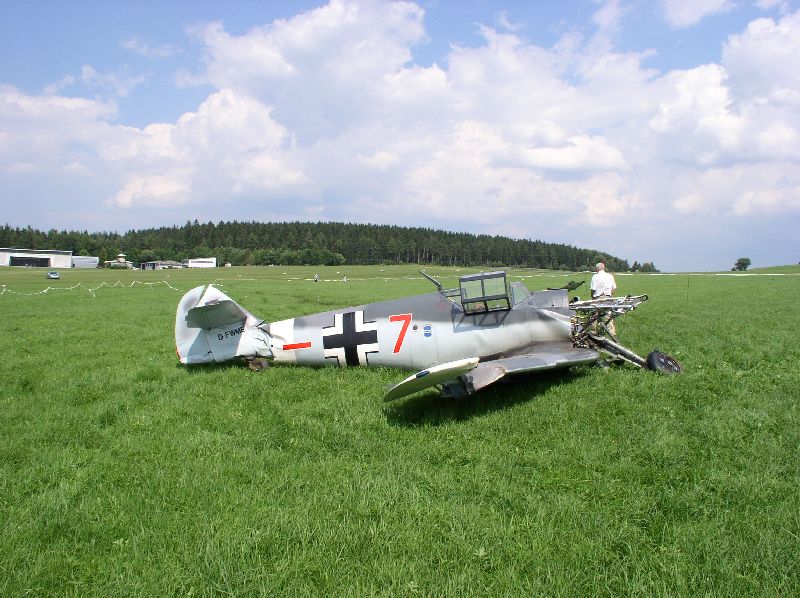
A charmed life: This Me Bf 109 has survived 3 crashes.

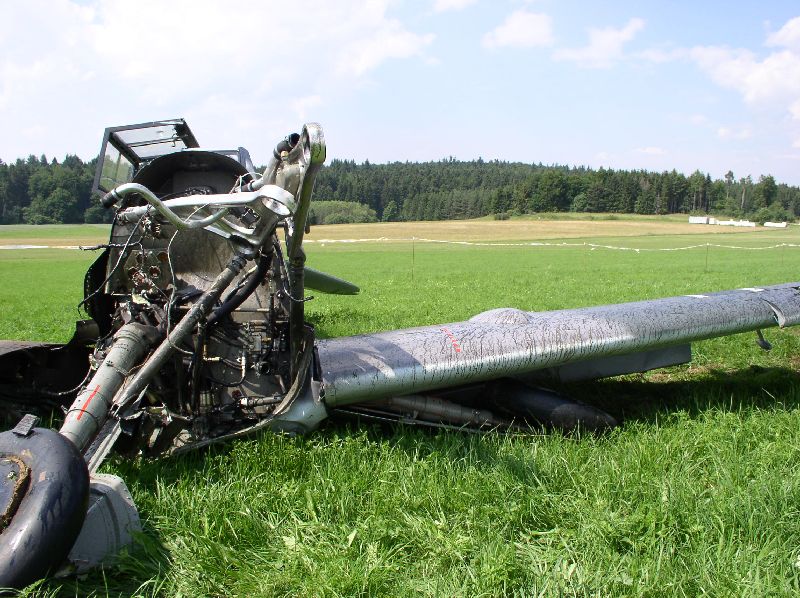
The pilot was unhurt and the aircraft does not seem to have suffered heavy damage. The propeller is shattered and the engine will certainly have suffered, but the pilot’s decision to land in an unharvested wheat field probably helped to limit the damage to the airframe.

This is the third time that this aircraft has been damaged. It crashed in 2005 and, after being rebuilt, it made a wheels-up landing in 2008.

The Messerschmitt Stiftung's "Rote Sieben" (Red Seven) was built as a Hispano (CASA) license built Bf-109, the Hispano HA-1112 M-1L Buchón, Spain in 1950 with c/n 139. After delivery she first served with the Ejercito del Aire with serial C.4K-75.

After being stuck of charge she was stored on Tablada before being sold to the United Kingdom in 1968, registered as G-AWHH. She starred as a Bf-109E "yellow 11" and "red 14" in the famous movie "The Battle of Britain". 

For another role in a movie she was reconverted into a P-51 "Mustang". Therefore a fake belly-cooler was attached. But she unfortunately crashed during a take-off and was severely damaged.

After her accident she was sold to the USA being registered as N3109G and restored to flying condtion. She was flown for the first and last time from Casper, Wyoming in 1986 as she crashed on take-off. After she was "repaired" to represent an Bf-109E-4 in static condition and in open storage. 

She was in a poor state when she arrived in Augsburg, Germany in the 1990s where a couple of enthusiasts had the ambitious plan to restore her to Bf-109G-4 "Gustav" specifications, including the Daimler-Benz DB605 engine.

Her first owner gave up on the plan fairly soon an in 1998 she was moved to the Messerschmitt Air Company (MAC) at Albstadt-Degerfeld. There she would undergo an expensive and time consuming restoration, that took over 30.000 hours. The work was completed in 2004 and on October 8 of that year she was presented to the public; the Rote Sieben had come to life!

Image

On July 15, 2005 disaster struck as she was involved in a crash landing. While she touched down at her home, Albstadt-Degerfeld, the main gear collapsed resulting in a violent ground spin. The engine broke of the fuselage and the fighter was heavily damaged. 


Image

Image


At that point it wasn't clear if she would ever take the skies again. While being repaired the MAC was having difficulties to raise the funds to finalize the needed work and in December 2007 she was adopted by the Manching based Messerschmitt Stiftung. On April 2, 2008 she made, with Walter Eichhorn as her pilot, her first 15 minute test flight.
But then on April 15, 2008, just two weeks after her first flight, disaster struck again. While on approach to Manching, the pilot, Walter Eichhorn, found out that the right main gear of the 109 wasn't locked. After several attempts he found himself forced to make a wheels-up landing. 
Image


The "Rote Sieben" was damaged, but thanks to the superb landing of Eichhorn the damage was kept to a minimum. After the previous accident in 2005, this mend that yet another round of repairs where necessary. 

After the repairs were made the "Rote Sieben" made her first flight on February 19, 2009 with Walter Eichhorn as pilot.


ubehandlet_webpix_960nolkm.jpg


Now again belly landed in a corn field on August 18th 2013 during an airshow display at Roskilde Airport, Denmark. The pilot was unharmed, and the aircraft sustained only minor damage, including a completely broken propeller:


Wednesday, 14 August 2013

Angels 20: Clocked 20 000 views this week

Angels 20: Clocked 20 000 views this week


Many thanks to all my readers. My blog clocked 20 000 views this week.
Many thanks from Aircraft Nut!


Monday, 12 August 2013

Car crash fire water-bombed!

Car Crash Water-bombed

How cool is this. Overkill, but cool

Canadair CL-415 "Super cooper" water bomber aircraft are not only used to support ground firefighting activities in case of forest fires.

\

The “Superscooper” planes can be extremely useful when you need to extinguish fire following a car crash and your firefighting trucks are several miles away.


Authorities in rural Canada have turned to an aerial water bomber to put out a dangerous fire after a truck crash.

Last week a semi-trailer collided with a road grader on the Trans-Labrador Highway in far northern Canada and when the wreck began to smoke, local firefighters called in their largest weapon, CBC News reports
Recently released footage shows the giant water-bombing aircraft slowly approaching the crash site before unleashing a torrent of water and fire retardant to extinguish the blaze.

The footage was taken by Shawn Noseworthy, a manager with Humber Valley Paving who was working on the road.
The driver of the truck was pulled to safety by the driver of the grader and taken to hospital for non-life-threatening injuries.
Source: CBC News

Check out the amazing video:

http://www.stuff.co.nz/motoring/videos/9034214/Water-bomber-puts-out-highway-crash-fire

Wednesday, 7 August 2013

Airliner hits cow

Lion Air from Indonesia, already known for poor safety record, hits a cow


The pilot reports smelling burning meat


A Lion Air jet carrying 117 people has hit a cow while landing and skidded off a runway in eastern Indonesia.
No injuries were reported, but the incident forced the cancellation of flights, stranding hundreds of passengers traveling for the Eid holiday.
The incident occurred Tuesday night (local time) as the Boeing 737-800 plane was landing at Jalaluddin airport in Gorontalo on Sulawesi island with 110 passengers and seven crew, Transportation Ministry spokesman Bambang Ervan said.
He said three cows were on the runway, and the plane hit at least one of them and careened off the runway before coming to a stop.
The incident is under investigation.
An airport official said several flights were cancelled and planes resumed landing today.
In April, a Lion Air plane belly-flopped into the ocean just short of the runway off the resort island of Bali. All 108 people aboard survived.
Associated Press


Sunday, 28 July 2013

New NZ Choppers take to the Skies in Exercise:


A109s

The Defence Force's newest choppers will be soaring through the skies above the Waiouru Military Camp this week ahead of a major training exercise later in the year.
The helicopter transition unit (HTU), based at the Ohakea Air Force Base, will spend this week at Waiouru with three NH90s and two A109s helicopters to train with soldiers from Queen Alexandra's Mounted Rifles regiment.
The training will help prepare the helicopters for the Southern Katipo exercise being held in South Canterbury in November.
About 1000 army, navy and air force personnel will take part in the large-scale exercise, which will run over several 
weeks.

NH90


Click here for NZ NH90s video: Video of NH 90s
It was the first time such training had been undertaken with the helicopters.
''[We're here] to test out and train for our ability to deploy, away from our home base of Ohakea.
''The aim is to maintain and operate helicopters from an austere environment without the luxury of hangars and the day-to-day help we get.
This will help us build up procedures so we can deploy the aircraft within New Zealand and overseas.''
The unit was practising flying techniques, including low flying, troop carrying and drop-off and pickup techniques in complex terrain.
The NH90 was ''quite different'' from the Iroquois in what could be done with them, as it was able to deploy in more situations, cope with harsher environments and combat high-tech opposition, he said.
(Photos off net, News item Manawatu Standard)

Monday, 15 July 2013

RNZAF De Havilland Vampires

RNZAF De Havilland Vampires

I went to the Soutward Car Museum in Paraparaumu, New Zealand with some visitors on Saturday, and found myself delighted to see a Vampire Aircraft suspended from the ceiling!


The aircraft is a Vampire (DH 100) FB.5 (NZ5770)


The aircraft is NZ5570, late of the RNZAF and Former Royal Air Force WA444


Previously WA444 delivered to RAF 20 July 1951 and served with Nos. 145 and 234 Squadrons and No. 2 Tactical Air Force Communications Support Unit. SOC with RAF on 17 May 1956.

 Shipped to New Zealand on 'Hertford". BOC 25 June 1956. Took part in Exercise Silver Bullet the farewell tour of New Zealand to mark the withdrawal of the Vampire during late 1972. 


Flown to Woodbourne for storage 15 December 1972 and sold by GSB tender number DO1523 16 March 1973. To Swedish Museum but sale fell through and aircraft was retendered.

Sold to Southward Motor Museum, Paraparaumu. Presently on display at Southward Motor Museum, Paraparaumu.


Also on display is this Bleriot replica, used in he 1960's movie 
'Those Magnificent Men in their Flying Machines'.


Other Kiwi Vampires:
(Copyrights as indicate, and happy to credit if notified)
Vampire NZ5765  
Wanaka 
2nd April 2010
Photo by George Canciani

Vampire NZ5772
Ohakea 1980s 
Photo via Winstonwolfe Wikipedia

DH.115 Vampire 
NZ5710
RNZAF Photo

Vampire NZ5755 
Lilydale 
21st November 2004
Photo by George Canciani


Sunday, 7 July 2013

Korean jet crashes at San Francisco Airport: Pilot error to blame?

Korean jet crashes at San Francisco Airport: Pilot error to blame?


 The plane that crashed at San Francisco's airport was flying "significantly below" its intended speed and its pilot was in training.


Asiana Airlines said the pilot in charge of landing the Boeing 777, Lee Kang-kook, was training for the long-range plane and it was his first flight to that airport with the jet. Asiana Airlines said he had previously flown to San Francisco on different planes and was being assisted by another pilot more experienced with the Boeing 777.


Information collected from the plane's cockpit voice recorder and flight data recorder indicated that there were no signs of trouble until seven seconds before impact, when the crew tried to accelerate, NTSB Chairwoman Deborah Hersman said at a news conference at the airport.

Opinion on possible cause of this crash:

Images FAA

A stall warning in which the cockpit controls begin to shake activated four seconds before impact, and the crew tried to abort the landing and initiate what is known as a "go around" maneuver 1.5 seconds before crashing, Hersman said.


"Air speed was significantly below the target air speed" of 137 knots, she said. The throttle was set at idle as the plane approached the airport and the "engines appear to respond normally" when the crew tried to gain speed in the seconds before the crash, Hersman said.

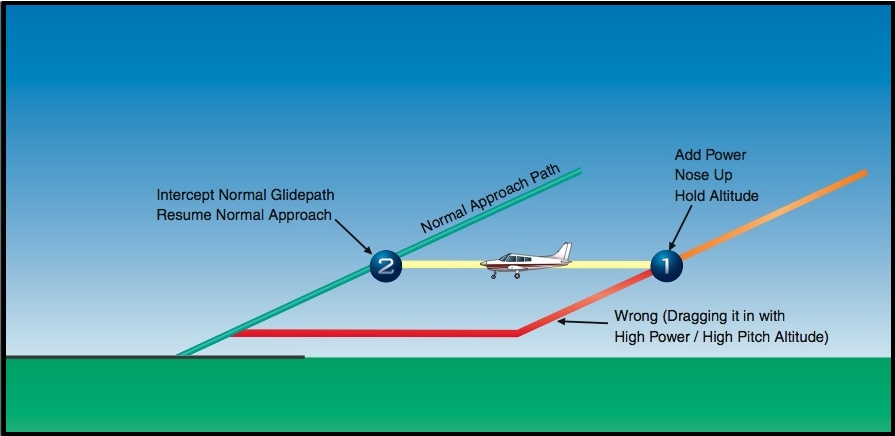
If a landing cannot be made on the first third of the runway, or the airplane drifts sideways, the pilot should  EXECUTE A GO-AROUND.

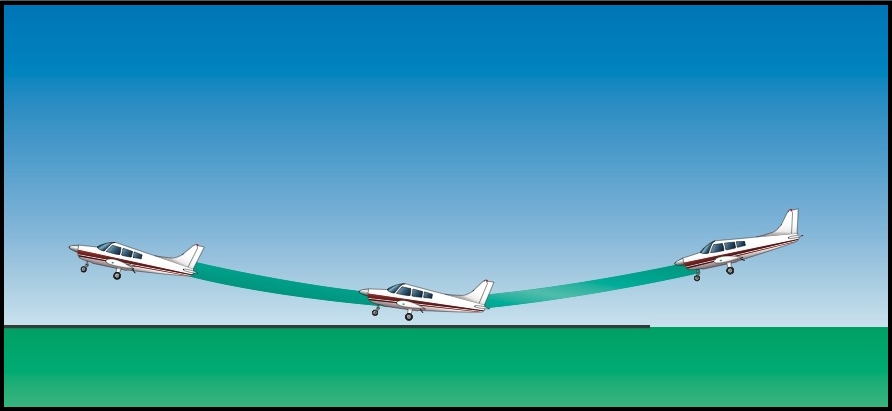
Diagram showing ballooning in roundout.

Ballooning During Round-out

If you misjudge the rate of sink during a landing and think the airplane is descending faster than it should, there is a tendency to increase the pitch attitude and angle of attack too rapidly. This not only stops the descent, but actually starts the airplane climbing, known as ballooning.

Ballooning can be dangerous because the height above the ground is increasing and the airplane may be rapidly approaching a stalled condition.I suspect the plane balloned, and the tail slammed into the ground as the pilot tried to climb out of the stall/ballooning.

When ballooning is excessive, it is best to EXECUTE A GO-AROUND IMMEDIATELY; and  NOT ATTEMPT TO SALVAGE THE LANDING. 

Power must be applied before the airplane enters a stalled condition. Reuters reports that the stall warning had already sounded, so there was no powering out of the descent.


Two Chinese teenagers died in the incident and more than 180 people were injured, local officials said. In a tragic new twist, the San Francisco Fire Department said that one of the teenagers may have been run over by an emergency vehicle as first responders scrambled to the scene.


"One of the deceased did have injuries consistent with those of having been run over by a vehicle," fire department spokeswoman Mindy Talmadge said. "Many agencies were on the field yesterday."

Autopsies to determine the cause of death will be conducted by the San Mateo County coroner's office, officials said.

More than 30 people remained hospitalised late. Eight were listed in critical condition, including two with paralysis from spinal injuries, according to hospital officials.

The charred hulk of the aircraft remained on the airport tarmac as flight operations gradually returned to normal. Three of the four runways were operating by Sunday afternoon.


Hersman said it was too early to speculate on the cause of the crash. The data recorders corroborated witness accounts and an amateur video, shown by CNN, that indicated the plane came in too low, lifted its nose in an attempt to gain altitude, and then bounced violently along the tarmac after the rear of the aircraft clipped a seawall at the approach to the runway.


Asked whether the information reviewed by the NTSB showed pilot error in the crash, Hersman did not answer directly.

"What I will tell you is that the NTSB conducts very thorough investigations. We will not reach a determination of probable cause in the first few days that we're on an accident scene," she told reporters.

Asiana said mechanical failure did not appear to be a factor in the crash. Hersman confirmed that a part of the airport's instrument-landing system was offline on Saturday as part of a scheduled runway construction project, but cautioned against drawing conclusions from that.

"You do not need instruments to get into the airport," she said, noting that the weather was good at the time of the crash and that the plane had been cleared for a visual approach.

The Asiana flight originated in Shanghai and was flying to San Francisco from Seoul with 291 passengers and 16 crew members on board. Several large groups of Chinese students were among the passengers.


People on the flight said nothing seemed amiss until moments before the plane hit the ground. Pictures taken by survivors showed passengers hurrying out of the wrecked plane, some on evacuation slides. Thick smoke billowed from the fuselage and TV footage showed the aircraft gutted and blackened by fire. Much of its roof was gone.

Interior damage to the plane also was extreme, Hersman said on CNN earlier on Sunday.

"You can see the devastation from the outside of the aircraft, the burn-through, the damage to the external fuselage," she said. "But what you can't see is the damage internally. That is really striking."


The NTSB released photos showing the wrecked interior cabin oxygen masks dangling from the ceiling.

The dead were identified as Ye Meng Yuan and Wang Lin Jia, both 16-year-old girls and described as Chinese nationals who are students, Asiana Airlines said. They had been seated at the rear of the aircraft, according to government officials in Seoul and Asiana, and were found outside the airplane.

Hersman said the first crew of emergency workers to arrive at the scene included 23 people in nine vehicles. San Francisco Mayor Ed Lee said a total of 225 first responders were involved.

"As chaotic as the site was yesterday, I think a number of miracles occurred to save many more lives," Lee said at the airport news conference. Appearing later at San Francisco General Hospital, he declined to address whether one of the Chinese teenagers may have been run over.


The crash was the first fatal accident involving the Boeing 777, a popular long-range jet that has been in service since 1995. It was the first fatal commercial airline accident in the United States since a regional plane operated by Colgan Air crashed in New York in 2009.

"For now, we acknowledge that there were no problems caused by the 777-200 plane or (its) engines," Yoon Young-doo, the president and CEO of the airline, told reporters on Sunday at the company headquarters on the outskirts of Seoul.

Asiana said passengers included 141 Chinese, 77 South Koreans, 64 Americans, three Indians, three Canadians, one French, one Vietnamese and one Japanese citizen.

Asiana, South Korea's junior carrier, has had two other fatal crashes in its 25-year history.

- Reuters

Amelia Earhart's sad demise

Dozens heard Amelia Earhart's final, chilling pleas for help, researchers say Distilled from 2 posts in the  Washington Post a...