Showing posts with label C. Show all posts

Sunday, 25 May 2014

Back to the Ju 87 Stuka: Part 3: Variants: Production models

Ju 87 Stuka Part 3:
Variants: Production Models

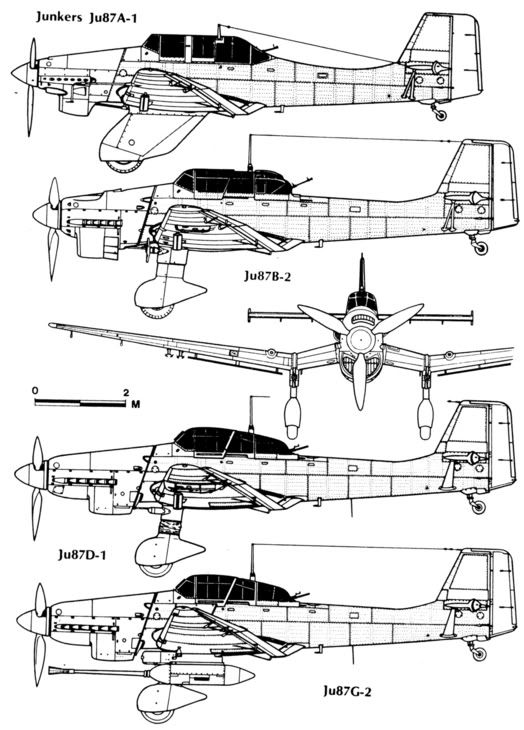


Ju 87B "Bertha"

The Ju 87 B series was to be the first mass-produced variant. A total of six pre-production Ju 87 B-0 were produced, built from Ju 87 A airframes. Test flights began from the summer of 1937. A small number, at least three, served as conversion Cs or Es for potential naval variants.
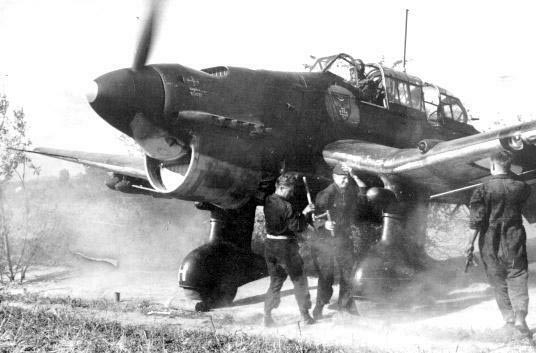

Junker Ju 87B.
[Source: Unknown]

The first production version was the Ju 87 B-1, with a considerably larger engine, its Junkers Jumo 211D generating 1,200 PS (883 kW, 1,184 hp), and completely redesigned fuselage and landing gear. This new design was again tested in Spain, and after proving its abilities there, production was ramped up to 60 per month. As a result, by the outbreak of World War II, the Luftwaffe had 336 Ju 87 B-1s on hand.


The B-1 was also fitted with "Jericho trumpets", essentially propeller-driven sirens with a diameter of 0.7 m (2.3 ft) mounted on the wing's leading edge directly forward of the landing gear, or on the front edge of the fixed main gear fairing. This was used to weaken enemy morale and enhance the intimidation of dive-bombing. After the enemy became used to it, however, they were withdrawn. The devices caused a loss of some 20–25 kph (10-20 mph) through drag. Instead, some bombs were fitted with whistles on the fin to produce the noise after release.


The trumpets were a suggestion from Generaloberst Ernst Udet (but some authors say the idea originated from Adolf Hitler). The Ju 87 B-2s that followed had some improvements and were built in a number of variants that included ski-equipped versions (the B-1 also had this modification), and at the other end, with a tropical operation kit called the Ju 87 B-2 trop.

Italy's Regia Aeronautica received a number of the B-2s and named them the "Picchiatello", while others went to the other members of the Axis, including Hungary, Bulgaria and Romania. The B-2 also had an oil hydraulic system for closing the cowling flaps. This continued in all the later designs.
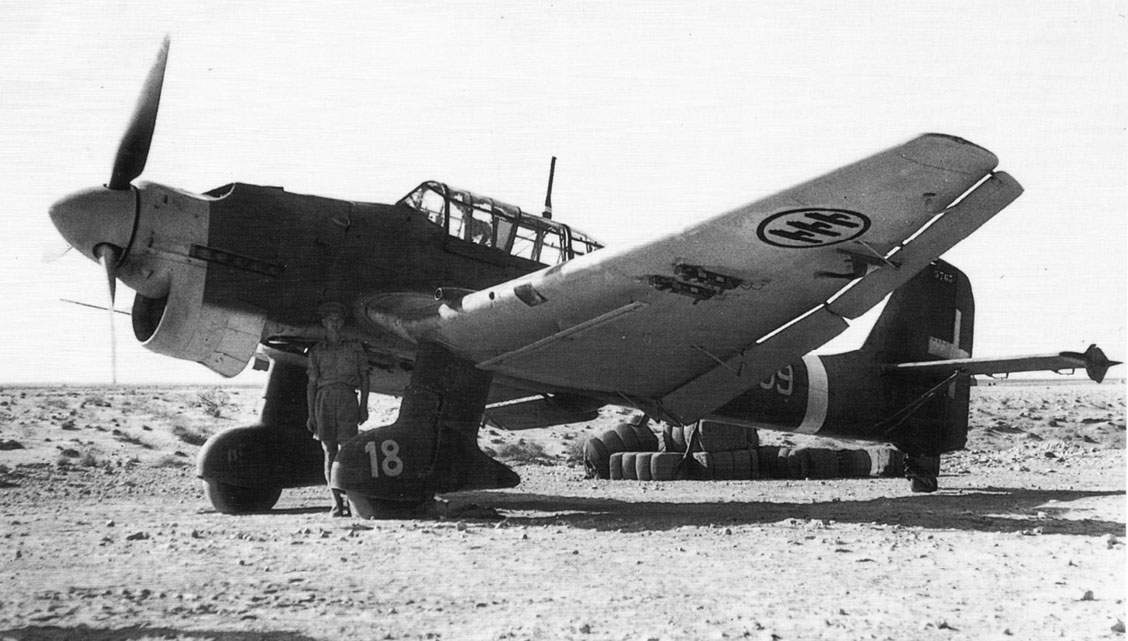

Italian Air force Ju87B2-trop, forced down behind British Lines

The tropicalised versions were initially named the Ju 87 B-2/U1. This was eventually designated the Ju 87 B-2 trop, equipped with tropical emergency equipment and sand filters for the powerplant.

Production of the Ju 87 B started in 1937. 89 B-1s were to be built at Junkers' factory in Dessau and another 40 at the Weserflug plant in Lemwerder by July 1937. Production would be carried out by the Weserflug company after April 1938, but Junkers continued producing Ju 87 up until March 1940. Total production amounted to 697 B-1s (311 by Junkers, 386 by Weserflug) and 225 B-2s (56 by Junkers, 169 by Weserflug). The last Ju 87B rolled off the production lines in October 1940.

Ju 87R
A long range version of the Ju 87 B was also built, known as the Ju 87 R. They were primarily intended for anti-shipping missions. The Ju 87R had a B-series airframe with an additional oil tank and fuel lines to the outer wing stations to permit the use of two 300 L (79,25 US gal) under-wing drop tanks.
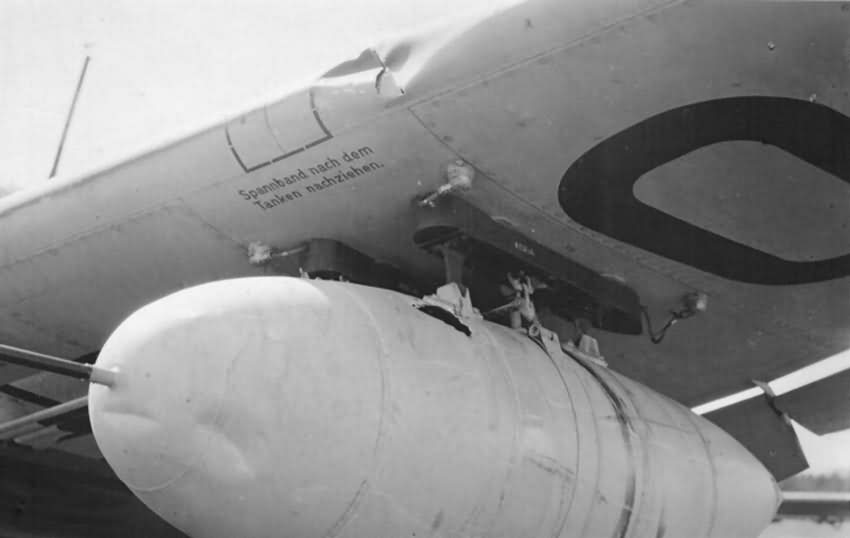
Junkers JU 87 R-2 STUKA May 1941

This increased fuel capacity to 1,080 litres (500 L in main fuel tank of which 480 L where usable + 600 L from drop tanks). To prevent overload conditions, bomb carrying ability was often restricted to a single 250 kg (550 lb) bomb if the aircraft was fully loaded with fuel.
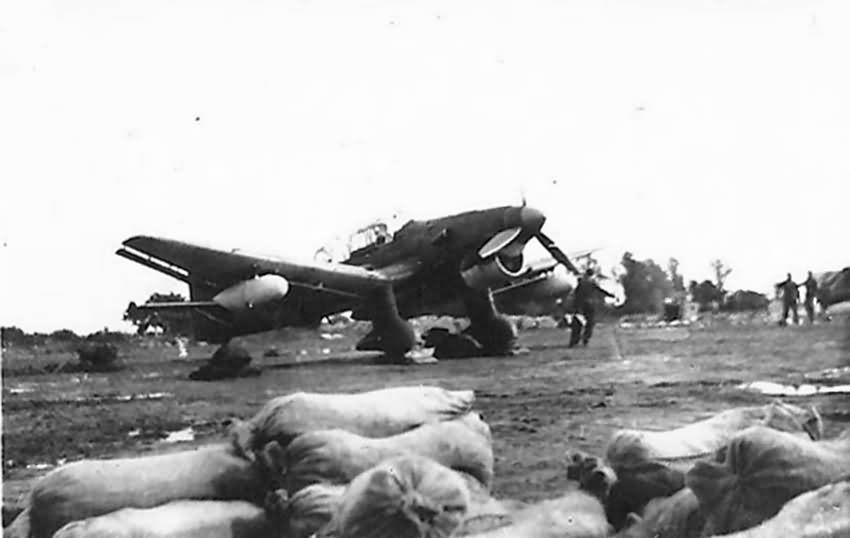
Junkers Ju 87 R 13

Ju 87 R-3

The Ju 87 R-1 had a B-1 airframe with the exception of a modification in the fuselage which enabled an additional oil tank. This was installed to feed the engine due to the increase in range after the addition of the extra fuel tanks.

The Ju 87 R-2 had the same airframe as the B-2, and strengthened to ensure it could withstand dives of 600 kph (370 mph). The Jumo 211D in-line engine was installed, replacing the R-1s Jumo 211A. Due to an increase in overall weight by some 700 kg (1,540 lb), the Ju 87 R-2 was 30 kph (20 mph) slower than the Ju 87 B-1 and had a lower service ceiling. The Ju 87 R-2 had an increased range advantage of 360 km (220 mi). The R-3 and R-4 were the last R variants developed. Only a few were built.

The R-3 was an experimental tug for gliders and had an expanded radio system so the crew could communicate with the glider crew by way of the tow rope. The R-4 differed from the R-2 in the Jumo 211J powerplant.

Total production amounted to 972 Ju 87R (105 R-1, 472 R-2, 144 R-4), all built by Weserflug. The last Ju 87R rolled off the production lines in October 1941.

Ju 87 C


Ju 87 R2

On 18 August 1937, the RLM decided to introduce the Ju 87 Tr(C). The Ju 87 C was intended to be a dive and torpedo bomber for the Kriegsmarine. The type was ordered into prototype production and available for testing in January 1938. Testing was given just two months and was to begin in February and end in April 1938. The prototype V10 was to be a fixed wing test aircraft, while the following V11 would be modified with folding wings. The prototypes were Ju 87 B-0 airframes powered by Jumo 211 A engines. Owing to delays, the V10 was not completed until March 1938. It first flew on 17 March and was designated Ju 87 C-1. On 12 May, the V11 also flew for the first time. By 15 December 1939, 915 arrested landings on dry land had been made. It was found the arresting gear winch was too weak and had to be replaced. Tests showed the average braking distance was 20–35 metres (65–115 feet). The Ju 87 V11 was designated C-0 on 8 October 1938. It was fitted out with standard Ju 87C-0 equipment and better wing-folding mechanisms. The "carrier Stuka" was to be built at the Weserflug Company's Lemwerder plant between April and July 1940.
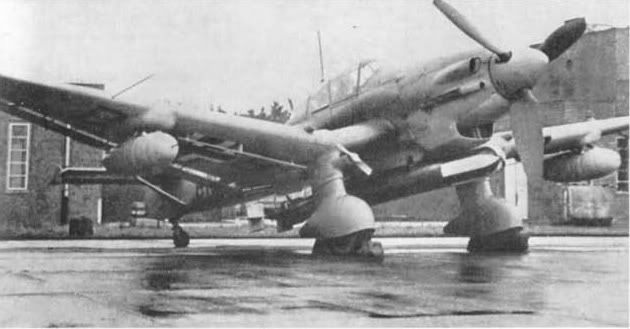

Among the "special" equipment of the Ju 87 C was a two-seat rubber dinghy with signal ammunition and emergency ammunition. A quick fuel dump mechanism and two inflatable 750 L (200 US gal) bags in each wing and a further two 500 L (130 US gal) bags in the fuselage enabled the Ju 87 C to remain afloat for up to three days in calm seas. On 6 October 1939, with the war already underway, 120 of the planned Ju 87 Tr(C)s on order at that point were cancelled. The intention was to launch them off the Graf Zeppelin CV1 class aircraft carriers:
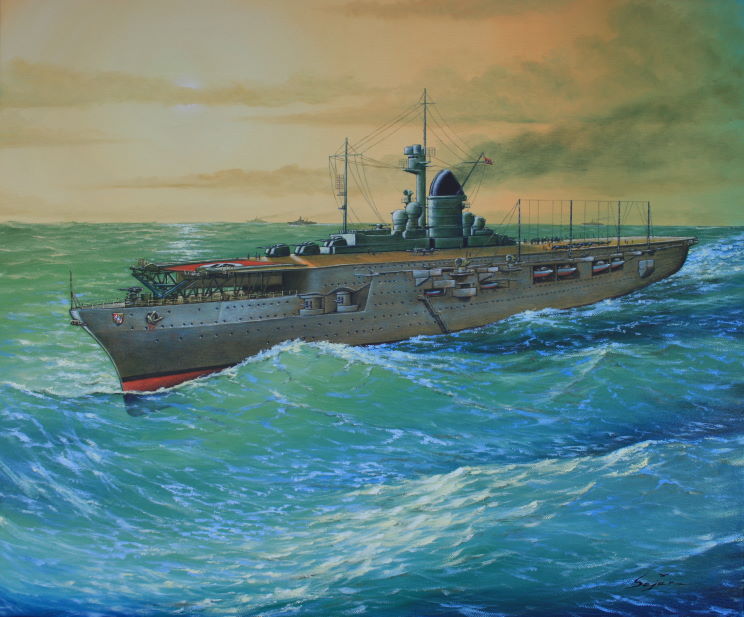
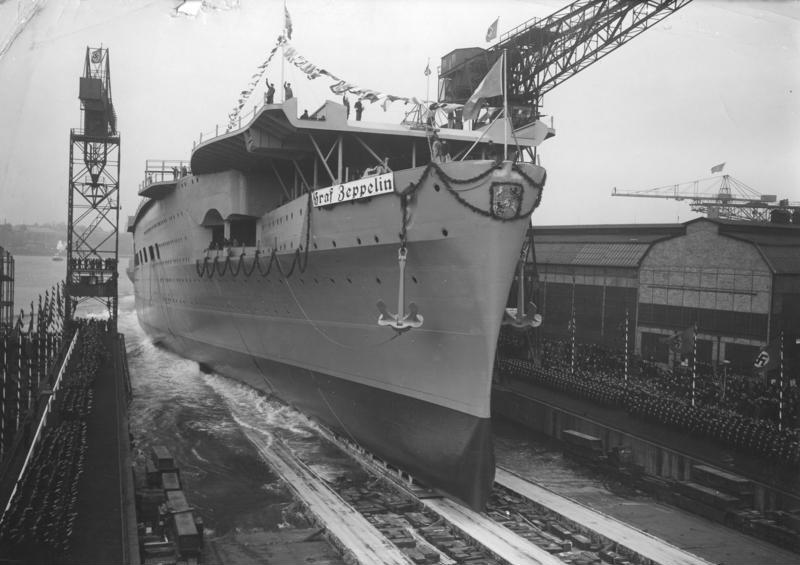


Despite the cancellation, the tests continued using catapults:

Imagen


The Ju 87 C had a takeoff weight of 5,300 kg (11,700 lb) and a speed of 133 kph (82 mph) on departure. The Ju 87 could be launched with a SC 500 kg (1,100 lb) bomb and four SC 50 kg (110 lb) bombs under the fuselage. The C-1 was to have two MG 17s mounted in the wing with a MG 15 operated by the rear gunner. On 18 May 1940, production of the C-1 was switched to the R-1.
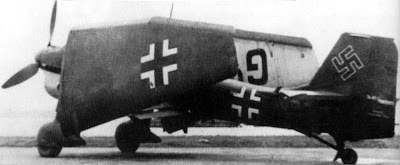

Junkers Ju 87 C.


Ju 87D "Dora"


Ju 87 D-5

Despite the Stuka's vulnerability to enemy fighters having been exposed during the Battle of Britain, the Luftwaffe had no choice but to continue its development, as there was no replacement aircraft in sight. The result was the D-series. In June 1941, the RLM ordered five prototypes, the Ju 87 V21–25. A Daimler-Benz DB 603 powerplant was to be installed in the Ju 87 D-1, but it did not have the power of the Jumo 211 and performed "poorly" during tests and was dropped. The Ju 87 D-series featured two coolant radiators underneath the inboard sections of the wings, while the oil cooler was relocated to the position formerly occupied by the coolant radiator.


The D-series also introduced an aerodynamically refined cockpit with better visibility and space. In addition, armor protection was increased and a new dual-barrel 7.92 mm MG 81Z machine gun with an extremely high rate of fire was installed in the rear defensive position. Engine power was increased again, the Ju mo 211J now delivering 1,420 PS (1,044 kW, 1,401 hp). Bomb carrying ability was nearly quadrupled from 500 kg (1,100 lb) in the B-version to 1,800 kg (3,970 lb) in the D-version (max. load for short ranges, overload condition), a typical bomb load ranged from 500-1,200 kg (1,100-2,650 lb).
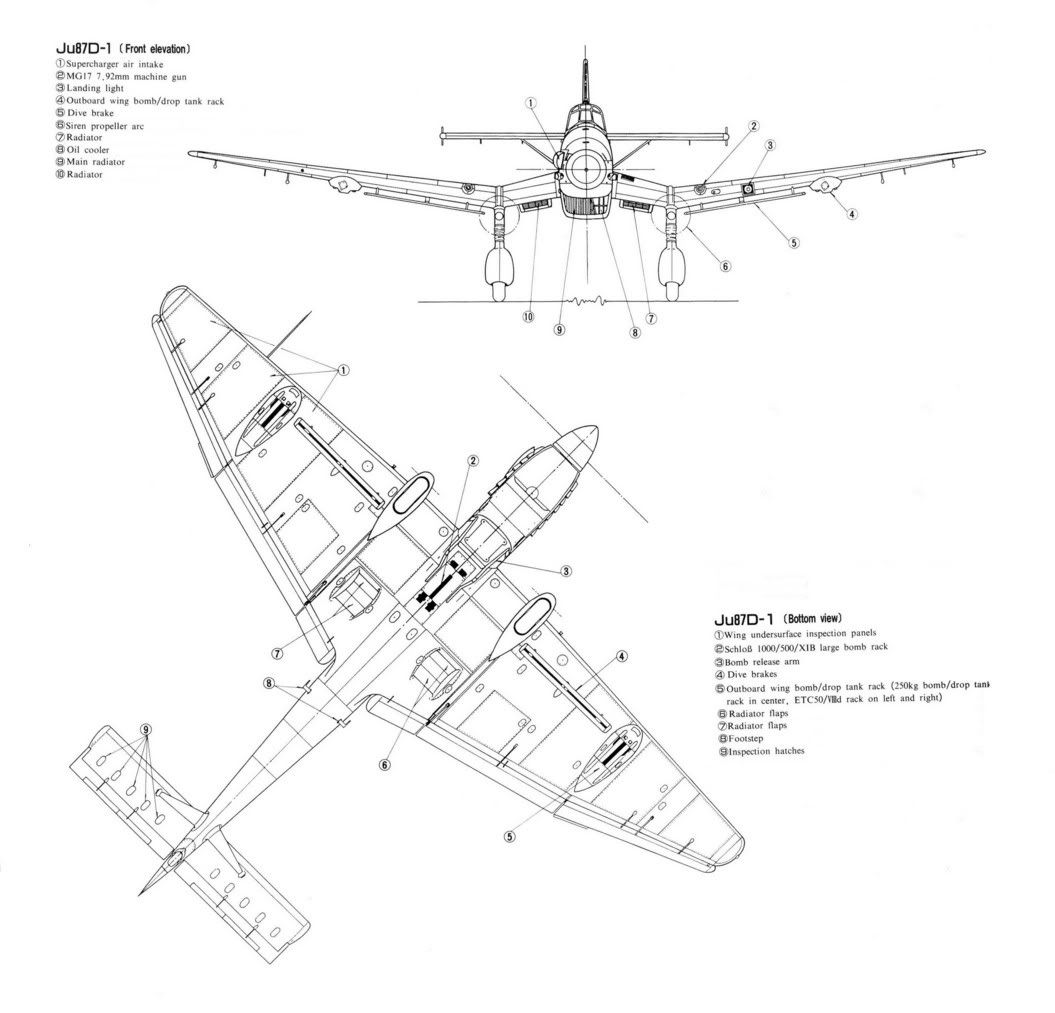


The internal fuel capacity of the Ju 87D was raised to 800 L (of which 780 L were usable) by adding additional wing tanks while retaining the option to carry two 300 L drop tanks. Tests at Rechlin revealed it made possible a flight duration of 2 hours and 15 minutes. With an extra two 300 L (80 US gal) fuel tanks, it could achieve four hours flight time.


The D-2 was a variant used as a glider tug by converting older D-series airframes. It was intended as the tropical version of the D-1 and had heavier armour to protect the crew from ground fire. The armour reduced its performance and caused the Oberkommando der Luftwaffe to "place no particular value on the production of the D-2".

 The D-3 was an improved D-1 with more armour for its ground-attack role. A number of Ju 87 D-3s were designated D-3N or D-3 trop and fitted with night or tropical equipment. The D-4 designation applied to a prototype torpedo-bomber version, which could carry a 750–905 kg (1,650-2,000 lb) aerial torpedo on a PVC 1006 B rack.

The D-4 was to be converted from D-3 airframes and operated from the aircraft carrier Graf Zeppelin. Other modifications included a flame eliminator and, unlike earlier D variants, two 20 mm MG 151/20 cannon, while the radio operator/rear gunner's ammunition supply was increased by 1,000 to 2,000 rounds.


The Ju 87 D-5 was based on the D-3 design and was unique in the Ju 87 series as it had wings 0.6 metres (1 foot) longer than previous variants. The two 7.92 mm MG 17 wing guns were exchanged for more powerful 20 mm MG 151/20s to better suit the aircraft's ground-attack role. The window in the floor of the cockpit was reinforced and four, rather than the previous three, aileron hinges were installed. Higher diving speeds were obtained of 650 kph (408 mph) up to 2,000 m (6,560 ft). The range was recorded as 715 km (443 mi) at ground level and 835 km (517 mi) at 5,000 m (16,400 ft).


The D-6, according to "Operating instructions, works document 2097", was built in limited numbers to train pilots on "rationalised versions". However, due to shortages in raw materials, it did not go into mass production. The D-7 was another ground attack aircraft based on D-1 airframes upgraded to D-5 standard (armor, wing cannons, extended wing panels), while the D-8 was similar to the D-7 but based on D-3 airframes. The D-7 and D-8 were both were fitted with flame dampers, and could conduct night operations.
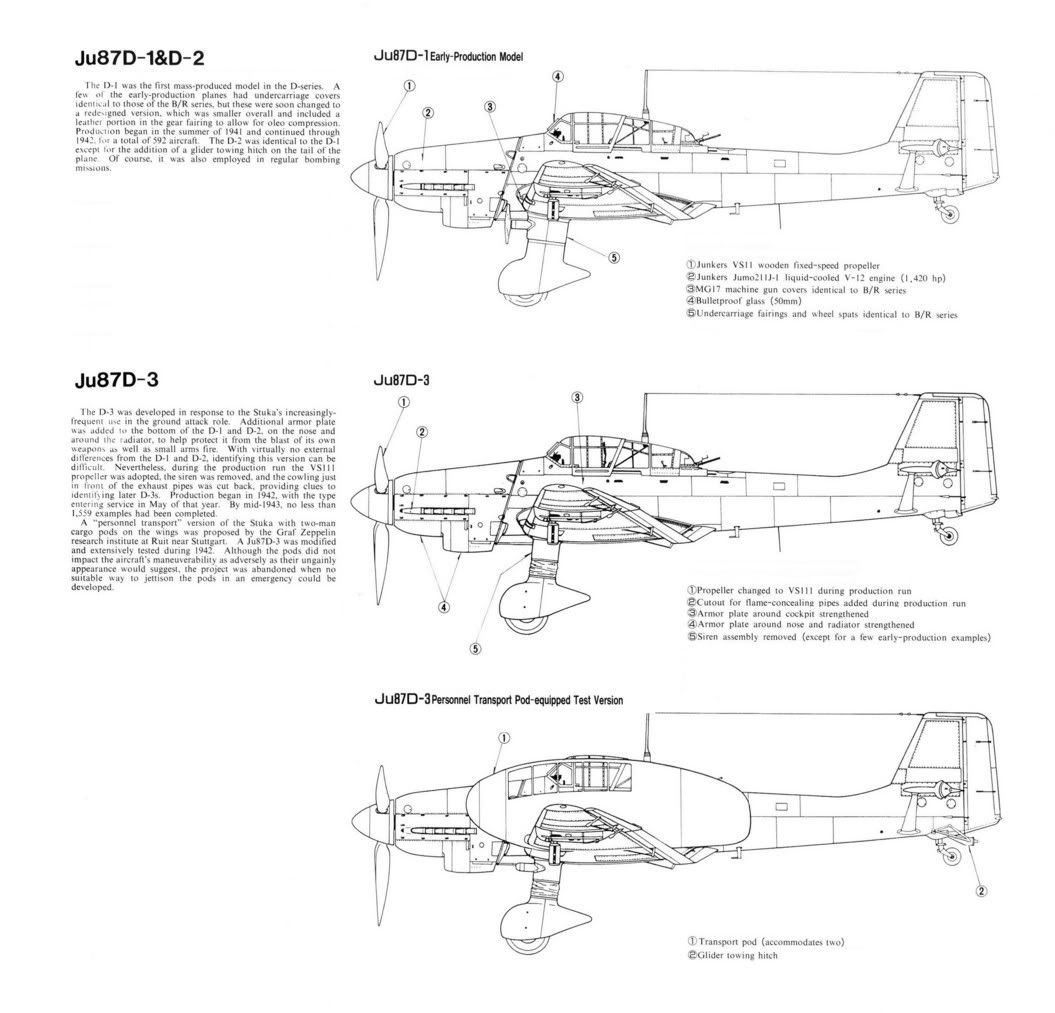
Production of the D-1 variant started in 1941 with 495 ordered. These aircraft were delivered between May 1941 and March 1942. The RLM wanted 832 machines produced from February 1941. The Weserflug company was tasked with their production. From June to September 1941, 40 Ju 87 Ds were expected to be built, increasing to 90 thereafter. Various production problems were encountered. Just one of the planned 48 was produced in July. Of the 25 the RLM hoped for in August 1941, none were delivered. Only in September 1941 did the first two of the planned 102 Ju 87s roll off the production lines. The shortfalls continued to the end of 1941. During this time, the WFG plant in Lemwerder moved production to Berlin. Over 165 Ju 87s had not been delivered and production was only 23 Ju 87 Ds per month out of the 40 expected. By the spring of 1942 to the end of production in 1944, 3,300 Ju 87s, mostly D-1s, D-2s and D-5s had been manufactured.
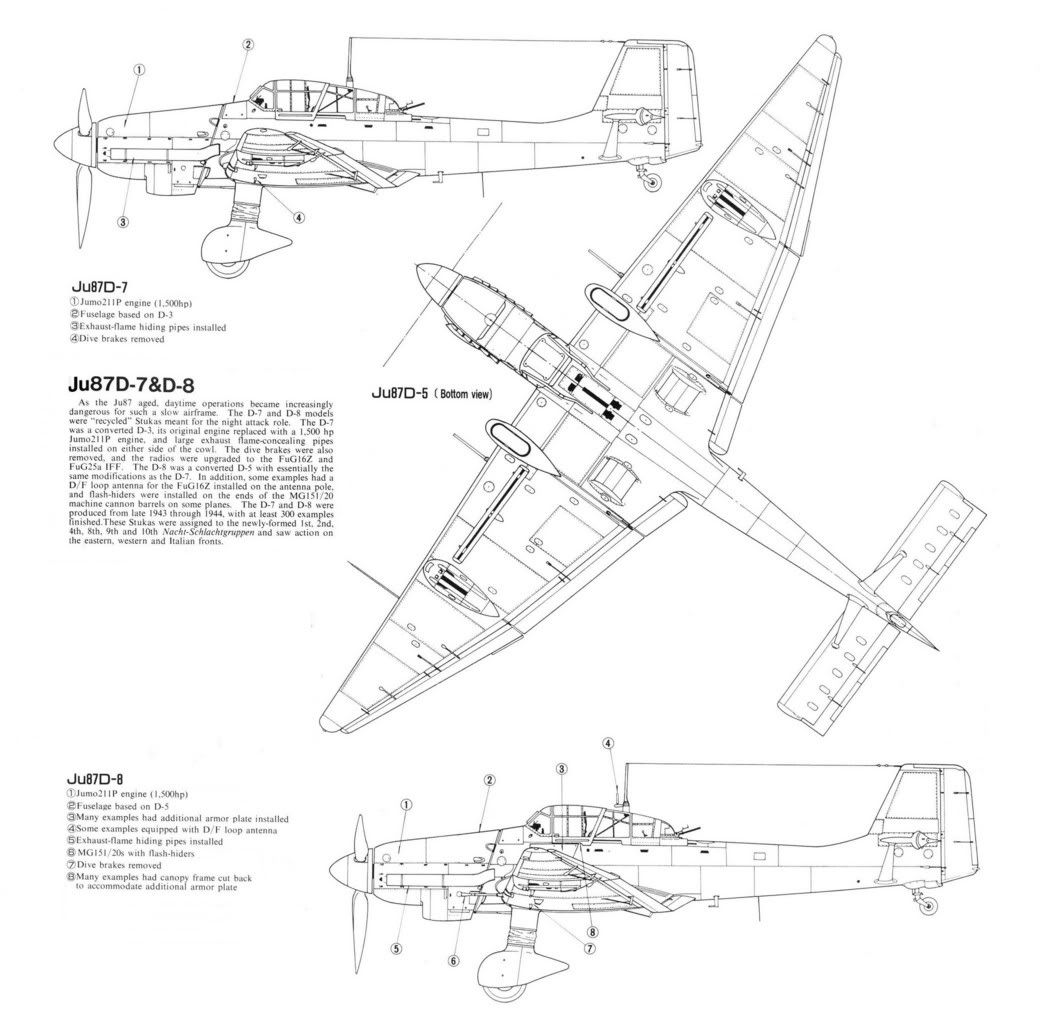


Total production amounted to 3639 Ju 87D (592 D-1, 1559 D-3 and 1448 D-5), all built by Weserflug. The last Ju 87 D-5 rolled off the production lines in September 1944.


The Ju 87 E and F proposals were never built, and Junkers went straight onto the next variant. Another variant derived from the Ju 87D airframe, the Ju 87H saw service as a dual-control trainer.


In January 1943, a variety of Ju 87 Ds became "test beds" for the Ju 87 G variants. At the start of 1943, the Luftwaffe test centre at Tarnewitz tested this combination from a static position. Oberst G. Wolfgang Vorwald noted the experiments were not successful, and suggested the cannon be installed on the Messerschmitt Me 410. However, testing continued, and on 31 January 1943, Ju 87 D-1 W.Nr 2552 was tested by Hauptmann Hans-Karl Stepp near the Briansk training area. Stepp noted the increase in drag, which reduced the aircraft's speed to 259 kph (162 mph). Stepp also noted that the aircraft was also less agile than the existing D variants. D-1 and D-3 variants operated in combat with the 37 mm (1.46 in) BK 37 cannon in 1943.


Ju 87G "Gustav"
With the G variant, the aging airframe of the Ju 87 found new life as an anti-tank aircraft. This was the final operational version of the Stuka, and was deployed on the Eastern Front. The reverse in German military fortunes after 1943 and the appearance of huge numbers of well-armoured Soviet tanks caused Junkers to adapt the existing design to combat this new threat. The Hs 129B had proved a potent ground attack weapon, but its large fuel tanks made it vulnerable to enemy fire, prompting the RLM to say "that in the shortest possible time a replacement of the Hs 129 type must take place." With Soviet tanks the priority targets, the development of a further variant as a successor to the Ju 87D began in November 1942. On 3 November, Erhard Milch raised the question of replacing the Ju 87, or redesigning it altogether. It was decided to keep the design as it was, but to upgrade the powerplant to a Jumo 211J, and add two 30 mm (1.18 in) cannon. The variant was also designed to carry a 1,000 kg (2,200 lb) free-fall bomb load. Furthermore, the armoured protection of the Ilyushin Il-2 Sturmovik was copied - a feature pioneered by the 1916-17 origin Junkers J.I of World War I Imperial Germany's Luftstreitkräfte - to protect the crew from ground fire now that the Ju 87 would be required to conduct low level attacks.


Junkers Ju 87G.
[Source: Unknown]

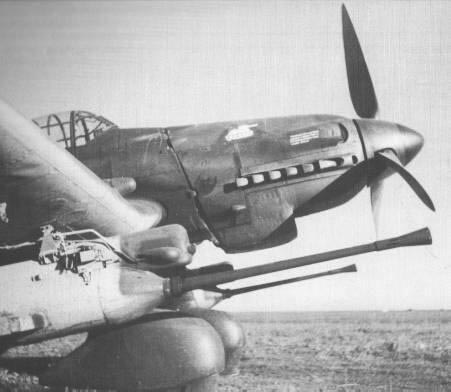
Hans-Ulrich Rudel, a Stuka ace, had suggested using two 37 mm (1.46 in) Flak 18 guns, each one in a self-contained under-wing gun pod, as the Bordkanone BK 3,7, after achieving success against Soviet tanks with the 20 mm MG 151/20 cannon.
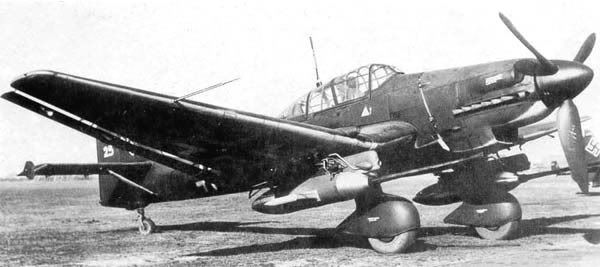

These gun pods were fitted to a Ju 87 D-1, W.Nr 2552 as "Gustav the tank killer". The first flight of the machine took place on 31 January 1943, piloted by Hauptmann Hans-Karl Stepp. The continuing problems with about two dozens of the Ju 88P-1, and slow development of the Hs 129 B-3, each of them equipped with a large Bordkanone BK 7,5 cm (2.95 in) cannon in a conformal gun pod beneath the fuselage, meant the Ju 87G was put into production.


Winter Camo

In April 1943, the first production Ju 87 G-1s were delivered to front line units. The two 37 mm (1.46 in) cannons were mounted in under-wing gun pods, each loaded with a six-round magazine of armour-piercing tungsten carbide ammunition. With these weapons, the Kanonenvogel ("cannon-bird"), as it was nick named, proved spectacularly successful in the hands of Stuka aces such as Rudel. The G-1 was converted from older D-series airframes, retaining the smaller wing, but without the dive brakes. The G-2 was similar to the G-1 except for use of the extended wing of the D-5. 208 G-2s were built and at least a further 22 more were converted from D-3 airframes.
Junkers Ju 87 Stuka
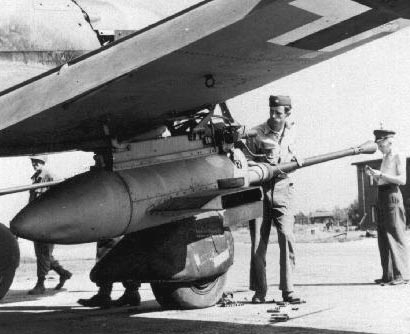

37mm Flak 18 mounted on a Junkers Ju 87G.
[Source: Unknown]

Only a handful of production Gs were committed in the Battle of Kursk. On the opening day of the offensive, Hans-Ulrich Rudel flew the only "official" Ju 87 G, although a significant number of Ju 87D variants were fitted with the 37 mm (1.46 in) cannon, and operated as unofficial Ju 87 Gs before the battle. In June 1943, the RLM ordered 20 Ju 87Gs as production variants. The G-1 later influenced the design of the A-10 Thunderbolt II, with Hans Rudel's book, Stuka Pilot being required reading for all members of the A-X project.


Night-harassment variants

The Soviet Air Force practice of harassing German ground forces using antiquated Polikarpov Po-2 and R-5 biplanes at night to drop flares and fragmentation bombs, inspired the Luftwaffe to form its own Störkampfstaffeln (harassment squadrons). On 23 July 1942, Junkers offered the Ju 87 B-2, R-2 and R-4s with Flammenvernichter ("flame eliminators"). On 10 November 1943, the RLM GL/C-E2 Division finally authorised the design in directive No. 1117. This new equipment made the Ju 87 more difficult to detect from the ground in darkness.
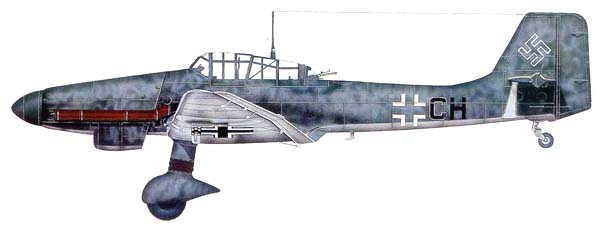
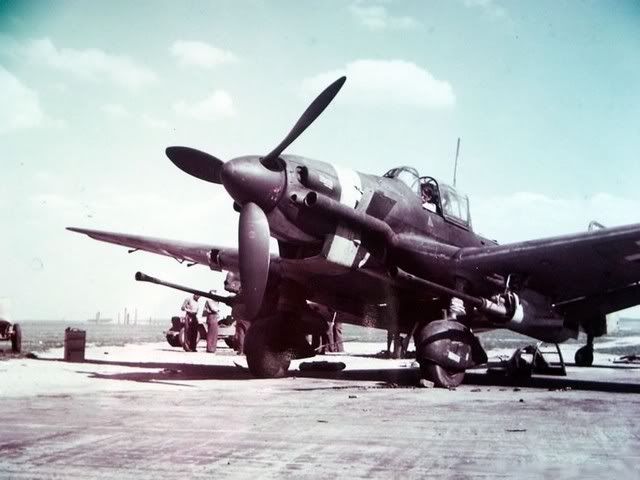


Note the flame suppressors on the exhausts


Pilots were also asked to complete the new "Blind Flying Certificate 3", which was especially introduced for this new type of operation. Pilots were trained at night, over unfamiliar terrain, and forced to rely on their instruments for direction. The Ju 87's standard Revi C12D gunsight was replaced with the new Nachtrevi ("Nightrevi") C12N. On some Ju 87s, the Revi 16D was exchanged for the Nachtrevi 16D. To help the pilot see his instrument panel, a violet light was installed. On 15 November 1942, the Auxiliary Staffel were created. By mid-1943, Luftflotte 1 was given four Staffeln while Luftflotte 4 and Luftwaffe Kommando Ost (Luftwaffe Command East) were given six and two respectively.

 In the first half of 1943, 12 Nachtschlachtgruppen had been formed, flying a multitude of different types of aircraft, including the Ju 87, which proved itself ideally suited to the low-level slow flying needed.

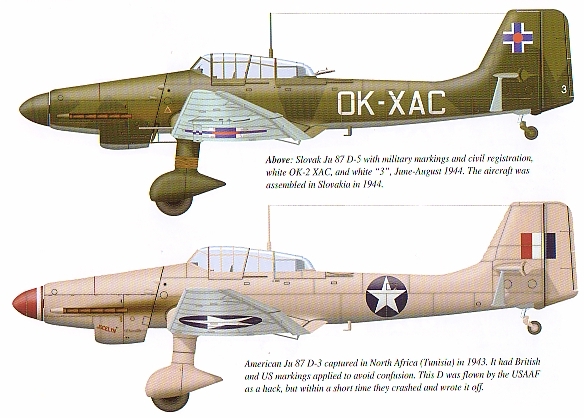
Unusual operators:
Sunday, 13 April 2014

P-51 Mustang: A History, starting with the RAF

The P-51 Mustang: A History: Built to RAF specification

Every aircraft nut is familiar with the P51, mostly with the D model, which was the definitive production model. It played a great part in the final years of the war, providing fighter escort for long-range bombers.

Few people actually realise that the first aircraft were built to RAF specification:
From Wiki:

The North American Aviation P-51 Mustang was an American long-range, single-seat fighter and fighter-bomber used during World War II, the Korean War and other conflicts. The Mustang was conceived, designed and built by North American Aviation (NAA) in response to a specification issued directly to NAA by the British Purchasing Commission.

The prototype NA-73X airframe was rolled out on 9 September 1940, 102 days after the contract was signed and, with an engine installed, first flew on 26 October 1940.


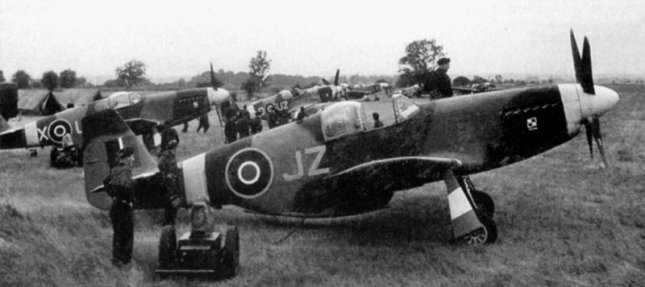
RAF (309) Polish squadron Mustang Is with Spitfire Bubble canopy

The Mustang was originally designed to use the Allison V-1710 engine, which had limited high-altitude performance. It was first flown operationally by the Royal Air Force (RAF) as a tactical-reconnaissance aircraft and fighter-bomber (Mustang Mk I).


Western USA Model: P-51A-10NA

The addition of the Rolls-Royce Merlin to the P-51B/C model transformed the Mustang's performance at altitudes above 15,000 ft, giving it a much better performance that matched or bettered almost all of the Luftwaffe's fighters at altitude.


P-51A


The Merlin-engined P51B


P51C "Tuskagee Airmen"


Heart of the P51C and D: The Rolls-Royce Merlin

 The definitive version, the P-51D, was powered by the Packard V-1650-7, a license-built version of the Rolls-Royce Merlin 60 series two-stage two-speed supercharged engine, and armed with six .50 caliber (12.7 mm) M2 Browning machine guns.


RAF Mustang MkIII - note the Spitfire-type curved cockpit canopy
This one is from 19 Squadron

American style plain cockpit canopy and the" quarterlight" window, which was sometimes painted out


From late 1943, P-51Bs (supplemented by P-51Ds from mid-1944) were used by the USAAF's Eighth Air Force to escort bombers in raids over Germany, while the RAF's 2 TAF and the USAAF's Ninth Air Force used the Merlin-powered Mustangs as fighter-bombers, roles in which the Mustang helped ensure Allied air superiority in 1944.


 The P-51 was also in service with Allied air forces in the North African, Mediterranean and Italian theaters, and saw limited service against the Japanese in the Pacific War. During World War II, Mustang pilots claimed 4,950 enemy aircraft shot down.

At the start of the Korean War, the Mustang was the main fighter of the United Nations until jet fighters such as the F-86 took over this role; the Mustang then became a specialized fighter-bomber. Despite the advent of jet fighters, the Mustang remained in service with some air forces until the early 1980s. After World War II and the Korean War, many Mustangs were converted for civilian use, especially air racing, and increasingly, preserved and flown as historic war-bird aircraft at airshows.


Friday, 27 September 2013

Dassault Mirage III (Part 2) Progeny: The Cheetah and Kfir

Mirage III Progeny: The Cheetah program


During the early 1980's, the SAAF faced modern Soviet aircraft and weapons in Angola. Being handicapped by a UN arms embargo, the SAAF had to act urgently to improve its capabilities. 
The SAAF never had a large number of combat aircraft to spare. It only had about forty combat-ready 1970's-vintage Mirage F1's. If it was to take them out of service to upgrade them, it had no replacement other than the  even older, 1960's-vintage Mirage III's. These were shorter-ranged, had less powerful engines and obsolete combat systems, and could carry less ordnance. This meant any upgrade would have to be applied first to the older Mirage III's, as they were the only aircraft that could be spared from combat operations for that purpose.

Fortunately, this wasn't a bad choice in the end. Two major aircraft programs had demonstrated what could be done by building on the foundation of the Mirage III, probably one of the most successful proven combat aircraft of it's day. First, Dassault Aviation was by then producing the successor to the Mirage F1, the Mirage 2000, which returned to the delta-wing format of the Mirage III.


Mirage III D

Israel agreed to supply systems and components, and the green light for the Cheetah project was given in the early 1980's. In order to provide a measure of diplomatic and political 'cover' for Israel, it was decided (as with  many South African weapons projects) to claim that it was an purely indigenous development. Despite huge similarity between the Kfir and the Cheetah, officials in on both sides  steadfastly deny that the two aircraft had anything in common. 

The SAAF provided Israel a two-seat Mirage IIID as the prototype air frame for conversion. It was stripped down completely and all components subject to metal fatigue or stress were replaced, effectively returning the air frame new condition. An extended nose cone was fitted, derived from the Kfir TC.2 model, which housed advanced electronic systems, and small canard wings were fitted above the air intakes to improve low-speed handling and angle of attack. (The canards on the D and E model Cheetahs were smaller than those used on the later Cheetah C's, reportedly because it was too difficult to reinforce the fuselage frames in the engine intake area to accommodate the larger units. The Cheetah C's used the same full-size canards as the Kfir; but their air frames were supplied by Israel, as noted below. Presumably they weren't subject to the same limitations as the French-air frame-based Cheetah D's and E's.)

Israel Aircraft Industries (IAI), together with several other companies in that country's defense industry, had already produced a series of Mirage derivatives. Israel had purchased Mirage III aircraft from France prior to the Six-Day War of 1967, and had ordered a further 50 Mirage 5's (a simplified version of the Mirage III). However, these were embargoed by France after the conflict. Undaunted, Israel stole the plans to the Mirage III from Switzerland, which was license-manufacturing the aircraft (Swiss engineer, Alfred Frauenknecht, would later be sentenced to 4½ years imprisonment for his collaboration with Israel).

Israel used these plans to develop its own fighters. The first  was the Nesher, almost an exact copy of the Mirage 5 (indeed, it's so exact that some sources suggest IAI actually assembled Mirages, clandestinely supplied in kit form by France, rather than manufactured the Nesher itself). A total of 60 Neshers appear to have been manufactured, most sold to Argentina at the end of the 1970's under the name of Dagger 


These aircraft confronted British forces during the Falklands War. Israel went on to produce the Kfir, a considerably upgraded Mirage derivative with Israeli electronics with a US J79 turbojet engine (As on the F-4 Phantom II fighter-bomber, also operated by Israel at the time).


Argentine "Dagger"

The IAI Nammer ("Leopard",  frequently mistranslated as "Tiger") was a fighter aircraft developed in Israel in the late 1980s/1990s as a modernised version of the Kfir for the export market. Although a prototype was built and flown, buyers were not forthcoming and development was ceased. The avionics of the Nammer were those of the cancelled Lavi project.

The Nammer promised an upgrade package for existing Mirage III and Mirage 5 air frames. Two configurations were proposed, one based around re-engining with a General Electric F404, the other around retaining the Mirage's SNECMA Atar engine. Elta EL/M-2011 or EL/M-2032 fire-control radar was to be fitted. The first of these options maximised performance and range, the second maximised the aircraft's air-to-air targeting capability. As development progressed, the Nammer came to be advertised as a new-build aircraft with the EL/M-2032 an integral part of the package, and customers able to choose their preferred engine out of the F404 (or its Volvo derivative, the RM-12), the SNECMA M53, or the Pratt & Whitney PW1120. The design strongly resembled the Kfir C-7,but was easily distinguished by its longer nose and lack of a dorsal air scoop under the tail fin

Details of the weapon and control systems fitted to the Cheetah have never been publicly revealed by the SAAF, but it can probably assumed they were close to or identical to those found on various models of the Kfir. IAI lists them as including, in the latest Kfir version:

The radar used in the Cheetah D and E models (and in the Kfir C.7) was the simple Elta EL/M-2001Bunit. The Cheetah C, the last development of this project, possibly had the much more advanced Elta EL/M-2032 . The Cheetah C's electronic systems were probably on a par with those of the F-16C/D fighter-bombers of the USAF at the time.

The intermediate single-seat Cheetah E model:


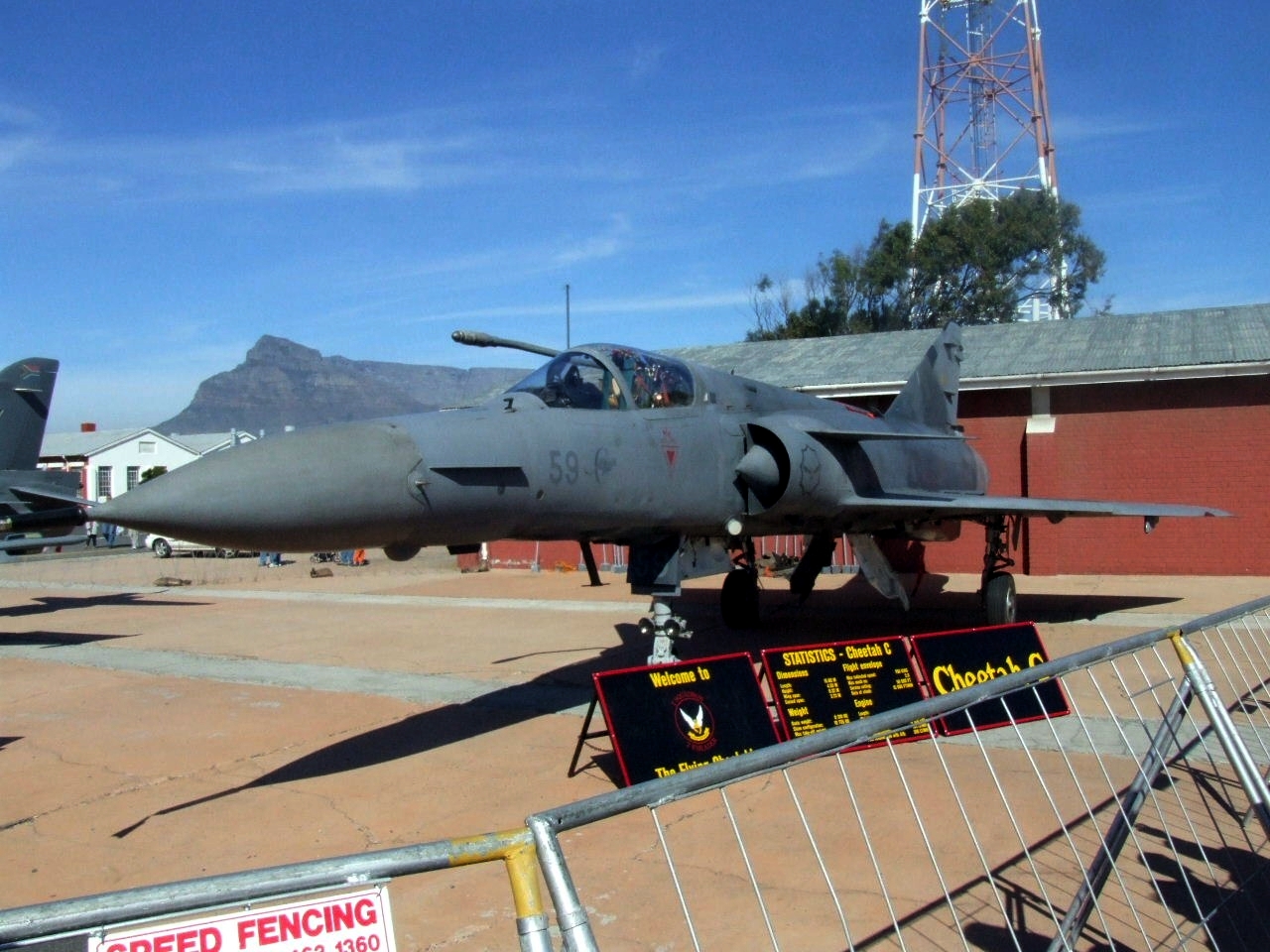
Here's the final iteration of the Cheetah, the 'C' model:


The SAAF's two-seat Mirage IIID variants were the first to be converted. This was probably for two reasons. First, and most pragmatically, the two-seat air frames could be most easily spared from operational duties. Second, they were probably urgently needed to replace the worn-out two-seat Buccaneer aircraft in the nuclear strike role (South Africa had six nuclear weapons, developed at the height of its political isolation and military struggle, which were dismantled in the early 1990's). The Buccaneers had not been updated with modern strike systems, which limited their usefulness; so the upgraded Cheetah D's would have been welcome in this role.

Sixteen two-seat Cheetah D's were produced, as well as 16 single-seat Cheetah E's, the latter mostly converted from Mirage IIIEZ air frames (although some were reportedly converted from air frames supplied by Israel, due to a shortage of suitable South African Mirages). All had been delivered by 1991. Finally, 38 Cheetah C's were produced under the auspices of 'Project Tunny'. 
The Cheetah C's were reportedly based on stripped down Kfir air frames supplied by Israel, modified to accept the French Atar engine rather than the US J79.  Most of the SAAF's Mirage III's had been delivered during the 1960's. Some had reached the end of their fatigue lives, and were thus unsuitable for conversion. Others had been lost in accidents, and the Cheetah E conversions had absorbed many of the remainder.

Given these two facts, there would not have been enough usable single-seat Mirage III air frames left in the SAAF inventory to produce 38 Cheetah C's.  one can safely assume that the reports that say Israel supplied the fuselages for the latter is accurate. Apart from the prototype Cheetah D, most of the conversions were carried out in South Africa by Atlas Aircraft Corporation (today part of Denel Aviation), with Israeli technical assistance (which decreased as local industry gained experience and competence).

The C models were delivered from 1993-1995, replacing the Cheetah E's, which were retired. Some of the two-seat Cheetah D's were retained in service as lead-in trainers for the C versions, and to provide a specialist strike function if required. A single experimental Cheetah R version was produced, using a Mirage IIIR2Z airframe, but no other reconnaissance versions were converted, and the Cheetah R did not enter squadron service, being retired soon afterwards. The reconnaissance function was taken over by Cheetah C's fitted with pod-mounted cameras.

The first ACW prototype was tested on the only Cheetah R, and a more evolved model was tested on a two-seat Cheetah D. The latter improved the Cheetah's sustained turn rate by 14%, and permitted maximum takeoff weight to be increased by well over half a ton. It also permitted angles of attack up to 33 degrees at low speeds, with much greater stability, at the expense of a reduction of approximately 5% in the aircraft's maximum supersonic speed. However, for budgetary reasons the SAAF declined to upgrade their Cheetahs with the ACW, and it was never put into production.


If it lost aircraft due to combat or accident  it could not replace them, due the embargo; and it had to keep its combat planes as up-to-date as possible, to ensure they did not become so obsolete that they risked being shot down in large numbers by more advanced enemy aircraft. 


Mirage 2000-5F of the French Air Force

South Africa had friendly ties with Israel, particularly in the military field.  South African technological institutions such as the Council for Scientific and Industrial Research (CSIR), and local defense companies such as Kentron (today Denel Dynamics), Reutech and others, were developing advanced radar and electro-optical detection and guidance systems. The latter companies in particular often collaborated with their Israeli counterparts (up to and including producing Israeli components and systems under license in South Africa). It would therefore be entirely feasible for the advanced combat systems of the Kfir to be 'transplanted' into the Mirage III's of the SAAF, including local assembly and partial production if necessary.


AI Kfir, in US Navy colors under the designation F-21A,
where it served as an adversary aircraft for Dissimilar Air Combat Training

The Cheetah had a considerably more powerful and more economical engine, greatly improved avionics and weapons systems, and a fly-by-wire control system, which rendered it far superior to the Mirage III from which it stemmed. (It's generally accepted that the French Mirage 2000 is roughly comparable, in terms of its overall capability, to contemporary models of the US F-16 Fighting Falcon or the Soviet MiG-29.) The SAAF reasoned that if Dassault could develop the Mirage III into a fully modern warplane, they could do likewise. This was aided by the fact that in the 1970's, South Africa had purchased a license to manufacture the Mirage III and F1, as well as the latter's Atar 09K-50 turbojet engine. All the necessary plans were thus already on hand.


Given that the Cheetah prototype was converted in Israel, it's very interesting to note the proposed IAI Nammer aircraft of the late 1980's. Wikipedia info:


You can't help but notice that the line drawing above is virtually identical to the pictures of the Cheetah C and Kfir 2000 . Also note that the translation of 'Nammer' is the name of a big cat. A co-incidence? Did the prototype' of the Nammer become the prototype SAAF Cheetah C ?  It would certainly have been a good cover story to disguise IAI's involvement with the latter program. 


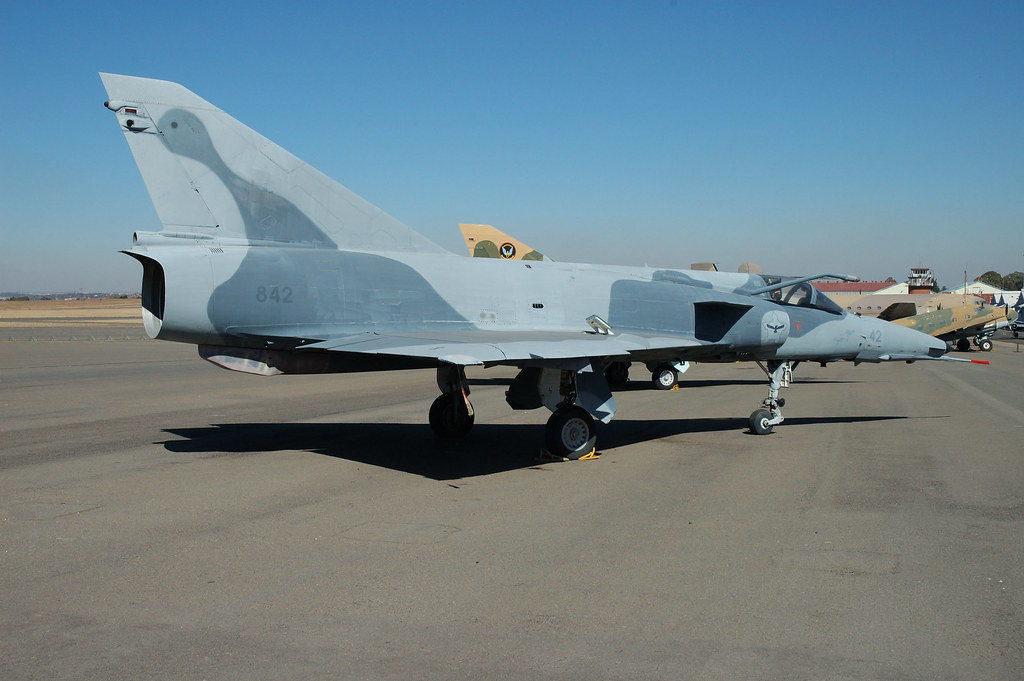
SAAF Cheetah C in Service Ysterplaat AFB

Pilot friendly advanced "Glass" Cockpit;Hands On Throttle And Stick (HOTAS) operation;
Advanced multi-mode Fire Control Radar (FCR) with SAR; State-of-the-art weapons delivery, including Beyond Visual Range missiles; Digital Moving Map (DMM); Electronic Warfare (EW) Suite.


The Israeli lineage of the Cheetah is clearly demonstrated by comparing the aircraft side-by-side. The SAAF Cheetah D, the initial two-seat version of the aircraft:


Kfir TC.2 of the Israeli Air Force:


Note identical extended and slightly downward-sloping nose cones, housing the electronics; the canard wings above the engine air intakes; and the strakes on the nose cone. Note the second curved strake running from the base of the nosecone down and back along the bottom of the fuselage. The Cheetah has an air refueling probe on the starboard side of the cockpit, which is absent from the Kfir TC.2, but an identical probe may be seen on other Kfir models, as shown below. The rear fuselage is different as the Cheetah uses a French Atar engine, while the Kfir uses the US turbojet; but from the engine forward, there's virtually no difference.


And the single-seat Kfir C.7:


Note that both have small strakes at the tip of the nose cone, identical instrument probes beneath it, and an in-flight refueling probe that goes to the starboard air intake, rather than behind the cockpit, as in the later Cheetah C. The Cheetah E also incorporates the Kfir C.7's additional two weapons stations beneath the air intakes. I therefore consider the Cheetah E and the Kfir C.7 to be essentially identical from the engine forward.


      IAI publicity photograph of their Kfir 2000 


The refueling probes are different, but the noses of the two aircraft are, again, almost identical. (Note, too, their similarity to the IAI Nammer mentioned above.) As far as its weapons and electronic systems are concerned, the Cheetah C is the functional equivalent of the Kfir 2000 (also known as the Kfir C.10.

The first sixteen Mirage III's supplied to the SAAF were 'C' model interceptors, with a shorter fuselage than subsequent models - too short to be converted into Cheetah C's, which have a longer fuselage. They could not have been lengthened without a reconstruction so extensive (and expensive) that it would have effectively meant producing a new air frame.


Vinten Vicon 18 Series 601 reconnaissance pod mounted beneath a Cheetah C

Some of the Cheetah D aircraft had been converted from Mirage IIID2Z airframes, which had been delivered with Atar 09K-50 engines in the 1970's. Naturally, they retained these more powerful engines in their Cheetah guise. The remainder of the D's, and the Cheetah E models converted from Mirage IIIE's, retained their 1960's-vintage Atar 09C turbojet engine, as local production of the more powerful Atar 09K-50 (used in the Mirage F1) had proved economically unfeasible - South Africa's technological base was insufficiently advanced to manufacture all of the required components. In any event, due to changing circumstances , the lower-powered Cheetah models would all be retired within a few years.

Efforts were mounted to obtain additional 9K-50 engines to equip the Cheetah C models. The Mirage F1 was operated by a number of other countries, including Jordan, Iraq, Morocco and Qatar, all of whom also purchased armaments from South Africa. It is possible that one or more of those nations made Atar 9K-50 engines available to South Africa in return for arms shipments. The most likely candidate would have been  Iraq.

They bought over 80 Mirage F-1's from France, and, as mentioned above, obtained 100 G5 howitzer cannon from South Africa. (Iraq was engaged in a war with Iran from 1980-1988). 

Since combat operations would naturally impose greatly increased wear on the engines of its aircraft, it could order large numbers of replacement engines without arousing suspicion. I have little doubt that some of these replacements were swapped for South African artillery and/or ammunition - probably at a very favorable 'rate of exchange', because South Africa needed the engines very badly.)


The retirement of the SAAF's Mirage F1 fleet in the 1990's was partly (although by no means exclusively) caused by the need to transplant at least some of their engines into the Cheetah fleet. The surviving F1CZ interceptors were retired in 1992. 

Some of their engines went into the Cheetah C program. The Cheetah D and E versions (which had all entered service by 1992) took over from them until the Cheetah C's were ready. The last of the Mirage F1AZ's were retired in 1997, after all the Cheetah C's had entered service.


Mirage F1

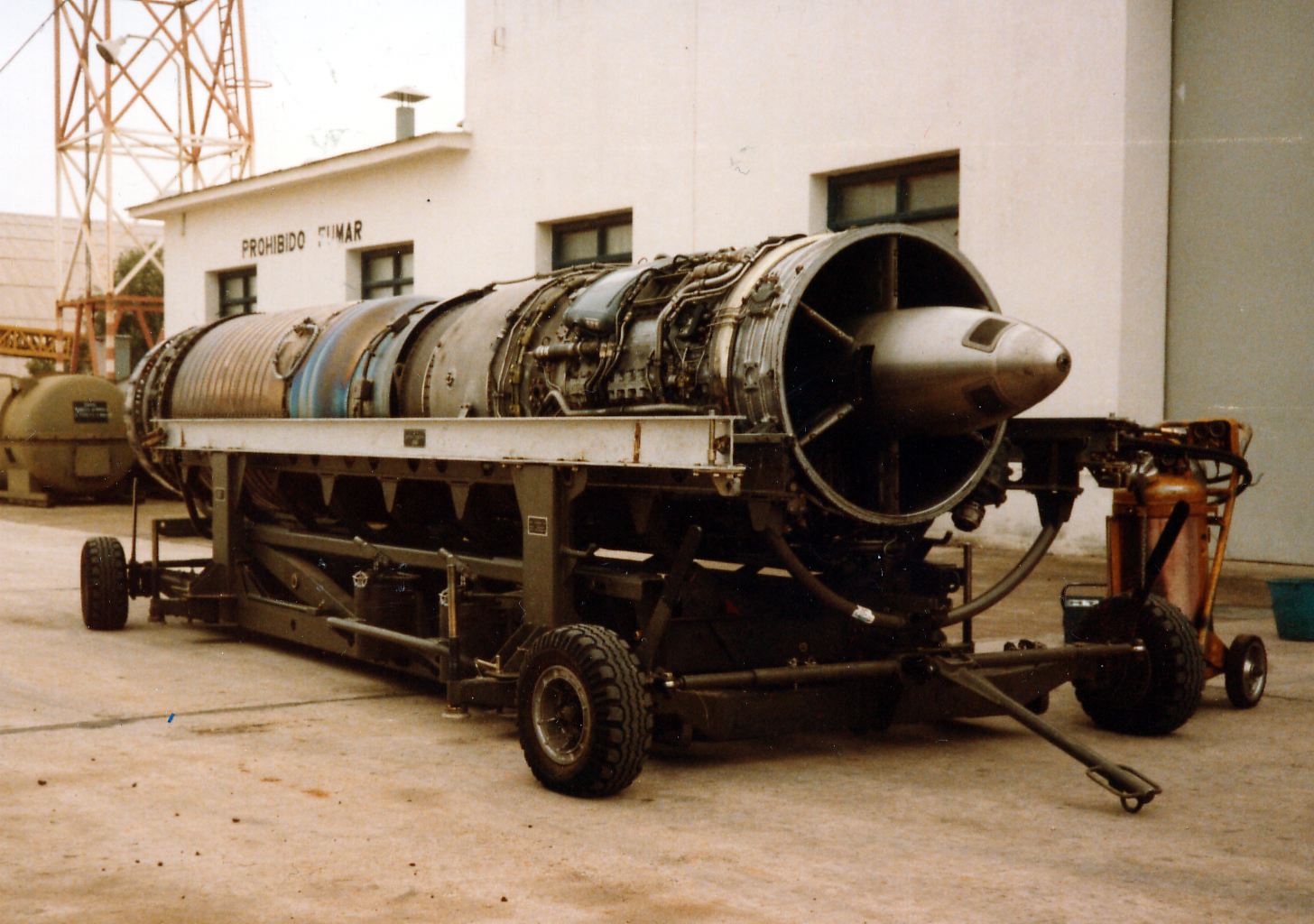
If the Cheetah aircraft had a major weakness, it was their engines. The Atar 9C engines used by Mirage III's were rated at a maximum of 13,240 pounds static thrust with afterburner. The Atar 9K-50 engine of the Mirage F1 was rated at 15,873 pounds static thrust with afterburner, an increase in power of almost 20%. 

The core technology of both these engines was based on the German BMW 003 axial-flow turbojet developed during World War II, and was becoming increasingly dated. Technology that old simply couldn't keep pace with more modern developments. The Atar 9-series turbo jetengines weren't nearly as powerful (or as economical) as the turbofan engines installed in more modern military aircraft such as the F-16 or the MiG-29 (using two Klimov RD-33 turbofans, each rated at 18,285 pounds static thrust with afterburner. Such engines weren't available to South Africa at the time the Cheetah program was developed, so the SAAF had to make do with what it could get.

The Cheetahs used an upgraded wing, offering improved aerodynamic qualities compared to that originally fitted to the Mirage III. The wing design from the Carver program was experimentally adapted to fit the Cheetahs as the Advanced Combat Wing, or ACW. The diagram below shows how more advanced Cheetah wings evolved, from the initial production variant to a final design with missile stations on the wingtips. The ACW was flight-tested, but never entered service. 


The ACW had a fixed, drooped leading edge. An early iteration (Version 2 as shown above) had a simple notch in the leading edge at mid-span, while a later model (Version 3 above) had a much wider slot. This permitted underwing mounting of the SAAF's standard 500-liter (about 132 US gallon) drop tanks, which would otherwise have struck the lowered leading edge. Additional fuel tanks were incorporated into the drooped leading edge, which were claimed to improve the Cheetah's radius of action by almost 100 kilometers (just over 60 miles).

Official and unofficial South African sources claim that the Cheetahs were very successful, and popular with their pilots. Compared to the earlier Mirage III's and F1's, this is probably true. 
The Cheetah C's were  more capable than anything preceding them in the SAAF inventory. In terms of their electronics and weapons systems, they could certainly have matched the 1980's-vintage MiG-23's and -27's, and Sukhoi Su-20/22's, that the SAAF encountered in Angola. 

Due to the lower power of their engines, I don't believe they could have matched the Soviet aircraft in acceleration or top speed. One cannot believe claims from some South African sources that the Cheetah C was comparable in performance to the US F-15 Eagle. 


SAAF Cheetah C over USS Forrest Sherman, Cape Town 2007

Despite its limitations, the Cheetah program was a success, albeit at a very high price. Including all research, development, tooling, purchase and production expenses, and averaging them across the 71 aircraft produced (16 D's, 16 E's, 38 C's and a single R - the latter not entering service), each Cheetah cost South Africa well over twice the price of a brand-new contemporary equivalent (e.g. the Mirage 2000) on the open market. Operating in a sanctions environment, there was no alternative. 

The program updated obsolete third-generation jet combat aircraft to fourth-generation standards as far as their weapons and electronic systems were concerned, and provided the SAAF with an aircraft capable of handling any regional threat at the time. Fortunately, with the end of the Angolan War in the late 1980's, the collapse of the Soviet Union in the early 1990's, and the end of apartheid in 1994, no more sophisticated threats arose that would have required a more technologically advanced response.

During the 1990's the SAAF found itself in a budgetary crisis. Not surprisingly, the first democratically-elected post-apartheid government prioritized restoring balance to political, economic and social structures Funding was directed largely to such efforts. Furthermore, the military threats facing the country had almost completely evaporated, compared to the days of the Border War and international sanctions, which had driven the Cheetah program from its inception. 

There was no longer a pressing need for combat aircraft, but a need to conserve the SAAF's much more restricted budget. The number of front-line aircraft was therefore slashed. Only one squadron was retained, operating 28 Cheetahs (a mixture of single-seat C's and two-seat D's, all powered by Atar 09K50 engines). The remainder of the Cheetah fleet was retired from SAAF service. A couple were used as development aircraft, but most were placed in storage. Some were later sold to other nations. The last Cheetahs were retired in 2008, and are presently being replaced by 26 Saab Gripen multi-role fighters.


SAAF Saab Gripen fighters

Sadly, these reductions in force and budgetary constraints caused major problems for the SAAF in retaining the services of its highly qualified and skilled pilots. Many of them saw no future for themselves in the new climate of politically correct restructuring, and resigned to pursue more lucrative opportunities elsewhere. Some became mercenary pilots of combat aircraft for other nations and/or organizations, where their superior flying skills and combat experience were greatly appreciated and well compensated. 

The SAAF's budgetary and personnel problems have not abated since. It has been rumoured that only 8 trained pilots for its Saab Gripen fighters remain , down from 30 pilots in 2005 and 20 in 2008. 

The SAAF is presently in the midst of a crisis as far as trained personnel are concerned . . . a very sad situation for a service that only two decades ago boasted pilots equal to, if not better than, those of most first-class air forces, including the USAF. The SAAF will probably never regain the very high standards it had attained by the end of the Border War in the 1980's.

And the sad end of the road for some Cheetahs:


More info on SAAF Mirages:

The Mirage F1 (click to follow links) 3 Parts, including the Border war:
Part 1 History of the F1
Part 2 The Border War: F1s in Combat
Part 3 Combat record and First Hand Account (Arthur Piercy)

(Source Wings and Wiki, other Internet sources. Not for gain, just a fan blog. No copyright infringement intended)

Amelia Earhart's sad demise

Dozens heard Amelia Earhart's final, chilling pleas for help, researchers say Distilled from 2 posts in the  Washington Post a...