Showing posts with label aircraft. Show all posts

Thursday, 1 June 2017

World's largest aircraft unveiled

Stratolaunch: Largest aircraft in the world unveiled


Microsoft co-founder Paul Allen has been quietly building the world's largest aircraft, Stratolaunch,  in the California desert. Once completed  it will be the world's largest airplane. With a wingspan more than that of Howard Hughes' Spruce Goose. It was wheeled out of its hangar for the first time on Wednesday.

 Stratolaunch  has some impressive stats:

Wingspan 117 ms
Height 15m.
Unfueled weight :226 800 kg
Fuel load : 113 400 kg
Total weight: 589 670kg.

Other extraordinary facts:  It has  28 wheels and six Boeing747 jet engines.


97 km of wiring.
It's so big that the county had to issue special construction permits just for the construction scaffolding.


It's so big that to truly get a sense of it, you have to see it from a distance - like a mountain.


Why so big?  Not to carry passengers, but rather low earth orbit payload carying rockets. The bigger the plane, the larger the rockets, or the greater the number.


Allen's Stratolaunch company has partnered with Orbital ATK to "air launch" the company's Pegasus XL, a rocket capable of delivering small satellites, weighing as much as 450kg, to orbit. The rockets would be tethered to the belly of the giant plane, which would fly them aloft, and once at an altitude of 10,668m or so, the rockets would drop and "air launch" to space.

"With airport-style operations and quick turn-around capabilities," the company said it believes "air launch" is a cheaper and more efficient way to get satellites into space than rockets that launch vertically and can be extraordinarily expensive.

For Allen, it's all about LEO, or low-Earth orbit. He, and others, such as Richard Branson's Virgin Orbit, are betting that they can reduce the cost of launching small satellites to space. And that, in turn, will lead to new ways to beam the internet all across the globe, provide better Earth sensing capabilities, better communication, and open up all sorts of avenues.


"When such access to space is routine, innovation will accelerate in ways beyond what we can currently imagine," Allen said in a statement a year ago. "That's the thing about new platforms: when they become easily available, convenient and affordable, they attract and enable other visionaries and entrepreneurs to realize more new concepts."


More than a decade ago, Allen had hoped to spark a revolution in space travel when he funded SpaceShipOne, which became the first commercial vehicle to cross the threshold of space. The project ultimately won the Ansari X Prize, and a $10 million award. He then licensed the technology to Branson and moved on to other pursuits. But with Stratolaunch, he is back in the space business.

"Thirty years ago, the PC revolution put computing power into the hands of millions and unlocked incalculable human potential," he wrote.


"Twenty years ago, the advent of the Web and the subsequent proliferation of smartphones combined to enable billions of people to surmount the traditional limitations of geography and commerce. Today, expanding access to LEO holds similar revolutionary potential."

Jean Floyd, Stratolauch's chief executive, said the company would be "actively exploring a broad spectrum of launch vehicles that will enable us to provide more flexibility to customers."

He added: "Over the coming weeks and months, we'll be actively conducting ground and flightline testing at the Mojave Air and Space Port. This is a first-of-its-kind aircraft, so we're going to be diligent throughout testing and continue to prioritize the safety of our pilots, crew and staff. Stratolaunch is on track to perform its first launch demonstration as early as 2019."

Original Article Washington Post


NASA concept for a similar concept, using a tow-plane 


Wednesday, 4 November 2015

Proof of carbon emissions: Flatulent cows and sheep cause planes to make emergency landings

Animal farts set off emergency alarms on planes


A Singapore Airlines plane was forced to make a bizarre emergency landing after noxious gas from a flock of sheep caused the smoke alarms to go off.
According to The Aviation Herald, the Boeing 747-400 cargo plane, carrying around 2186 sheep, was on its way from Sydney to Kuala Lumpur when the crew received a smoke indication coming from the cargo bay, forcing the plane to make an emergency landing in Bali.

The Aviation Herald reported that upon landing, emergency personnel inspecting the aircraft failed to "find any trace of fire, heat or smoke."

Instead, it has been claimed that the "smoke indication was identified to be the result of exhaust gasses and manure produced by the sheep."

Singapore Airlines have since released a statement claiming the flatulence may or may not have caused the emergency landing.


Similarly a Korean Airways cargo flight made an emergency mayday landing at Heathrow airport when the fire alarm on board was triggered over the Irish sea.

Gas masks in place, the crew proceeded to investigate. Instead of a blaze, they found that the 390 sweaty cows in cargo had inadvertently set off the alarm.

Cows produce a high level of methane gas - the second most significant heat-trapping emission. This raised humidity levels inside the aircraft, triggering the alarm.


According to the Daily Mail, "the Korean Airways landing at Heathrow is one of 88 mayday calls reported to the Civil Aviation Authority (CAA) last year. A mayday landing is the highest level of emergency and is rarely used except in the most urgent cases."


Gas protection for sheep dogs coming soon? 

Wednesday, 9 July 2014

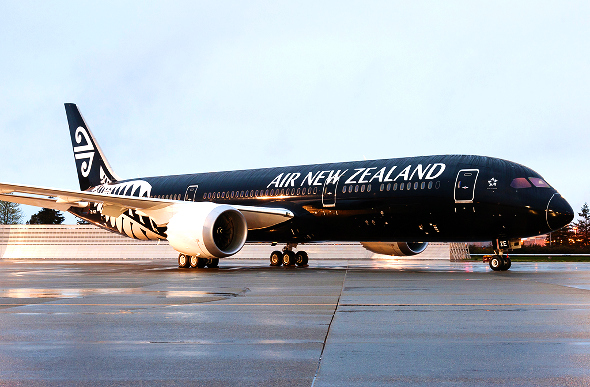
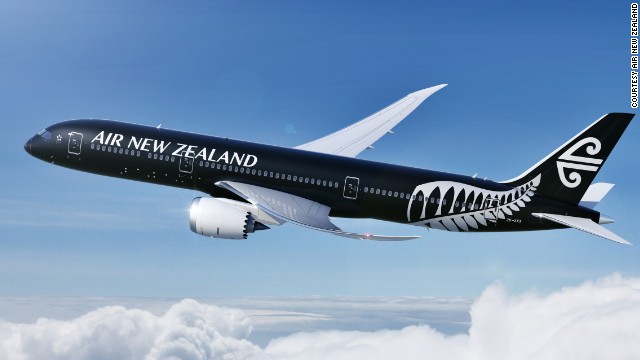
Air New Zealand gets first Boeing 787-9 Dreamliner. Also to feature at Farnborough

Air New Zealand takes Delivery of the first Boeing 787-9 Dreamliner, also to feature at Farnborough


 Air New Zealand has become the first airline to take delivery of the new 787-9, a stretched version of the revolutionary Dreamliner aircraft.

The plane was handed over in front of more than 1000 Boeing employees and guests at the aircraft manufacturer's facility in Everett, near Seattle in the US.

"It's a privilege to be the global launch customer for this aircraft and our team is looking forward to flying it home to New Zealand.  The 787-9 is a real game changer," Luxon said.

The fuselage for the 787-9 is stretched by 6 metres over the 787-8, and will fly up to 40 more passengers an additional 450 nautical miles (830 km).

Boeing's Dreamliners feature several major differences from other major passenger aircraft.

SONY DSC

It is the first airliner to be made of carbon fibre, not aluminium, and promises airlines more fuel efficiency - a saving of 20 per cent. It also offers 20 per cent less carbon dioxide emissions than comparable aircraft.

The aircraft promises a better experience for passengers too. The cabin air is, unlike other aircraft, drawn directly from outside, rather than through the engines, meaning it is fresher. The air is also more humid, and pressurised at a lower level - the theory being that passengers will feel better at the end of their flights. There are also larger windows and a more spacious cabin.

Twenty-six customers from around the world have ordered 409 787-9s, accounting for 40 per cent of all 787 orders, Boeing said.

The Air New Zealand aircraft is scheduled to depart the US on Thursday morning, local time, and arrive in Auckland late afternoon on Friday.


This is the first of ten 787-9 Dreamliners to join Air New Zealand's fleet.  The aircraft will operate the Auckland-Perth route from 15 October 2014 and to Shanghai and Tokyo later this year.

Another of Air New Zealand's 787-9s will be displayed by Boeing at the Farnborough International Airshow later this month.

Delayed for several years, the Dreamliner has faced criticism over its reliability from some carriers. All active aircraft were grounded for three months last year after a battery fire on one Dreamliner. The incident forced Boeing to re-design the powerful lithium-ion battery and enclose it in a tough new steel containment box.

Boeing admitted in January it was not satisfied with the aircraft's performance. The Dreamliner's reliability rate was at about 98 per cent - this meant that two out of every 100 flights were delayed for mechanical problems.

The rate was higher than the 97 per cent recorded in October but was still short of Boeing's target. The company aims to have the aircraft's reliability up to the level of its long-range 777 model, which has a reliability rate of 99.4 per cent.

Plane spotters may think this is the same livery as the ‘All-Blacks’ livery that already graces some of the fleet, but you’ll actually be wrong. The fern, which now is the ‘New Zealand Way’ national fern rather than the all-blacks ‘Silver’ fern (above), is a sign of national pride, and symbolises New Zealand internationally.


Created by Designworks, the fern, now a part of the national carrier livery, was just one part of the job of bringing together all the ingredients needed to accelerate New Zealand’s brand on the world stage. “[we were] involved in a process of clarifying and articulating the strategic idea of New Zealand’s past, present and future purpose – engaging the country in a program of initiatives aimed at moving the whole population onto the same song sheet and collaborating with artists, designers and the wider community on a national attitude and vocabulary that is unique.”

Monday, 30 June 2014

Boeing P-26 Pea Shooter and Strange planes and Oddities

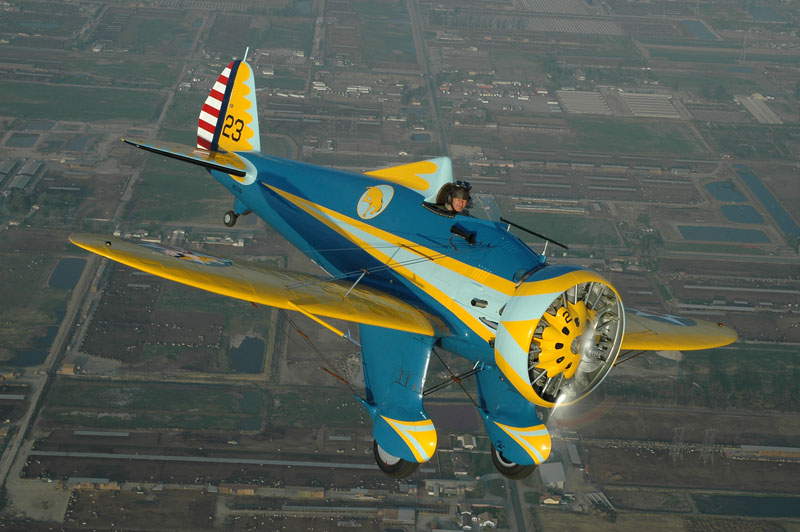
Gallery of the Bizarre: Odd looking aircraft: P-26 Pea Shooter


(photo: Michael O’Leary via Planes Of Fame)

The Planes of Fame Air Museum in Chino, California is sending their Boeing P-26A Peashooter to England this July to take part in the Flying Legends air show over the weekend of July 12th/13th at Duxford, in Cambridgeshire. This ulra-rare fighter plane is one of only two originals in existence, and the only one flying.

Interestingly, the Peashooter was the world’s first all-metal fighter, and the first monoplane in the US Army Air Corps. Boeing built 151 of them between 1932 to 1936. The type first saw combat with the Chinese Air Force on August 15th 1937, when eight Peashooter’s engaged twenty Japanese “Claude” bombers. They shot down two bombers without loss. A handful of them were still flying with the Army Air Corps in the Philippines when the US entered WWII in December, 1941. Ed Maloney acquired this example, 33-123, from the Guatemalan Air Force in 1957. The Guatemalan’s had used the type from 1943 until its retirement in 1957. The only other original survivor, P-26A 33-135, is on display with the Smithsonian’s National Air & Space Museum at their Udvar-Hazy Center in Chantilly, Virginia. They also acquired it from Guatemala in 1957. There are a half dozen faithful replicas in various stages of completion dotted around the USA at present, and although one of these has flown in recent years, none are currently active.

It is probably the first time that a P-26 has ever visited Europe, and it is bound to cause a stir at Flying Legends. The Fighter Collection, organizers of the hugely popular air show, based at Duxford have close ties to many of the established vintage aircraft collectors/collections in the USA. They often work to bring one of their more unusual overseas exhibits to be a part of the Flying Legends air show to keep it fresh each year. Flying Legends will be the only chance to see the Peashooter flying during her UK visit. According to the air show details, the Peashooter will fly a carefully scripted solo routine each day of the show, and sit on the Flight Line during the remainder to allow close viewing of the unusual monoplane.

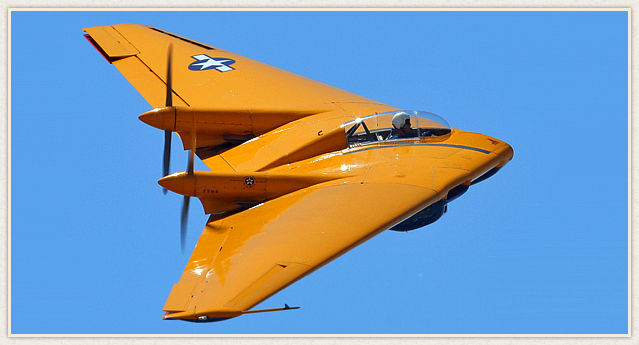
N9MB_w_brdr

The Northrop N-9M was an approximate one-third scale, 60-ft wide, all-wing aircraft used for the development of the 172-ft wide Northrop XB-35 and YB-35 flying wing long-range, heavy bomber program. First flown in 1942, the N-9M (M for Model) was the third in a lineage of all-wing Northrop aircraft designs that began in 1929 when Jack Northrop succeeded in early experiments with his single pusher propeller, twin-tailed, twin-boom, all stressed metal skin Northrop Flying Wing X-216H monoplane, and a decade later, the dual-prop N-1M of 1939–1941. Northrop's pioneering all-wing aircraft would lead Northrop-Grumman many years later to eventually develop the advanced B-2 Spirit stealth bomber, which debuted in Air Force Inventory in 1989.

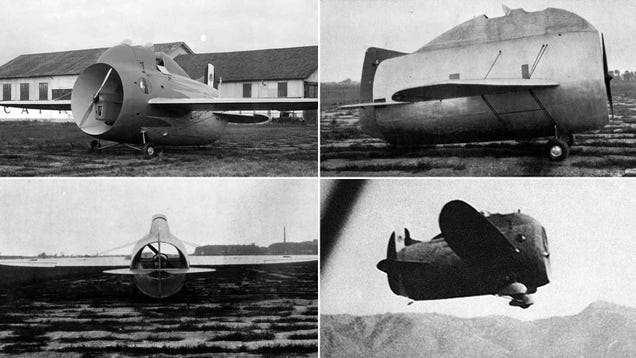
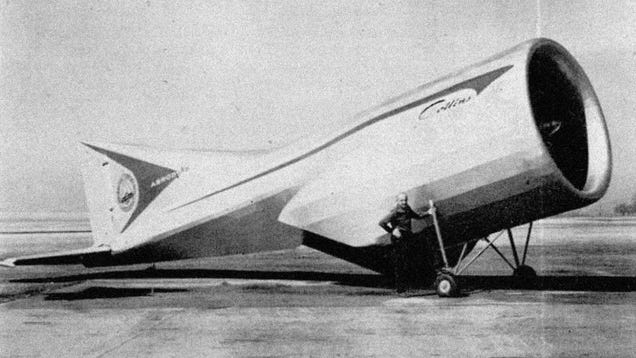
Stipa-Caproni, an experimental Italian aircraft with a barrel-shaped fuselage (1932).
25 Bizarre Aircraft That Don't Look Like They Should FlyEXPAND

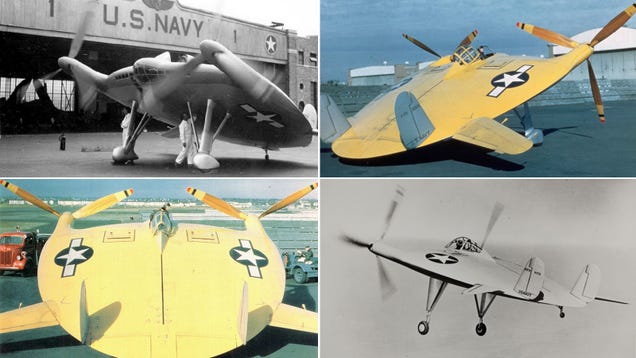
Vought V-173, the "Flying Pancake", an American experimental fighter aircraft for the United States Navy (1942).
25 Bizarre Aircraft That Don't Look Like They Should FlyEXPAND

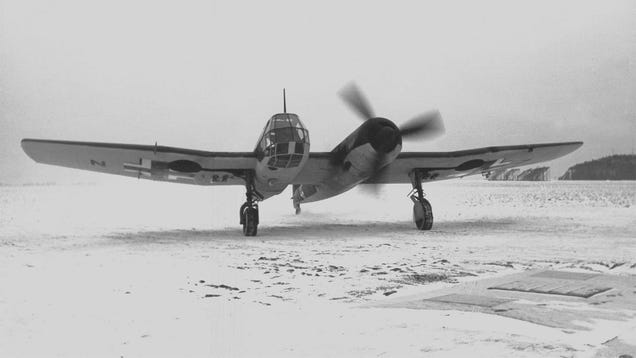
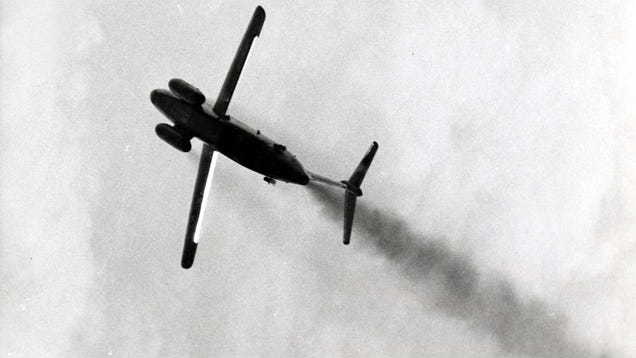
Blohm & Voss BV 141, a World War II German tactical reconnaissance aircraft, notable for its uncommon structural asymmetry.
25 Bizarre Aircraft That Don't Look Like They Should FlyEXPAND

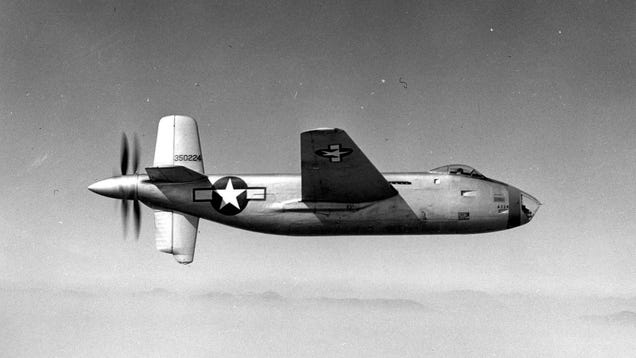
Douglas XB-42 Mixmaster, an experimental bomber aircraft, designed to have a very high top speed (1944).
25 Bizarre Aircraft That Don't Look Like They Should FlyEXPAND
Photo: U.S. Air Force

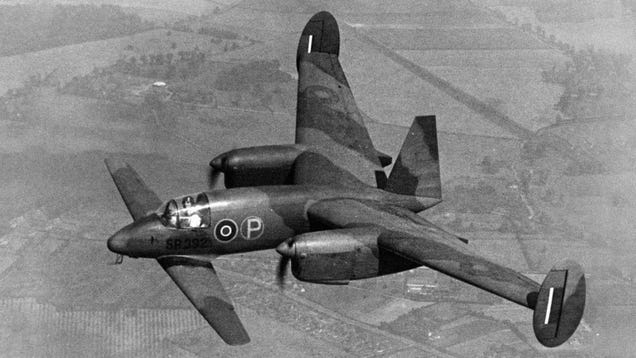
Libellula, a tandem-winged and twin-engine British experimental plane which gives the pilot an excellent view for landing on aircraft carriers (1945).
25 Bizarre Aircraft That Don't Look Like They Should FlyEXPAND
Photo: William Vanderson/Fox Photos/Getty Images

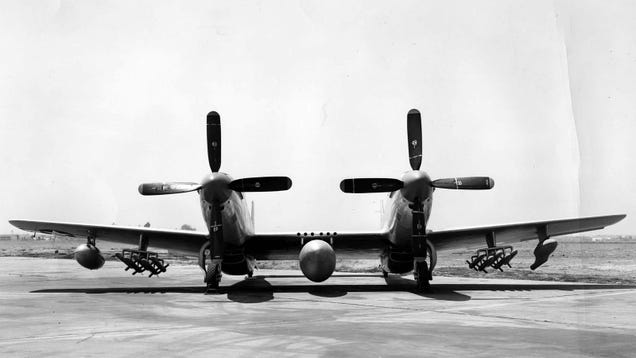
North American XF-82. Stitch together two P-51 Mustangs, and you get this long-range escort fighter (1946).
25 Bizarre Aircraft That Don't Look Like They Should FlyEXPAND
Photo: U.S. Air Force

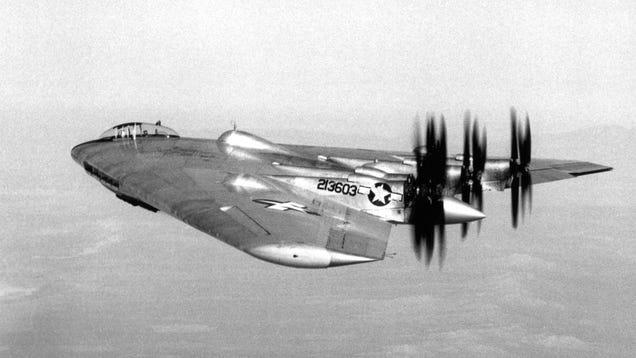
Northrop XB-35, an experimental flying wing heavy bomber developed for the United States Army Air Forces during and shortly after World War II.
25 Bizarre Aircraft That Don't Look Like They Should Fly
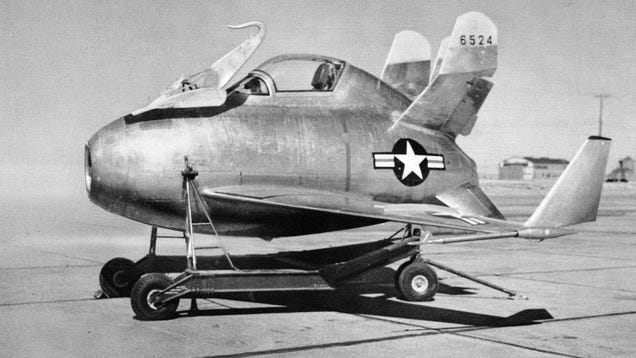
McDonnell XF-85 Goblin, an American prototype jet fighter, intended to be deployed from the bomb bay of the Convair B-36 (1948).
25 Bizarre Aircraft That Don't Look Like They Should FlyEXPAND
Photo: U.S. Air Force

Martin XB-51, an American "tri-jet" ground attack aircraft. Note the unorthodox design: one engine at the tail, and two underneath the forward fuselage in pods (1949).
25 Bizarre Aircraft That Don't Look Like They Should FlyEXPAND
Photo: U.S. Air Force

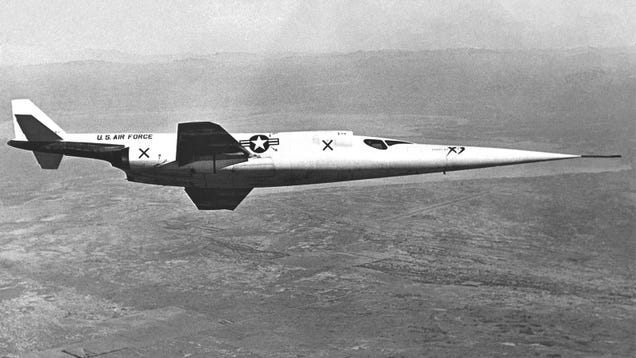
Douglas X-3 Stiletto, built to investigate the design features necessary for an aircraft to sustain supersonic speeds (1953 - 1956)

25 Bizarre Aircraft That Don't Look Like They Should FlyEXPAND
Photo: NASA/DFRC

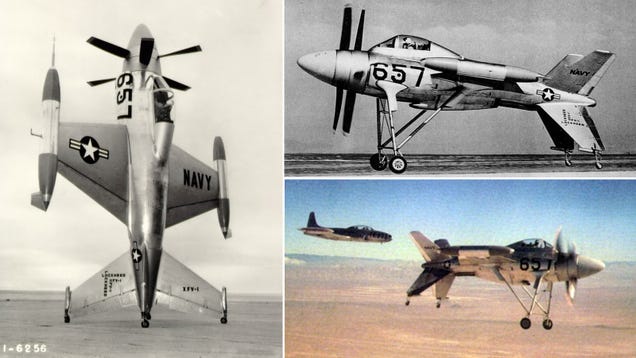
Lockheed XFV, "The Salmon," an experimental tail sitter prototype escort fighter aircraft (1953).
25 Bizarre Aircraft That Don't Look Like They Should FlyEXPAND
Photo: U.S. Air Force

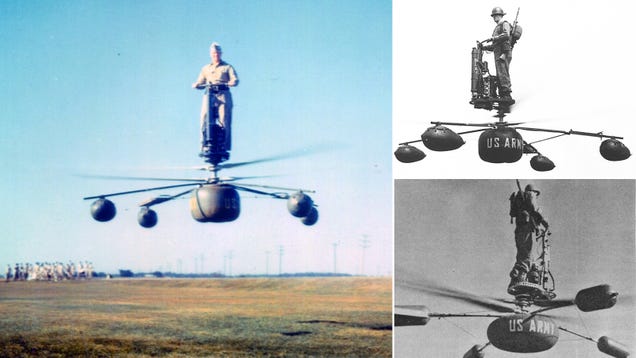
De Lackner HZ-1 Aerocycle flying platform, designed to carry one soldier to reconnaissance missions (1954).

25 Bizarre Aircraft That Don't Look Like They Should FlyEXPAND12
Photo: U.S. Army/army.arch

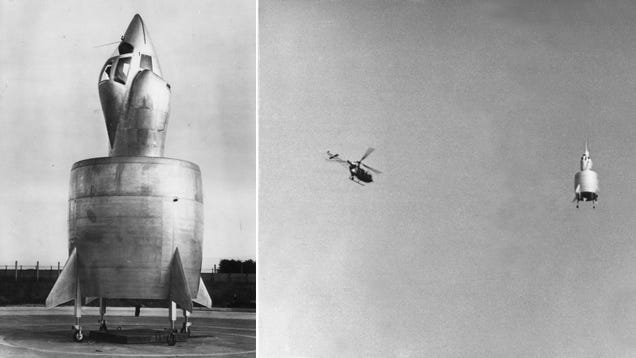
Snecma Flying Coleoptere (C-450), a French experimental, annular wing aeroplane, propulsed by a turbo-reactor, able to take off and land vertically (1958).

25 Bizarre Aircraft That Don't Look Like They Should FlyEXPAND
Photo: Keystone/Getty Images

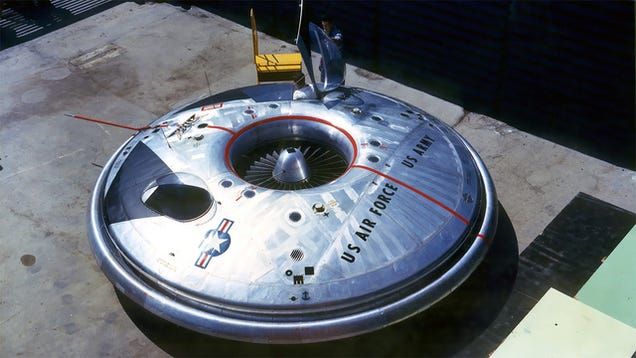
Avro Canada VZ-9 Avrocar, a VTOL disk-shaped aircraft developed as part of a secret U.S. military project (1959)

25 Bizarre Aircraft That Don't Look Like They Should FlyEXPAND

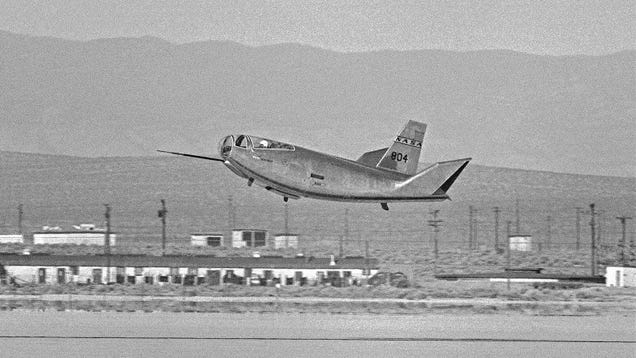
HL-10, one of five aircraft built in the Lifting Body Research Program of NASA (1966 - 1970).
25 Bizarre Aircraft That Don't Look Like They Should FlyEXPAND3
Photo: NASA/DFRC

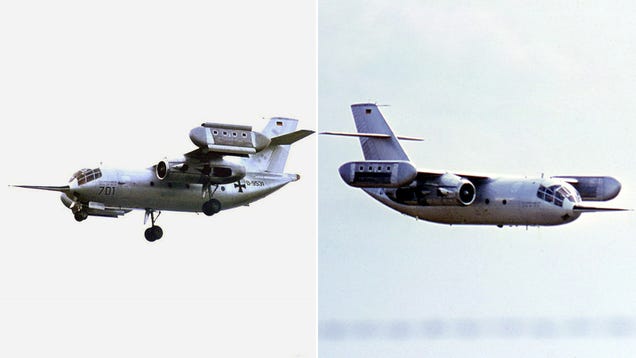
Dornier Do 31, a German experimental VTOL tactical support transport aircraft (1967).
25 Bizarre Aircraft That Don't Look Like They Should FlyEXPAND
Photo: amphalon

Alexander Lippisch's Aerodyne, a wingless experimental aircraft. The propulsion was generated by two co-axial shrouded propellers (1968).
25 Bizarre Aircraft That Don't Look Like They Should FlyEXPAND

Bartini Beriev VVA-14, a Soviet vertical take-off amphibious aircraft (1970s)
25 Bizarre Aircraft That Don't Look Like They Should FlyEXPAND4

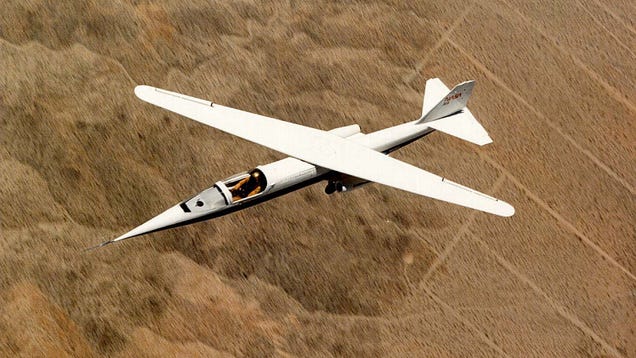
Ames-Dryden (AD)-1 Oblique Wing, a research aircraft designed to investigate the concept of a pivoting wing (1979 - 1982).

25 Bizarre Aircraft That Don't Look Like They Should FlyEXPAND
Photo: NASA/DFRC

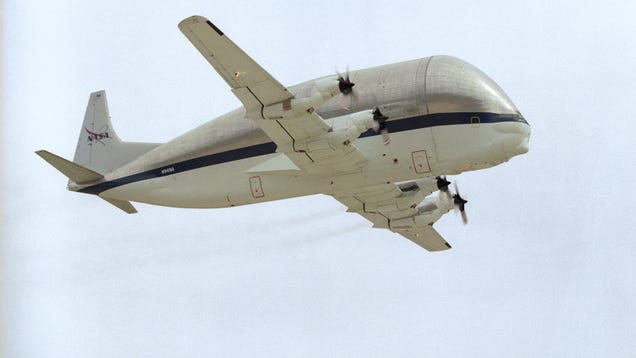
B377PG - NASA's Super Guppy Turbine cargo plane, first flew in its out-sized form in 1980.

25 Bizarre Aircraft That Don't Look Like They Should FlyEXPAND
Photo: NASA/DFRC

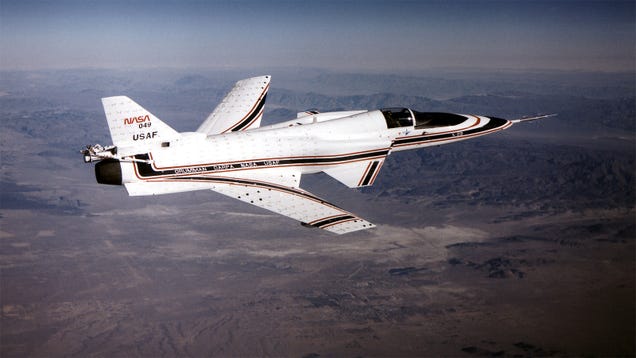
X-29 forward swept wing jet plane, flown by the NASA Dryden Flight Research Center, as a technology demonstrator (1984 - 1992).

25 Bizarre Aircraft That Don't Look Like They Should FlyEXPAND
Photo: NASA/DFRC

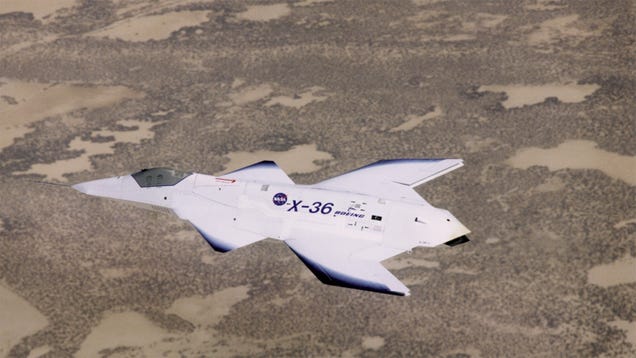
X-36 Tailless Fighter Agility Research Aircraft, a subscale prototype jet built by McDonnell Douglas for NASA (1996 - 1997).

25 Bizarre Aircraft That Don't Look Like They Should FlyEXPAND
Photo: NASA/DFRC

Beriev Be-200 Seaplane, a Russian multipurpose amphibious aircraft (1998).

25 Bizarre Aircraft That Don't Look Like They Should FlyEXPAND
Photo: amphalon

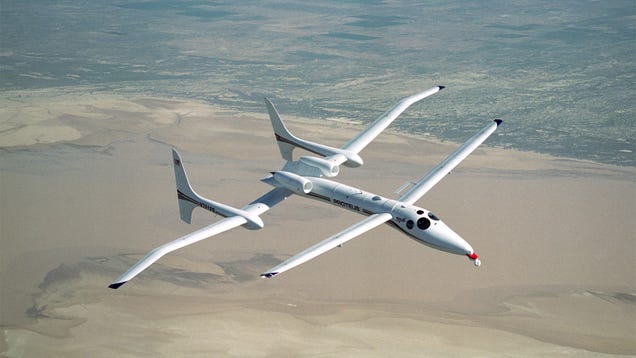
Proteus, a tandem-wing, twin-engine research aircraft, built by Scaled Composites in 1998.

25 Bizarre Aircraft That Don't Look Like They Should FlyEXPAND
Photo: NASA/DFRC

Amelia Earhart's sad demise

Dozens heard Amelia Earhart's final, chilling pleas for help, researchers say Distilled from 2 posts in the  Washington Post a...