Showing posts with label Wanaka. Show all posts

Tuesday, 9 June 2015

NZ $4 Million Griffon Engined Spitfire XIV to Roar in Blenheim

A battle-hardened World War II Spitfire fighter has been delivered to its permanent home at Omaka airfield, near Blenheim, New Zealand.


Repost and embellishment: The 70-year-old aviation marvel is one of only six Spitfire Griffon Mark 14 in existence, and the only one of its kind in the southern hemisphere.

The plane was delivered by a direct flight from Auckland to the Omaka Aviation Heritage Centre hanger on Sunday.

Spokesman Graham Orphan (above) said the plane would eventually be included in the planned WWII display at the heritage centre. The plane was on loan from owners, the Chariots of Fire fighter collection, he said.

"We are thrilled to get it, and it is a privilege not only to have it based in Marlborough, but also in New Zealand.

"In terms of historic aircraft this is the Rolls Royce of Rolls Royce powered fighters."


NH 799 Pre-Crash in the 1990s

The Spitfire Griffon was involved in a crash at Wanaka in 1996 which almost claimed the life of aviation entrepreneur Tim Wallis.

Hours of painstaking restoration over 19 years had brought the Spitfire back to its original condition, right down to the pilot's leather seat in the cockpit. It is valued at $4 million.

Wallis was reunited with the plane when it appeared at this year's Omaka airshow alongside two other Spitfire in the Twilight Extreme segment of the show.


Photos Harry Mole

Powered by a 2250 horsepower V12, the Supermarine Spitfire Griffon saw action with the Royal Air Force in India and Burma in the later stages of WWII, Orphan said. The engine's roar was known as "the sound of victory".


"It is the final salute to piston-powered engines before jet fighter came."

Orphan was convinced people would flock to the heritage centre to see it.

"Spitfires have a magnetic appeal that transcends all age groups."

The first stage of the display when completed later this year will include the Spitfire Griffon, alongside the Focke Wulf FW190, Russian Yak 3 and Avro Anson bomber from the heritage collection.

The Spitfire will fly in special events at Omaka during the summer  - The Marlborough Express

Spitfire FR Mk.XIVe NH799 (ZK-XIV) is owned by 'The Chariots of Fire Fighter Collection' and based at Omaka airfield, New Zealand. Post restoration first flight 2 April 2015, with John Lamont at the controls. Purchased by the Chariots of Fire Fighter Collection, who are based at Omaka, in 2010. Restored to airworthy condition by Avspecs Limited at Ardmore Airport, Auckland. The restoration was completed in time for the Classic Fighters Airshow held over the Easter weekend (3–5 April 2015) with NH799 is resplendent in a South East Asia Command (SEAC) colour scheme, and wears the individual letter T with the serial NH799 both in white.


NH799 was previously owned by the Alpine Fighter Collection at Wanaka until it crashed on take-off on 2 January 1996 which seriously injured pilot/owner Sir Tim Wallis. Was initially restored to flight by Historic Flying Ltd at Audley End, UK, and flew on 21 January 1994 (as G-BUZU and codes AP-V).


The Mk XIV was the most important of the Griffon powered Spitfires, and the only one to see significant wartime service. It used the two-speed two-stage supercharged Griffon 61 or 65, giving 2,050 hp and a significantly improved performance at higher altitudes when compared to the earlier Griffon powered Mk XII. The Mk XIV was based on the Mk VIII fuselage, already strengthened to cope with the Merlin 61 engine. Early models used the “c” type universal wing (four 20mm cannon or two 20mm cannon and four .303 inch machine guns), while later production used the “e” wing (two .50 inchy machine guns instead of the .303s).

The Griffon engine improved the performance of the Spitfire at all heights. Tests in early 1944 found it to be faster than the Mk IX at every altitude, with the best rate of climb yet seen. The only area not to see any improvement was manoeuvrability, which did not rely on the engine but on the airframe. It had a similar advantage over the Fw 190A, which had a similar performance to the Mk IX. The only problem posed by the Griffon was that it span in the opposite direction to the Merlin. Merlin powered Spitfires had tended to veer left on takeoff. The Mk XIV veered to the right instead.

The superior performance of the Mk XIV made it the ideal aircraft to deal with the menace of the V-1. No.91 Squadron, based at West Malling, ended up with the best record against the flying bomb, shooting down 184 with its Mk XIVs.

From September 1944 the Mk XIV was used with the 2nd Tactical Air Force. It equipped all twenty Spitfire squadrons on the continent between D-Day and VE-Day. Its role in Europe was normally armed reconnaissance, searching for any enemy targets behind the German lines. It could carry up to 1000 lbs of bombs, or in a FR role 500 lbs of bombs and a camera.

More survivors:


...and a close relative, (if only by paint scheme) not so lucky:


(Ps- no right to the photos claimed. Happy to credit, link or remove. Simply a fan page)

Wednesday, 16 April 2014

Vampires in Air Race in NZ Warbirds over Wanaka


Jet-Races on at Warbirds over Wanaka 

(Weather permitting)


Peter Vause

Peter Vause, who has a L39 Albatross, and Brett Emeny in his de Havilland Vampire will join Christchurch pilot Paul Hughan, who also has a de Havilland, to take on the Americans.
It is the first time this type of jet air racing has been done in New Zealand, Emeny says.
"We fly round a race track, it's an eight-mile course. The circuit gets down to 100ft at 700km an hour.
"It's good fun. It's going to be cool. You get around that eight-mile course in less than 1.5 minutes. It's about six miles a minute. We're going to do six laps of the course and see how we go."
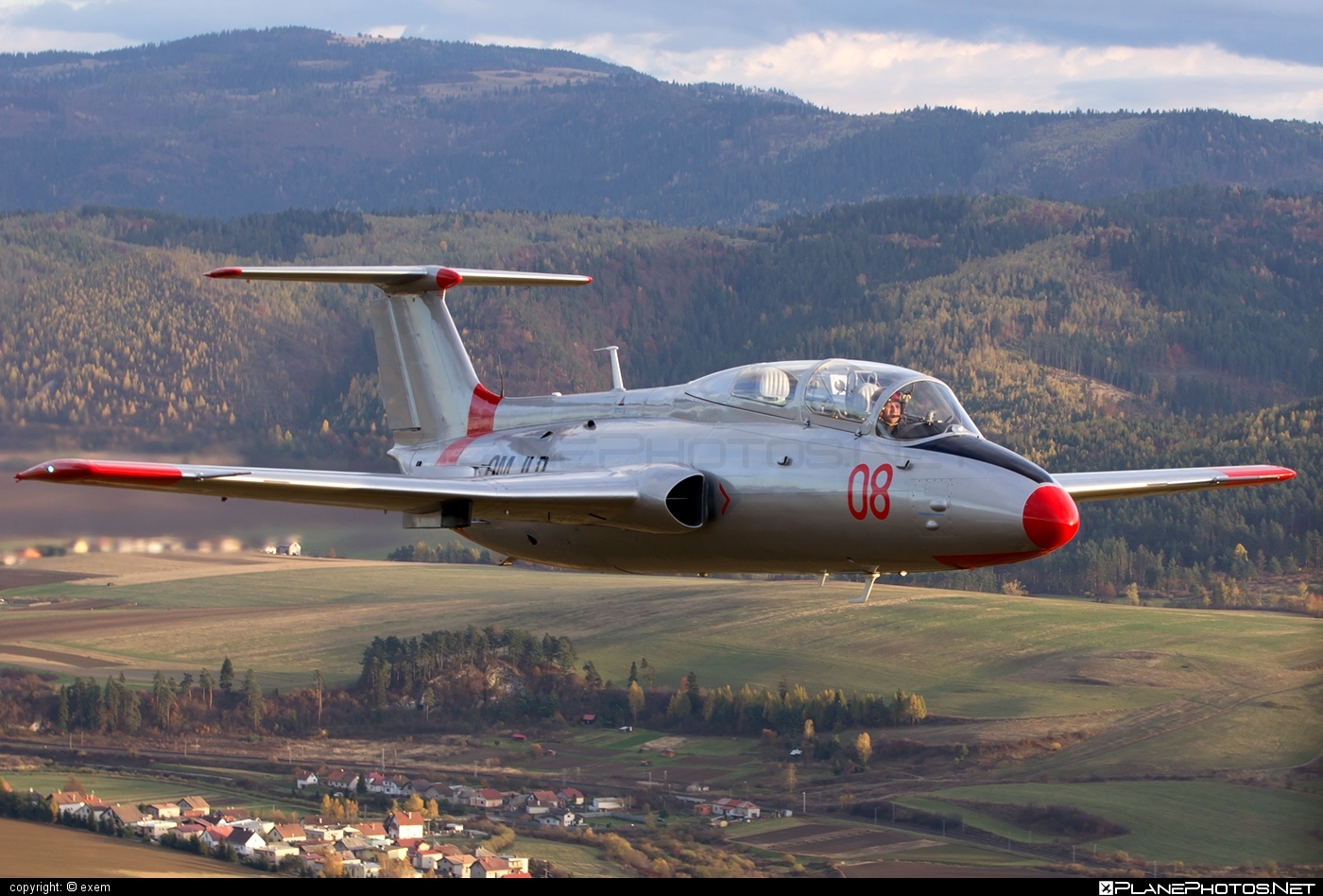
The Americans will be flying Russian L-29 trainer  jets, he said.
All six jets will start in a row, a bit like in a horse race, and come in from behind the airfield in a straight line.
"When you get cleared to start, you open the throttle and go for the first pylon.
"They've got these blow-up pylons that stand up and you fly around and zoom around those."
The six jets will be within a few metres of each other at times, Emeny said.
"It should be a good spectacle." 
L-29 Delfin

The American pilots race at the Reno Air Races in Nevada.
"They used do it with high-powered prop-driven fighters and now they are racing jets as well. It's the fastest motor sport there is."
The de Havilland Vampires were the first single-engine jet fighters ever built and were first flown in 1943, Emeny said.
They were also flown by 75 Squadron at Ohakea in the 1950s.
"Mine was built in 1958. It was one of the last ones built."
Vause, an engineer, got his L39 Albatross, which was built in 1983, 10 years ago.
"It's a Czech-built jet trainer used by all of the Eastern bloc air forces. They became available in relatively large numbers when the Russian empire collapsed in 1992. Air forces started shedding their aeroplanes so they could afford to pay people."
He bought it because he wanted to fly "something that went fast".
Vause and Emeny flew their jets to Wanaka yesterday.
Warbirds Over Wanaka starts on Good Friday and finishes on Sunday.
The first jet race will be on Friday.

L39 Albatross
Just in case anyone had forgotten the biggest warbirds airshow in the southern hemisphere starts on Saturday, six racing jet aircraft flew low, slow and quietly over Wanaka's lake frontage yesterday afternoon.

Under leaden skies, the three Aero L-29s, two De Havilland Vampires and an Aero L-39 have been practising for their starring role in the Warbirds Over Wanaka International Airshow.

On Saturday and Sunday, they will race wingtip-to-wingtip around an ''aerial racetrack'' marked by large orange pylons, in a type of race rarely seen beyond the Reno Air Race in the United States.

Much of the banter among the American and New Zealand jet racing pilots at Wanaka Airport yesterday revolved around the differing performance characteristics of the aircraft.

The Vampires are faster; the Aeros take the corners better.

And one of the American pilots was a little bemused at having a speedometer reading kmh rather than mph.

Spectators can expect the fastest of the six jets to hit 640kmh [397mph] on the home straight.


Wanaka Airport has been filling up this week with aircraft of all shapes and sizes - a Spitfire has arrived, and a Mustang, a Corsair and the Yaks are in the plane park.

Late yesterday afternoon, the French Air Force contingent arrived in its Casa (mini Hercules) military transport aircraft.

Infrastructure construction was a day ahead of the last show two years ago and was going ''really well'', he said.

Bad weather further north had created ''some challenges'' getting aircraft to Wanaka from the North Island.

While the ''vast majority'' had arrived, Mr Taylor said, there was still doubt yesterday over whether the Harvard aerobatics team would make the show.

''If the Harvards can't make it, it will be a real shame, but it won't affect the airshow at all.''

Mr Taylor said the weather forecast for the weekend indicated better weather for Central Otago than for elsewhere but there were still likely to be ''a few light showers''. An ''old-timer'' had told him a ''good thing'' about grey skies was that it made planes easier to see.

''Also, it's not such a strain looking into the hot sun all day.''

The first official event on the show programme is a free World War 1 ''dogfight'' over Lake Wanaka on Good Friday afternoon, involving six biplanes and triplanes.

Boating has been banned from the lake area below during the performance.

Mr Taylor said the New Zealand Air Force would be doing a ''special event'' at the end of the dogfight, but declined to elaborate.

''You've got to be there to see it. It will be pretty spectacular.''

In addition to the action in the air over Easter, the best jet sprint boats in the country will be competing in the finals of the national championships on a course next to Wanaka Airport tomorrow evening.

Race organiser Chris Munro said yesterday the event was timed to fit in around the warbirds show.

The last jet sprint event at Wanaka attracted a crowd of 6000-7000 people.

Canterbury driver Peter Caughey leads the way in the superboat championship and Sam Newdick, of Hamilton the group A championship.

Condensed article from Otago Daily and Southland Times reports - no copyright infringement intended

Amelia Earhart's sad demise

Dozens heard Amelia Earhart's final, chilling pleas for help, researchers say Distilled from 2 posts in the  Washington Post a...